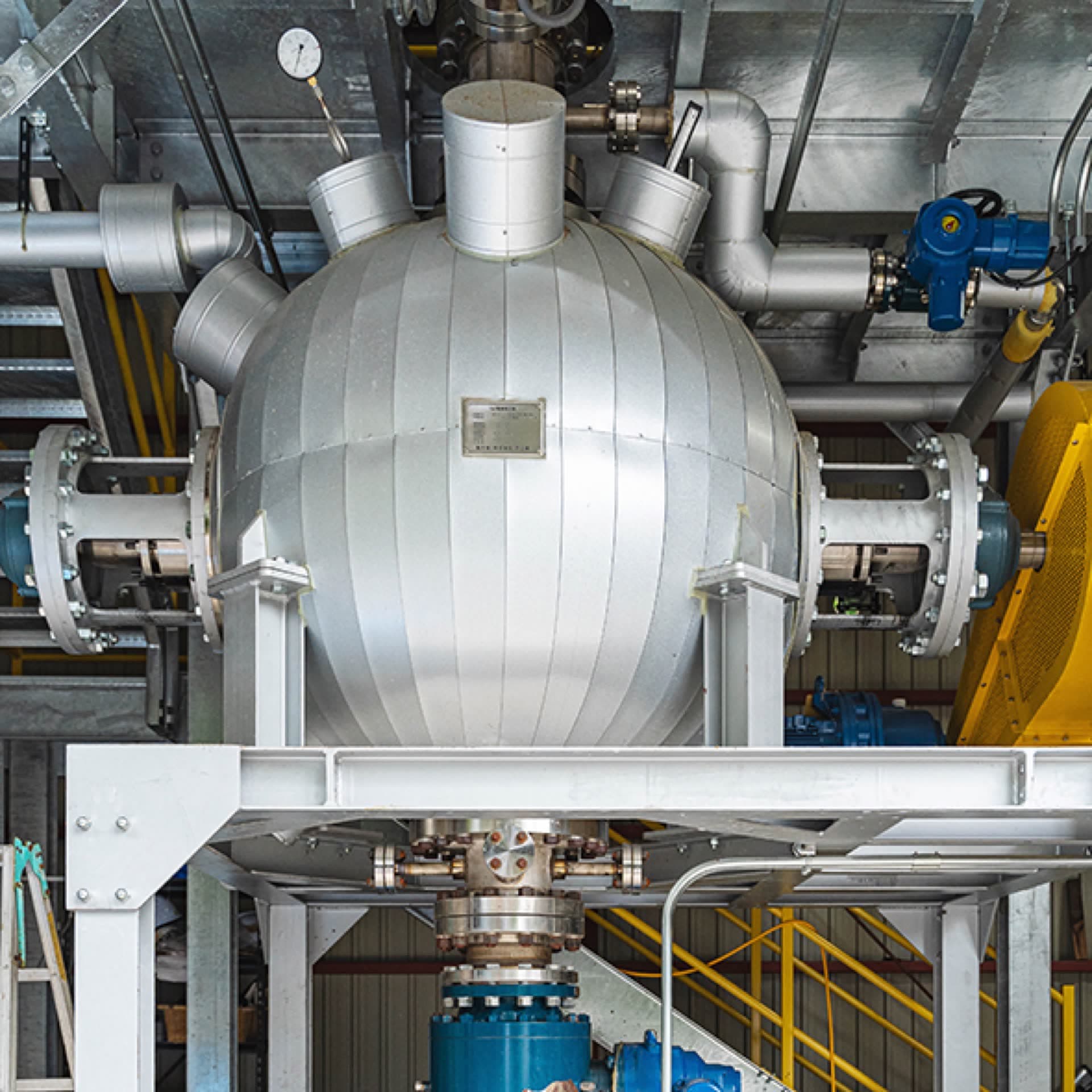
Subcritical Water Hydrolysis Machine
Stop Paying to Dispose of Waste. Start Getting Paid for It.
PHANTOM converts medical, farm, food, and industrial waste into compost, liquid fertiliser, and solid fuel in about 30 minutes — at ~$33/cycle (≈ ¥5,000), with zero dioxins and >99.9% pathogen sterilisation.
The sector is shifting from disposal toward resource recovery: the global industrial solid waste management market was valued at USD 171 billion in 2024 and is projected to reach USD 210 billion by 2030, according to TechSci Research — with hazardous waste the fastest-growing segment. See the global industrial waste treatment market landscape.
>99.9%
Pathogen Kill Rate
Validated sterilisation
0
Dioxin Emissions
No combustion
~30 min
Per Cycle
3 tonnes (normal density)
~$33
Operating Cost
Per cycle (≈ ¥5,000)
Instant Estimate
Calculate What PHANTOM Saves Your Facility
Pick your facility type to pre-fill a UK benchmark disposal rate, then model your annual variable-cost saving vs landfill. For machine price and payback, see the pricing section below.
Start from your facility type
Pick a facility to pre-fill a UK benchmark disposal rate (switches currency to £), then fine-tune every input below.
Changing currency only swaps the symbol — values are not converted. Enter all figures in the selected currency.
A · Throughput
Advanced
Partial cycles are dropped (cycles/day is rounded down).
B · Waste volume & current (before) cost
Following modelled throughput (37,128 t/yr). Edit to model a subset.
C · After Subcritical Water Hydrolysis processing & output
Mass reduces to 65% of input (24,133.2 t output from 37,128 t input).
Subcritical water hydrolysis also produces a small liquid wastewater byproduct. Disposal cost depends on your site's effluent handling and is typically minor. Leave the volume at 0 if you handle it in-house at no marginal cost.
Residual solids always incur the landfill cost per tonne.
D · Subcritical Water Hydrolysis fuel (running) cost
Standard: 35 L kerosene per cycle.
E · Resale revenue (offtake)
Resale revenue is optional and should be validated against your local market before relying on it.
Breakdown
- Residual disposal$5,309,304
- Wastewater byproduct$0
- Fuel cost$606,424
- Less resale revenue−$0
Typical annual disposal savings by facility type (UK benchmark rates, 3-tonne PHANTOM unit)
| Facility Type | Waste Stream | Typical Disposal Rate | Annual Saving (est.) |
|---|---|---|---|
| Hospital / Clinical | Infectious clinical waste | £419–£617/t | £200k–£400k |
| Livestock Farm | Slurry / manure | £35–£180/t | £60k–£200k |
| Food Processor | High-moisture organic | £80–£150/t | £100k–£250k |
| Nursing Home | Offensive / incontinence waste | £180–£400/t | £50k–£120k |
| Fishery / Slaughterhouse | Wet organic by-products | £60–£130/t | £80k–£180k |
| Manufacturer | Mixed industrial organic | £100–£200/t + EPR | £120k–£300k |
Operating cost ~$33/cycle (≈ ¥5,000). Payback typically 2–5 years depending on throughput and disposal rates. Figures are illustrative; request a site-specific assessment.
Pricing & Operating Cost
What Does PHANTOM Cost?
Buyers ask two questions: what is the machine price, and what does it cost to run? Both have clear answers.
Machine Price
~¥260M FOB
~£1.37M / ~$1.75M (rough estimate, specification-dependent). Finance and leasing available.
Operating Cost
~$33 / cycle
≈ ¥5,000. Covers kerosene boiler fuel and utilities per 3-tonne cycle — equating to ~£11–£16/tonne at rated throughput.
What's Included
Free ROI Proposal
Site assessment, waste economics analysis, and payback projection included with every enquiry. No commitment.
Waste treatment machine payback period
Payback depends on your current disposal costs, daily throughput, and output revenue. At UK clinical waste disposal rates of £419–£617/tonne, a facility processing 5 tonnes/day typically achieves payback within 1.5–3 years. For industrial and farm waste at £80–£180/tonne, payback ranges from 3–6 years. The ROI calculator above generates a facility-specific estimate in under 60 seconds. For a full CFO-level model, see the industrial waste processing machine ROI guide.
Industries Served
Who Uses PHANTOM?
Six industry segments — each with a dedicated deep-dive guide covering regulations, disposal rates, and site-specific ROI.
NHS clinical waste incineration, 2026
Hospital / Clinical
Infectious clinical waste, PPE, used sharps packaging, and contaminated theatre materials. PHANTOM exceeds CDC autoclave sterilisation standards without combustion — no dioxins, no fly ash.
Get Assessment →Blended tiger-stripe + orange bag rate
Care Home / Nursing Home
Adult incontinence waste classified as clinical waste attracts the same high incineration rates as hospital waste in most jurisdictions. PHANTOM processes it at ~$33/cycle (≈ ¥5,000).
Get Assessment →Organic recycling / exemption route
Farm / Livestock Operation
Manure, slurry, poultry litter, and fish by-products are converted into amino acid-rich liquid fertiliser and compost — creating a revenue stream from waste rather than a disposal cost.
Get Assessment →AD gate fee to contaminated landfill
Food Processing / Catering
Food waste from industrial kitchens, catering operations, and manufacturing lines. PHANTOM handles mixed and contaminated food streams that AD facilities reject — in 30 minutes, on-site.
Get Assessment →Landfill tax £130.75 + gate fee (2026)
Manufacturing / Industrial
Oil sludge, plastics, rubber, paint residue, and mixed industrial organics. PHANTOM converts waste that would otherwise attract maximum landfill tax into solid fuel or compost.
Get Assessment →Standard non-inert landfill rate, 2026
Municipal / Mixed Waste
For municipalities targeting zero-residual-waste goals. On-site PHANTOM installations provide an immediate path to near-zero residual waste without incineration infrastructure.
Get Assessment →Rates shown are indicative for 🇬🇧 UK. Actual disposal costs vary by waste classification, contract terms, and jurisdiction. Sources: HMRC (UK 2026), US EPA, Canadian Provincial Schedules, EREF, Dubai Municipality 2025/26.
The Process
Three Steps. Thirty Minutes.
Subcritical water hydrolysis requires no additives, no combustion, and no specialist operators. Water and heat do the work.
Load & Seal
Waste is loaded into the sealed spherical pressure vessel. No sorting, no additives — just the raw organic waste stream.
Subcritical Water Hydrolysis
Water is heated to 200–250°C at 2–2.7 MPa (20–27 bar) inside the reactor. At subcritical conditions, water's ionic constant Kw spikes — driving rapid molecular hydrolysis of proteins, fats, and carbohydrates.
Sterile Outputs
About 30 minutes later: sterile compost or bio-coal (solid), amino acid-rich liquid fertiliser, and clean effluent. Zero dioxins. Zero fly ash. Three sellable output streams.
What Comes Out
Compost / Bio-coal
Class A compost or ~5,000 kcal/kg solid fuel
Liquid Fertiliser
Amino acid-rich NPK — dilute 500× with seawater for field use
Avoided Disposal Cost
Up to £617/t (clinical) or £180/t (industrial) eliminated
For full chemistry, regulatory context, and circular economy data → Read the complete technical guide or what is subcritical water hydrolysis? · see outputs and applications by waste type
For operators with clean cellulosic residue, see which cellulosic feedstocks qualify for bioethanol — the full stream qualification table by feedstock type.
Head-to-Head
PHANTOM vs Incineration vs Composting
Four categories. Sixteen criteria. See exactly where PHANTOM outperforms the alternatives — on environment, performance, output value, and compliance cost.
Sealed system, no combustion
Requires scrubbers & monitoring
No thermal process
Significantly lower than incineration
Direct waste combustion CO₂
Methane off-gassing during decomposition
Fully sealed, no leachate
Heavy metals in residue
Leachate run-off from piles
Sealed pressure vessel
High-temp combustion
Requires site management
Disposal cost estimates based on UK market rates. ~1.27 USD/GBP.
| Criterion | PHANTOM (SWH) | Incineration | Composting / AD |
|---|---|---|---|
| Processing time | ~30 min/cycle | Continuous (24–48h) | 3–6 months / 20–40 days |
| Dioxin/furan emissions | Zero | Yes — regulated | None |
| Pathogen kill rate | >99.9% | >99.9% | Variable — not guaranteed |
| Outputs with resale value | Compost, fuel, fertiliser | Fly ash (hazardous waste) | Compost only |
| Suitable for medical waste | Yes | Yes | No |
| Suitable for mixed/plastics | Yes | Yes | No |
| Carbon pricing exposure (2028) | None | EU ETS — est. €65–€130/t | Low |
| Planning/permit complexity | Low | High (5–10 years) | Medium |
| Operating cost (UK) | ~$33/cycle | £419–£617/t gate fee | £25–£55/t gate fee |
| Capital cost vs incineration | Significantly lower | Baseline | Lower |
>99.9%
Pathogen Kill
Exceeds CDC autoclave standard
0
Dioxins / Furans
No combustion, no flue gas
~30 min
Cycle Time
3 tonnes per batch (normal density)
10 yr
Maintenance Interval
Boiler inspection only
~$33
Operating Cost/Cycle
≈ ¥5,000, all utilities
60%
Volume Reduction
By weight, organic streams
¥260M
Machine Price (FOB)
~£1.37M / ~$1.75M — rough estimate
200–250°C
Operating Temp
Inside sealed pressure vessel
The Science
Why Subcritical Water Works Where Other Technologies Fail
Subcritical water hydrolysis exploits a property of liquid water that most waste treatment technologies ignore: between 100°C and 374°C, under sufficient pressure to remain liquid, water's ionic product (Kw) increases by several orders of magnitude. This transforms ordinary water into a highly reactive ionic solvent — capable of breaking peptide bonds in proteins, hydrolysing ester linkages in fats, and cleaving glycosidic bonds in carbohydrates — all without adding acids, alkalis, or enzymes.
The practical consequence is total organic breakdown in about 30 minutes. Proteins hydrolyse into free amino acids. Fats saponify into fatty acids and glycerol. Carbohydrates dissolve. Pathogenic organisms — bacteria, viruses, prions — are denatured by the combination of temperature, pressure, and ionic chemistry. The process achieves >99.9999% (6-log) pathogen reduction, the highest level tested under IStAATT protocols for non-incineration medical waste treatment.
Critically, because there is no combustion, there is no formation of dioxins, furans, polycyclic aromatic hydrocarbons, or nitrogen oxides. The sealed pressure vessel prevents any gas release during processing. What enters the vessel as contaminated waste exits as three distinct outputs: a solid fraction (sterile compost or, where plastics are present, high-calorie bio-coal at ~5,000 kcal/kg), an amino acid-rich liquid fertiliser, and clean effluent that typically meets discharge consent standards.
PHANTOM's spherical reactor is fabricated from pharmaceutical-grade SUS 304 stainless steel, rated for its 2–2.7 MPa (20–27 bar) operating pressure. The spherical geometry distributes pressure forces evenly across the vessel wall — a key reason the system requires major maintenance only every 10 years under continuous-cycle operation. A kerosene boiler generates the steam required to reach operating temperature; total fuel cost is approximately $33 (≈ ¥5,000) per 3-tonne cycle, equating to ~£11–£16 per tonne at rated throughput.
This combination — complete sterilisation, zero harmful emissions, commercially valuable outputs, and low operating cost — is why PHANTOM is being deployed in hospitals, livestock facilities, food processors, and industrial operations across Europe and Asia. It does what incineration does (sterilise and reduce volume) without any of what incineration creates (toxic emissions, carbon liability, planning opposition, hazardous residues).
Common Questions
Frequently Asked Questions
How much does an industrial waste treatment machine cost in the UK?▾
The PHANTOM system is priced at approximately ¥260,000,000 FOB Japan (~£1.37M / ~$1.75M — a rough estimate, specification-dependent). Finance and leasing arrangements are available. For a facility generating 40 tonnes per week, payback is typically achieved within 1.5–3.5 years depending on local disposal costs and output revenue. Use the ROI calculator above for a facility-specific estimate, or see our full industrial waste machine ROI guide.
How long does subcritical water hydrolysis take per cycle?▾
A PHANTOM 3-tonne cycle runs approximately 15–20 minutes of active hydrolysis, with total cycle time including loading and unloading approximately 30–35 minutes. Each cycle processes up to 3 tonnes of normal-density waste; lightweight bulky waste is limited by the tank volume (0.5–3 m³) instead. At roughly two 3-tonne cycles per hour, a single unit processes around 60 tonnes over a standard operating day (higher at extended continuous operation). For the underlying chemistry, see what is subcritical water hydrolysis?
What types of waste can the PHANTOM system process?▾
PHANTOM processes all organic and mixed-plastic waste streams: clinical and infectious waste, PPE, incontinence products, food processing by-products, livestock manure, fish offal, agricultural residues, and most industrial plastics (PET, PE, PP, PS). Glass, metal, stone, and radioactive materials cannot be processed and require pre-separation. To see what each waste stream is recovered as, see the feedstock & output guide.
What are the operating costs per tonne?▾
Operating costs are approximately $33 (≈ ¥5,000) per 3-tonne cycle — covering kerosene fuel and utilities — equating to ~£11–£16/tonne at rated throughput. This compares to off-site incineration at £200–£617/tonne for clinical waste or UK landfill tax at £126.15/tonne (2025/26 standard rate). The 10-year maintenance schedule covers boiler inspection and gasket replacement only. Full cost modelling is covered in the medical waste TCO comparison.
Does PHANTOM require an environmental permit to operate on-site in the UK?▾
In England and Wales, on-site clinical waste treatment requires either an Environmental Permit (Standard Rules SR2012 No.9 or bespoke) or a registered exemption under the Environmental Permitting Regulations 2016. The PHANTOM system's IStAATT Level III validation pathway significantly simplifies EA approval. Scotland requires a SEPA Waste Management Licence; Northern Ireland a NIEA permit. The full regulatory pathway is covered in our UK medical waste permits and validation guide.
Knowledge Base
Deep-Dive Guides by Industry
Each guide covers regulations, cost benchmarks, compliance pathways, and site-specific ROI for that waste stream.
Medical & Healthcare
Agriculture & Livestock
Industrial & Technology
Ready to Calculate Your Exact Saving?
Our team will assess your waste stream, throughput, and site requirements — and provide a detailed ROI proposal within 5 business days. No commitment required.
Machine price: ~¥260,000,000 FOB (approx. £1.37M / $1.75M at time of publication — rough estimate, specification-dependent). Disposal rates based on UK 2026 industry averages. Figures are for informational purposes only and do not constitute financial, legal, or procurement advice. Actual results depend on waste composition, contract terms, jurisdiction, and site conditions. ~1.27 USD/GBP.