Article Series
TL;DR — Wet Waste Treatment for Fisheries & Slaughterhouses
Subcritical water hydrolysis is the most efficient, profitable way to treat high-moisture animal byproducts, eliminating the massive fuel costs and odour liabilities of trying to burn wet waste.
Unlike traditional incineration, hydrolysis uses the waste's own moisture to break it down:
- No Pre-Drying Required: Processes blood (80% water) and fish offal (75% water) directly without expensive evaporation steps.
- Eliminates Incinerator Fuel Penalties: Avoids the $150+ (~£118) per tonne diesel cost required to sustain combustion in traditional incinerators.
- Complete Sterilisation: Operates at 200–250°C, fully destroying pathogens and prions — exceeding EU ABP Method 1 regulations.
- Zero Odour: Processes waste in a fully sealed, 30-minute pressure cycle, preventing community complaints.
- Creates New Revenue: Converts a disposal liability into sterile, high-value protein hydrolysate, liquid fertiliser, and solid fuel.
Applicable to: Commercial slaughterhouses and fish processors operating under EU Animal By-Products Regulation (EC 1069/2009) Category 1/2 compliance requirements, UK ABP regulations post-Brexit (retained via The Animal By-Products (Enforcement) (England) Regulations 2013), and GCC facilities seeking halal-compatible treatment with zero chemical additives.
Example: Instead of paying $172/tonne (~£135/tonne) to incinerate wet fish offal, a facility uses subcritical water hydrolysis to convert 3 tonnes of raw, high-moisture waste into sterile fertiliser and protein solids in under an hour at ~$33 per cycle — using only the water already in the waste, with zero dioxin output.
Read the full engineering breakdown below for the thermodynamic physics of wet waste, EU/GCC regulatory standards, and a side-by-side ROI comparison against incineration. Related: Turn Livestock Manure into Organic Fertilizer · UK Farm Slurry Disposal Costs vs On-Site SWH: NVZ ROI Guide · What Is Subcritical Water Hydrolysis?
To understand the physics, regulations, and business case driving the shift away from incineration across industries, check out our foundational text: The Ultimate Guide to Zero-Emission Industrial Waste Treatment. This article focuses on one of the most technically demanding waste streams in any food processing operation: the raw, high-moisture biological material produced by slaughterhouses and fish processing facilities. Blood. Viscera. Bones. Scales. Shells. These are the materials that destroy incinerator economics, overwhelm conventional composting operations, and trigger the odour complaints that follow a food processing company into every planning meeting.
Understanding why these materials are uniquely difficult — and why subcritical water hydrolysis is uniquely suited to them — requires examining the physics, not just the marketing.
⚙️ Tanaka's Note: "Blood runs at ~80% moisture. Fish offal at ~75%. Standard incinerators need waste below 30–40% moisture to sustain combustion. The math is terminal before a single burner fires. Subcritical water hydrolysis — the core of the PHANTOM organic waste treatment machine — was engineered for exactly these conditions, turning high-moisture animal byproduct into sterile, recoverable product in 30 minutes without a single flame."
The Logistical Nightmare: What Makes Animal Byproduct Waste Different from Everything Else
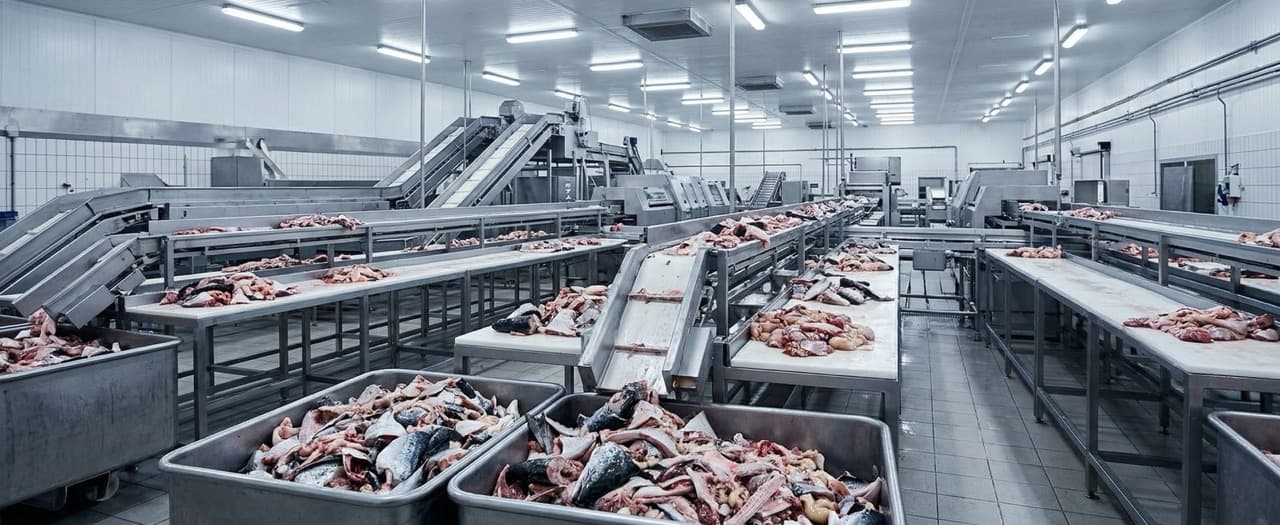
Slaughterhouse and fish processing waste is categorically different from industrial waste: it starts decomposing within minutes, cannot be legally landfilled in most jurisdictions, cannot self-sustain combustion, and generates biosecurity risk at every point of contact.
Four properties that make animal byproduct waste unmanageable by conventional methods:
- Moisture content: 45–85% — well above the 30–40% threshold where incinerators can sustain combustion without continuous auxiliary fuel
- Decomposition rate: blood and viscera begin generating ammonia and H₂S within hours at ambient temperature; within minutes above 20°C
- Regulatory classification: EU ABP Category 1/2 and UK ABP Regulations 2013 require traceable, approved treatment — no informal disposal routes permitted
- Volume: a 500-tonne/day beef slaughter facility generates approximately 200–275 tonnes of byproduct daily
Applies to: Commercial slaughterhouses and fish processors under EU ABP Regulation EC 1069/2009, UK ABP Regulations 2013, or GCC halal processing facilities. Does NOT apply to small artisan processors with less than 1 tonne/day byproduct generation, where rendering contracts may remain economical.
Example: A tuna processing facility generating 30 tonnes of heads, frames, and viscera per day faces $5,160/day in incineration costs at $172/tonne — or ~$660/day for 10 PHANTOM cycles via on-site hydrolysis. Annual saving before output revenue: approximately $1.64M.
Global food systems produce waste on a scale that most plant managers never fully internalise. Global fisheries and aquaculture reached 185.4 million tonnes of aquatic animals harvested in 2022 (FAO SOFIA 2024). Fish processing byproducts represent 30–70% of whole fish weight depending on species — heads, frames, viscera, skin, scales, and shells that cannot enter the human food chain. Conservative industry estimates place accessible global fish processing discards at approximately 27.85 million tonnes per year (Ferraro et al., 2020).
On the meat side, global production reached a forecast 373 million tonnes (carcass weight equivalent) in 2024 (FAO Food Outlook, November 2024), generating approximately 150 million tonnes of byproducts annually (MDPI Sustainability, 2022). A typical 500-tonne-per-day beef slaughter facility produces roughly 200–275 tonnes of byproduct daily — blood at 3–4% of live weight, bones at 15–20%, offal at 12–15%, hides at 6–10%, and fat trimmings at 3–5%.
Two physical characteristics define the processing challenge:
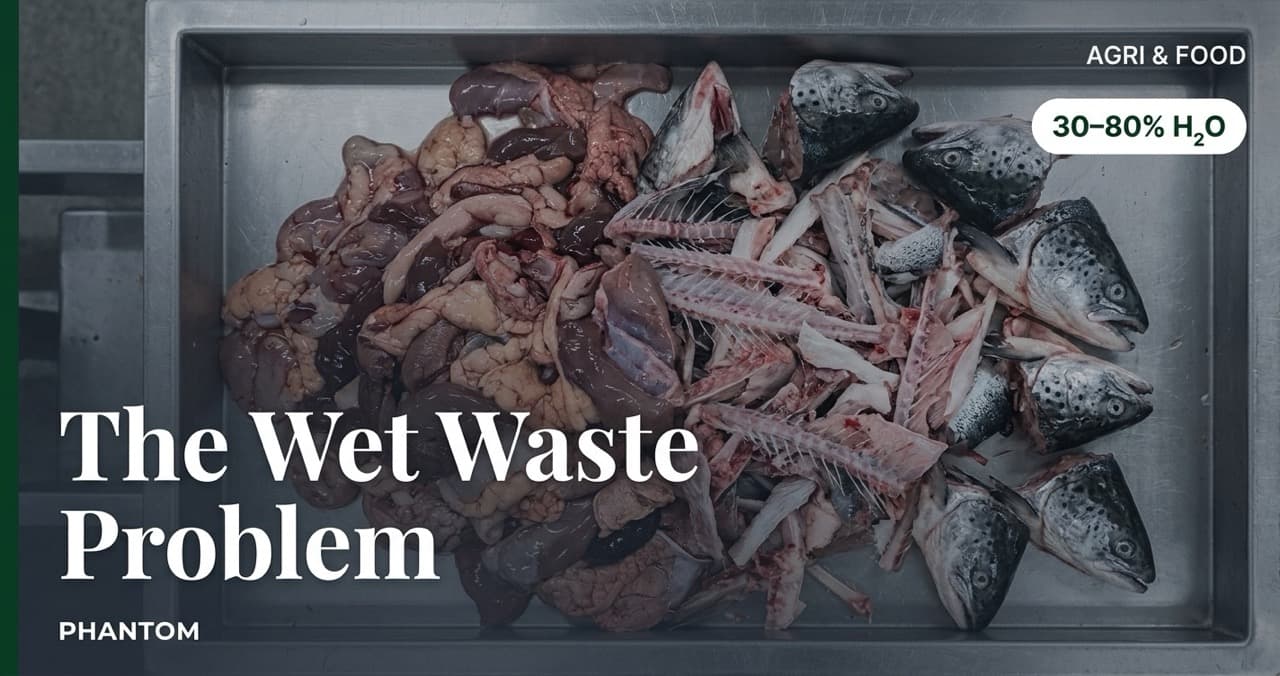
First, extreme moisture content. Whole blood runs at approximately 80% water by weight. Fish viscera and offal range from 70–80% moisture. Mixed slaughterhouse waste averages 55–75% moisture. Bones and scales are typically 35–55% — still far above the threshold at which incineration becomes thermodynamically viable.
Second, rapid degradation. Enzymatic autolysis and microbial decomposition begin immediately post-mortem. At ambient temperatures above 20°C — standard in most processing environments — volatile organic compounds including hydrogen sulfide, trimethylamine (TMA), and ammonia begin generating at measurable rates within hours. In Gulf Cooperation Council (GCC) countries where ambient temperatures regularly exceed 45°C, this degradation timeline compresses dramatically. The Saudi Adahi Hajj project manages approximately 1.2 million sheep within 48-hour windows across eight slaughterhouses — a waste concentration requiring immediate processing infrastructure, not holding tanks.
These two characteristics are not incidental. They are the fundamental engineering constraints that determine which treatment technology is appropriate. Any technology that requires pre-drying waste, prolonged storage, or open-air handling is fundamentally incompatible with the physics of what slaughterhouses and fish processors actually produce.
Why Does High-Moisture Animal Waste Cause Traditional Incinerators to Fail?
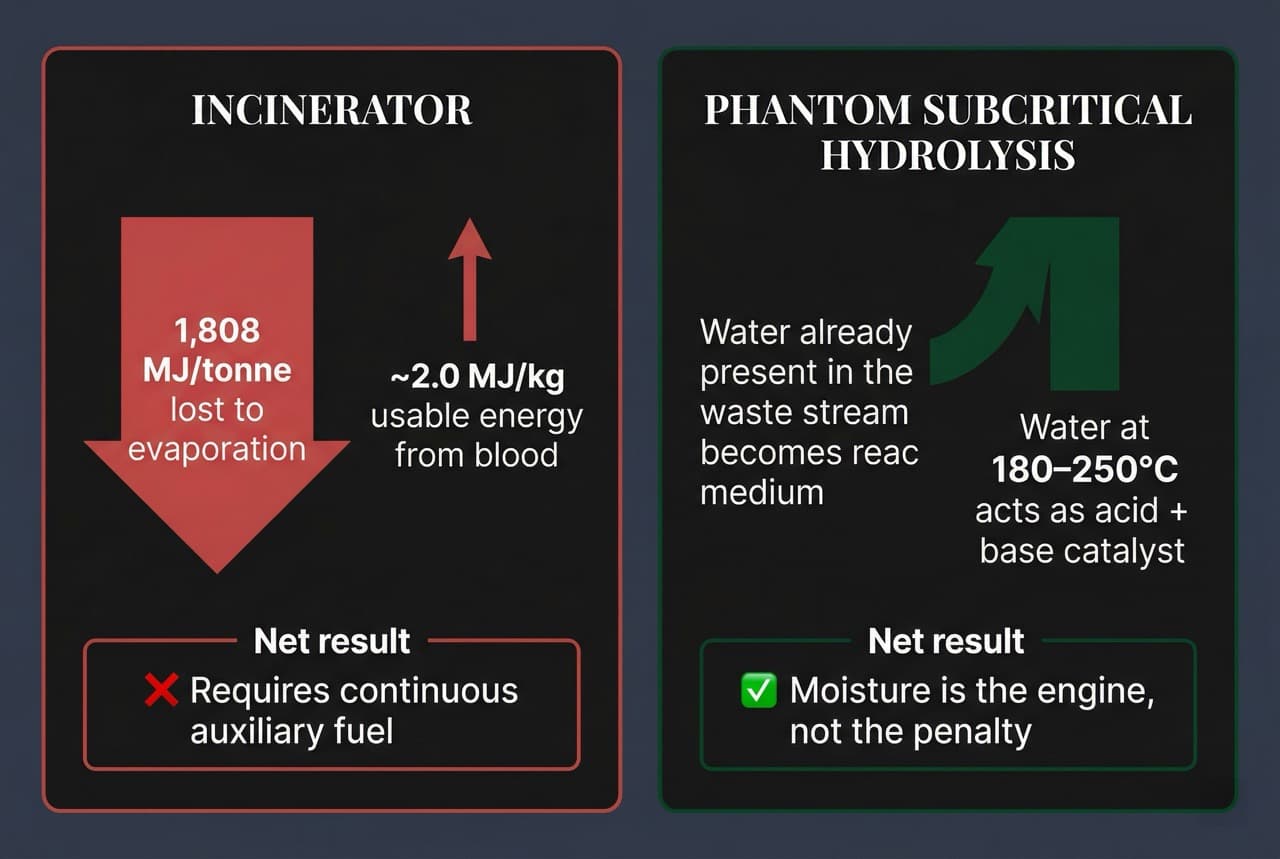
Evaporating water costs 2,260 kJ per kilogram — a fixed thermodynamic constant. At 80% moisture, over 1,800 MJ of energy per tonne of waste goes solely to boiling off water before any combustion can occur. Blood and fish offal carry so little net calorific value after this penalty that they cannot sustain combustion — meaning the incinerator runs entirely on expensive auxiliary fuel, not on the waste itself.
This is not an engineering opinion. It is thermodynamics.
Water requires 2,260 kJ/kg to vaporise — its latent heat. Adding the sensible heat to raise water from 20°C to 100°C (~335 kJ/kg), each kilogram of moisture costs approximately 2,595 kJ to remove before combustion can begin. For waste at 80% moisture (one tonne = 800 kg water), the evaporation energy demand alone is 1,808 MJ — equivalent to burning roughly 50 litres of diesel doing absolutely no useful work.
Against this penalty, the actual combustible fraction in high-moisture animal waste provides almost nothing. The net calorific value of waste on a wet basis is:
NCV_wet = NCV_dry × (1 – M) – 2.26 × M [MJ/kg]
Where M is the moisture fraction. Applying this to common animal byproducts:
| Waste Stream | Moisture Content | Wet-basis NCV | vs. Autogenous Threshold |
|---|---|---|---|
| Whole blood | ~80% | ~2.0 MJ/kg | ❌ Far below |
| Fish offal/viscera | ~75% | ~2.8 MJ/kg | ❌ Far below |
| Mixed offal | ~65% | ~4.1 MJ/kg | ❌ Below |
| Wet feathers | ~55% | ~5.6 MJ/kg | ❌ Below |
| Mixed bone | ~45% | ~7.2 MJ/kg | ⚠ Borderline |
The autogenous combustion threshold — the minimum calorific value at which waste can sustain its own burning without continuous auxiliary fuel — sits at approximately 7.5 MJ/kg (Joshi & Ahmed, 2016), or 14.4 MJ/kg by stricter combustion engineering standards. Blood at 2.0 MJ/kg and fish offal at 2.8 MJ/kg do not approach either value.
Inciner8, one of the UK's most prominent animal incinerator manufacturers, states in published guidance that anything above 40% moisture content should be dried out ahead of incineration. The operational consequence is significant. Inciner8's i8-200A large-capacity model specifies diesel consumption of 20–25 litres per hour at a burn rate of up to 200 kg/hr. For high-moisture waste without self-sustaining combustion, that equates to 100–125 litres of diesel per tonne — approximately $150–188 per tonne in fuel alone at current diesel prices.
This heavy reliance on fossil fuels not only destroys operational margins but also drastically increases the manufacturing waste carbon footprint, making net-zero targets impossible to achieve. A published three-year field study of a UK decentralised ABP incinerator found total operating costs of €159 (~$172 USD) per tonne for carcass material — and that was for fat-rich whole carcasses with reasonable calorific value. For pure blood or fish offal, the economics are materially worse. For slaughterhouses and fisheries generating 10+ tonnes of wet byproduct per week, the economics above almost always favour on-site PHANTOM deployment over contracted incineration. Request a free site assessment — we provide a stream-specific ROI model comparing your current disposal contract against PHANTOM's operational cost at your throughput volume.
The thermal penalty compounds into compliance failure. When furnace temperatures drop below the 850°C minimum required for complete combustion, incomplete combustion generates precursor compounds — chlorophenols and chlorobenzenes — that catalyse dioxin (PCDD/F) formation in the 200–400°C cool-down zone. Field measurements of small-scale animal waste incinerators without adequate pollution controls have recorded dioxin emission factors of 327 µg I-TEQ per tonne — orders of magnitude above the EU Industrial Emissions Directive limit of 0.1 ng I-TEQ/Nm³.
This is precisely why Phantom's approach inverts the problem entirely.
Why Subcritical Water Hydrolysis Is the First Process Engineered for Wet Waste
Rather than fighting moisture, subcritical water hydrolysis exploits it. The PHANTOM system heats water already present in the waste to 200–250°C under 2–2.7 MPa of pressure — conditions at which water's ionic product increases ~1,000-fold, turning it into a simultaneous acid and base catalyst. No added chemicals. No combustion. No drying step. The very property that defeats an incinerator becomes the engine of hydrolysis. For a full breakdown of the ionic chemistry behind this transformation, see What Is Subcritical Water Hydrolysis?.
The fundamental science is established in the physical chemistry of water at elevated temperature and pressure. To understand how the PHANTOM system harnesses these forces, we must look at the behaviour of water below its thermodynamic critical point (374°C, 22.1 MPa). Liquid water maintained under pressure undergoes two dramatic property shifts as temperature rises:
The ionic product (Kw) peaks at approximately 250°C. At ambient conditions, Kw = ~10⁻¹⁴ (mol/kg)². At 250°C, it reaches approximately 10⁻¹¹ — a 1,000-fold increase in both H₃O⁺ and OH⁻ ion concentrations simultaneously. The pH of pure water at 250°C drops to approximately 5.6 (NIST). Water is simultaneously acidic and basic, catalysing both protonation and nucleophilic hydrolysis reactions without any added chemicals.
The dielectric constant falls from ~80 (at 25°C) to ~27 (at 250°C). At ambient temperature, water's high polarity makes it an excellent solvent for polar molecules but poor for hydrophobic domains. At 250°C, its dielectric constant resembles methanol — making it capable of penetrating and dissolving hydrophobic protein domains, lipid-protein interfaces, and the mineral-protein matrix of bone.
The result: Peptide bonds in proteins are protonated and cleaved. Glycosidic bonds in chitin are hydrolysed. Ester bonds in lipids are broken, releasing fatty acids. Collagen — the fibrous protein that makes bones and connective tissue mechanically resistant — is hydrolysed to gelatin and then to free amino acid peptides. All of this occurs in 30–60 minutes, in a sealed stainless-steel pressure vessel, using only water and heat.
Operating parameters for the PHANTOM system are 200–250°C at pressures of 2–2.7 MPa (20–27 bar) with cycle times of 30–35 minutes. These parameters are backed by peer-reviewed research across dozens of animal substrate studies:
Published work on cod fish frames at 100–250°C and 100 bar achieved up to 57.7 g of extract per 100 g of raw material — near-total protein recovery — with the solid residue consisting of practically pure crystalline hydroxyapatite (Melgosa et al., 2021, Foods, MDPI). Bovine serum albumin hydrolysis by subcritical water achieved a 62.7% degree of hydrolysis versus only 26–32% by conventional enzymatic methods (Koh et al., 2019). Poultry feather keratin achieved 90.3% recovery at 180°C for 60 minutes (Polymers, 2023, MDPI). Crustacean shell chitin, hydrolysed at 170°C, produced chitosan with 12.2% yield and markedly better thermal stability than conventional alkaline-extracted chitosan (Scientific Reports, 2021).
The sterilisation performance deserves particular emphasis for regulatory compliance. The EU's Animal By-Products Regulation (EC) 1069/2009 requires Processing Method 1 for Category 1 and 2 materials: 133°C core temperature, 3 bar absolute pressure, 20 continuous minutes, with material pre-reduced to ≤50 mm particles. PHANTOM operating at 200–250°C at 20–27 bar exceeds this standard by a margin of 47–117°C and 7–37 bar. Even for prions — the misfolded proteins responsible for BSE/CJD — PHANTOM's operating temperatures cause complete protein hydrolysis, operating up to 116°C above the standard prion inactivation threshold of 134°C.
How Does a Sealed Hydrolysis System Completely Eliminate Processing Odours?
Odour from animal waste is not a nuisance problem — it is a biochemical emissions problem with measurable compounds at measured concentrations. Hydrogen sulfide is detectable below 1 part per billion. Trimethylamine signals fish decomposition at similar thresholds. The PHANTOM pressure vessel never opens during processing, producing zero fugitive emissions. The output is sterile, deodorised, and carries none of the putrefaction compounds that trigger community complaints and environmental enforcement.
Researchers have identified 368 distinct volatile organic compounds in decomposing animal waste (ScienceDirect, 2012). A study of rendering plant emissions documented 63 specific organic compounds in the plant's air envelope (Air Quality, Atmosphere & Health, 2020). The primary odour-active compounds are:
Hydrogen sulfide (H₂S) — the dominant odorant at animal processing facilities, responsible for 45–68% of total odour concentration (Blanes-Vidal et al., 2009). Its human detection threshold is 0.3–10 parts per billion. The OSHA permissible exposure limit is 20 ppm — approximately 2,000–66,000 times above the odour detection threshold. H₂S concentrations above 700 ppm cause rapid unconsciousness and death.
Trimethylamine (TMA) — the compound defining "fish smell," produced from TMAO by bacterial enzymatic reduction within hours of animal death, detectable below 1 ppm.
Ammonia (NH₃) — the product of protein nitrogen mineralisation. OSHA PEL is 50 ppm TWA; measured concentrations in swine confinement buildings exceeded this limit during cold-weather months with reduced ventilation (Sun et al., 2010).
Open composting generates uncontrolled fugitive emissions throughout the thermophilic phase, with NH₃ and volatile sulfur compounds comprising >70% of total odorous gas output (ScienceDirect, 2024). Conventional rendering plants operate with significant atmospheric release — documented cases in North America resulted in forced closures by air quality management authorities due to sustained residential complaints.
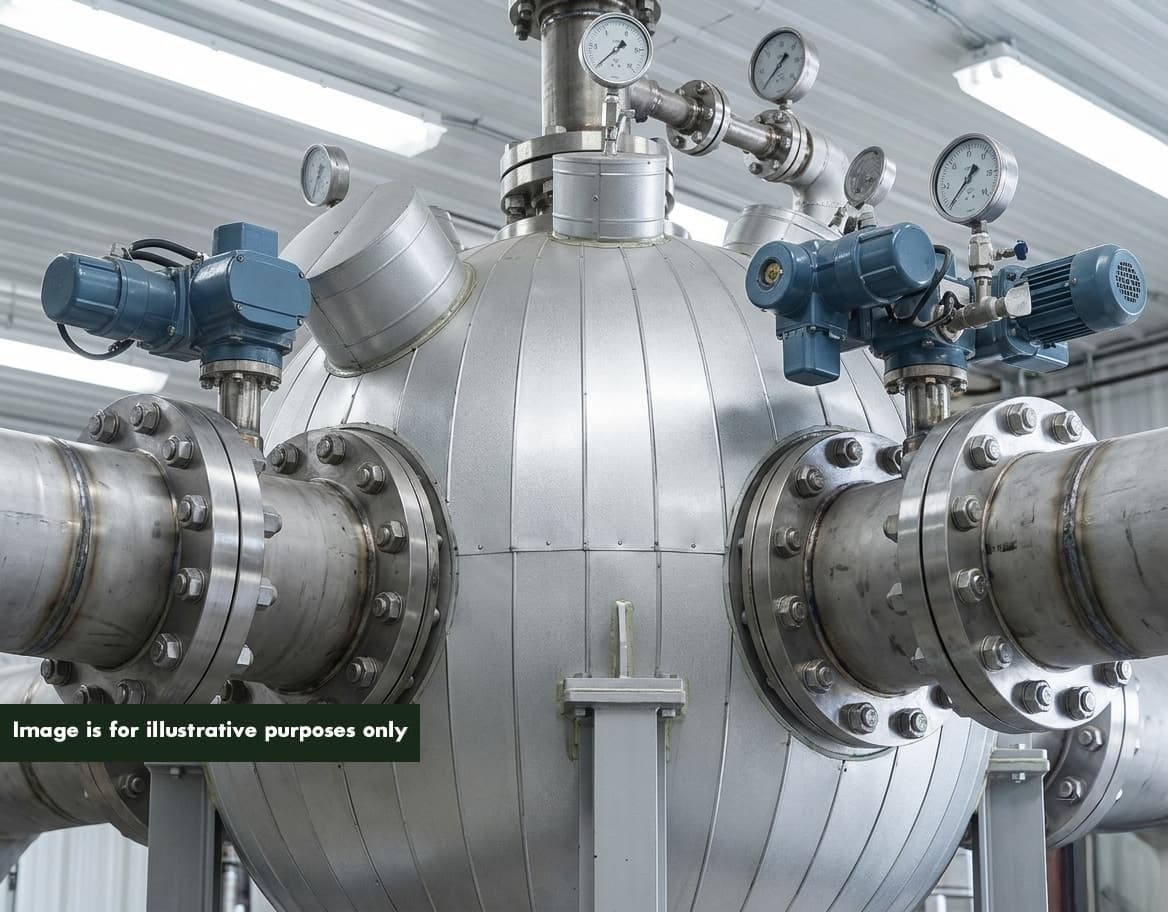
The PHANTOM system eliminates this problem by design, not by mitigation. The pressure vessel is sealed and pressurised to 20–27 bar before any heating begins. All volatile compounds remain contained within the closed vessel throughout the cycle. When the cycle completes, the hydrolysed material has been fully sterilised — all biological decomposition permanently arrested. No residual H₂S-producing bacteria. No TMA-producing microorganisms. Nothing generating ongoing volatile emissions.
The output does not smell of decomposition because decomposition has been thermally terminated. For facilities operating near residential zones, near water bodies, or under strict atmospheric emissions regulation including the UK's Environment Act 2021 and the EU's Industrial Emissions Directive, this distinction is operational, not cosmetic.
Can Subcritical Water Break Down Tough Materials Like Bones and Fish Scales?
Yes — and this is where subcritical water's chemistry offers an advantage no other wet-process technology matches. At 250°C, water's ionic product is ~1,000× higher than at ambient temperature, providing simultaneous acid and base catalysis. It dissolves collagen from bone, chitin from crustacean shells, and keratin from fish scales without any added acid, alkali, or enzymes. The mineral fraction — hydroxyapatite from bone, calcium carbonate from shells — is left as a concentrated, recoverable solid.
Bone is a composite of ~65% mineral (crystalline hydroxyapatite) and ~35% organic matrix (primarily type I collagen). Subcritical water at 200–250°C hydrolyses the collagen matrix into gelatin then into soluble peptides and amino acids within 20–40 minutes, leaving the mineral fraction as a concentrated solid residue. Analytical characterisation of this residue from cod bone processing showed practically pure crystalline hydroxyapatite with a Ca/P ratio of ~1.70, closely matching human bone at 1.67 (Melgosa et al., 2021). This co-production of soluble protein hydrolysate and recoverable mineral from a single feedstock in a single reactor stage is structurally unique to the SWH process.
Crustacean shells — shrimp, crab, lobster, scallop — are built from chitin, a crystalline polymer with high resistance to chemical and enzymatic attack. Conventional chitin extraction requires concentrated 40–60% sodium hydroxide for deproteinisation, generating hazardous chemical waste. Subcritical water at 170°C achieves 96% deproteinisation of crab shells using no chemicals (Espíndola-Cortés et al., 2017), producing chitosan with 12.2% yield and superior thermal stability.
Fish scales are a collagen-rich matrix mineralised with hydroxyapatite. Subcritical water extracts both the collagen (as gelatin/peptides) and the mineral fraction at 200–250°C with no reagents, yielding simultaneous hydroxyapatite and collagen recovery suitable for biomedical applications.
Fish skin and connective tissue are primarily type I and III collagen. Subcritical water extraction at 170–200°C produces marine collagen peptides with molecular weights of 1–10 kDa — the optimal range for commercial collagen supplement applications. Marine collagen commands a strong market premium because it is compatible with halal and kosher dietary restrictions — directly relevant to Middle East and international Jewish markets.
The practical implication: the same batch entering the PHANTOM vessel — containing bones, scales, offal, blood, and connective tissue together — exits as a single combined hydrolysate stream. Pre-sorting by material type is not required.
Turning Slaughter Byproducts into Certified Livestock Feed or Solid Fuel
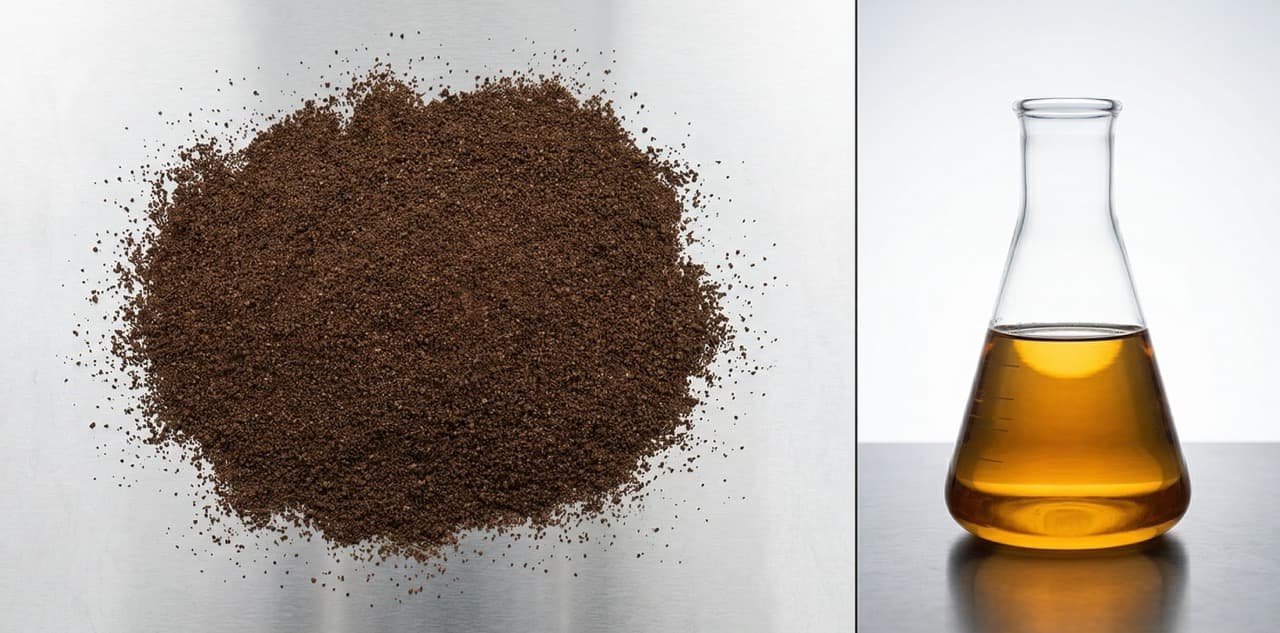
Incinerators produce sterile ash with zero economic value. The PHANTOM hydrolysis process produces protein hydrolysate suitable for animal feed at $1,200–2,500 per tonne, amino acid liquid fertiliser at $400–1,200 per tonne, and recovered lipid fractions at $1,200–1,800 per tonne. The same operation that eliminates a $150–188/tonne fuel cost creates a $200–550/tonne positive revenue stream.
Peer-reviewed analysis of a Greek slaughterhouse found incineration cost €74.10 (~$80 USD) per tonne versus rendering at €51.80 (~$56 USD) per tonne (MDPI Sustainability, 2020). Neither figure accounts for the revenue potential of properly recovered biochemical fractions. PHANTOM's output economics operate across three primary value streams:
Protein hydrolysate for animal feed and aquaculture. The global protein hydrolysate market reached $3.5–4.8 billion in 2024 (Global Market Insights; Markets & Markets), growing at 4.9–8.1% CAGR. Fish protein hydrolysate was valued at $244.6–330 million, with feed-grade applications commanding $1,200–2,500 per tonne. Standard meat and bone meal from conventional rendering sells for just $175–375 per tonne (USDA National Animal By-Product Feedstuff Report, November 2025). The hydrolysate premium reflects higher digestibility and pathogen-free sterility certification. For Middle East operators, hydrolysate from certified halal slaughter receiving PHANTOM treatment retains halal certification throughout — the process introduces only water and heat.
Amino acid liquid fertiliser. The liquid fraction from PHANTOM processing — particularly from blood, offal, and soft tissue — is rich in soluble amino acids and small peptides. These compounds feed both direct plant uptake (as organic nitrogen) and soil microbial communities supporting long-term fertility. Similar to the documented results in converting livestock manure to organic fertiliser, amino acid fertilisers command $400–1,200 per tonne, a premium of 1.5–3× over conventional NPK fertilisers ($300–500 per tonne), driven by biostimulant research demonstrating improved drought resistance, nutrient use efficiency, and crop yield. For the production method and crop-trial evidence behind these outputs, see seawater fertilizer via subcritical water hydrolysis.
Recovered lipid fractions for fuel or industrial use. Animal fats and oils separated during hydrolysis carry significant energy value. Tallow traded at approximately $1,200–1,800 per tonne in 2024–2025 (IMARC Group), driven by HVO (hydrotreated vegetable oil) and biodiesel blending demand. When plastic waste is co-processed with organic material, the output shifts toward a solid fuel fraction. The system handles PEs, PET, PP, and PS — covered in more depth in our guide to industrial plastics subcritical water hydrolysis — converting them into a combustible solid product with calorific value of approximately 30–40 MJ/kg for mixed plastic-derived fuel.
The Regulatory Landscape: What EU, US, and GCC Operators Are Required to Demonstrate
The EU's ABP Regulation (EC 1069/2009) requires Processing Method 1 — 133°C at 3 bar for 20 minutes — for Category 1 and Category 2 materials. PHANTOM operates at 200–250°C and 20–27 bar, exceeding this by a margin of 47–117°C and 7–37 bar. In the US, NPDES permit compliance under 40 CFR Part 432 demands strict effluent limits for BOD, TSS, and oil and grease — all substantially easier to meet when waste is processed on-site rather than discharged. In the GCC, Vision 2030 targets 90% landfill diversion by 2040 and prohibits liquid discharge from food processing operations into public sewage systems.
For EU and UK operators:
Regulation (EC) No 1069/2009, effective since March 2011 and retained in UK law under the European Union (Withdrawal) Act 2018, classifies all animal byproducts not intended for human consumption into three risk-based categories. Category 3 material — fresh fishery byproducts from processing plants and healthy animal parts not used for human consumption — may be processed by any of Methods 1–7 and used in animal feed, pet food, organic fertiliser, and technical applications. Category 2 material — including fallen stock, wastewater sludge, and products with veterinary drug residues above permitted limits — requires Method 1 sterilisation (133°C/3 bar/20 min/≤50 mm particle size) before composting or biogas use. Category 1 material — SRM, TSE-suspected animals — requires incineration or Method 1 followed by incineration.
The PHANTOM system's operating parameters of 200–250°C at 20–27 bar comfortably exceed Method 1 on every dimension. Article 20 of EC 1069/2009 — the alternative processing method approval pathway, requiring an EFSA risk assessment to demonstrate equivalent pathogen and prion reduction — is the relevant regulatory route for formal Category 1 and 2 approval. The thermodynamic margin provides an extremely strong evidential base for such a submission.
For North American operators:
The primary regulatory driver is the Clean Water Act § 402, administered via NPDES permits. The ~5,055 meat and poultry processing facilities subject to 40 CFR Part 432 must meet strict mass-based effluent limits: BOD₅ at 0.24 lbs per 1,000 lbs live weight killed (daily maximum), TSS at 0.40 lbs/1,000 lbs LWK, and oil and grease at 0.12 lbs/1,000 lbs LWK. On-site PHANTOM processing radically simplifies compliance — the sealed pressure vessel eliminates the biological activity that generates BOD and TSS loading in open-process operations. FDA regulations under 21 CFR 589.2000 and 589.2001 — governing BSE-related feed restrictions — are satisfied by the complete protein hydrolysis occurring at PHANTOM's operating range, which denatures and fragments any prion proteins present.
For GCC operators:
Saudi Arabia's MODON regulations explicitly prohibit slaughterhouse and food processing operations from discharging liquid waste into public sewage networks. MWAN targets 90% waste diversion from landfill by 2040, with investment opportunities estimated at SR 420 billion (~$112 billion USD) through 2040. The UAE targets 75% MSW diversion from landfills. The GCC waste management market is valued at $73.23 billion in 2026, growing to $104 billion by 2031 at 7.29% CAGR (Mordor Intelligence).
For Hajj and Eid al-Adha operations specifically, the PHANTOM system offers the compressed processing window that the Adahi project's 48-hour slaughter window demands. Eight Saudi slaughterhouses processing up to 1.5 million sheep in 48 hours produce waste volumes that cannot be managed by open-air composting or off-site rendering transport. On-site closed-loop hydrolysis — with resulting protein and fertiliser fractions distributable through humanitarian channels — matches both the scale and the regulatory requirements of the world's largest single-point slaughter event.
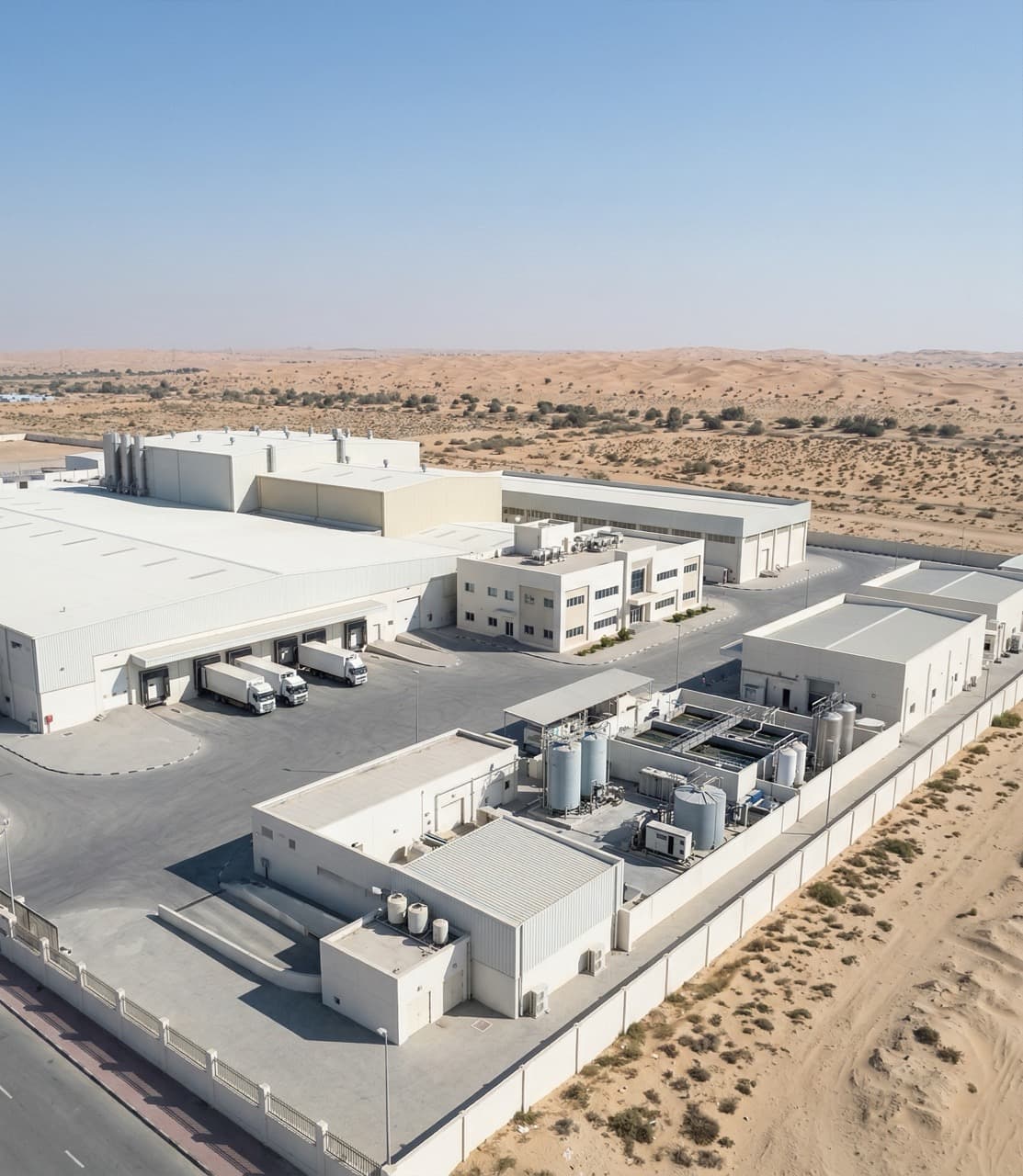
For Operations Handling Medical Waste and Mixed Organic Streams
For facility managers overseeing multiple waste streams — particularly in hospital-adjacent food service, pharmaceutical-adjacent food production, or integrated municipal waste scenarios — the PHANTOM system's treatment range extends beyond organic food industry waste. The same subcritical water hydrolysis mechanism that processes fish viscera and blood at 200–250°C also handles medical waste, used diapers, and other mixed organic municipal streams. The relevant treatment guidance for these streams is covered in our detailed guide on infectious medical waste treatment without incineration, where cross-contamination protocols, regulatory classifications, and dual-stream processing cycles are examined in depth.
Hydrothermal Treatment: A Faster Alternative to Landfill and Composting
For fisheries, slaughterhouses, and commercial food processors, landfill and composting present practical problems: high moisture content makes incineration energy-inefficient, composting takes months and generates odour, and anaerobic digestion requires large dedicated infrastructure.
Subcritical water hydrolysis (SWH) offers a faster, on-site alternative. Under approximately 250°C and 20–27 atmospheres of pressure, water dissociates into H⁺ and OH⁻ ions that act as natural solvents, breaking down organic molecular chains — the same chemical process that occurs in natural geological hydrothermal systems, accelerated to an industrial timescale.
Processing time comparison for wet organic food waste:
| Method | Processing Time | Output | GHG Emissions |
|---|---|---|---|
| Landfill | Ongoing (years) | Leachate, landfill gas | High (CH₄, CO₂) |
| Composting | 2–6 months | Compost | Low–moderate (CO₂) |
| Anaerobic digestion | 15–30 days | Biogas + digestate | Low (if captured) |
| Subcritical water hydrolysis | 30–35 minutes | Sterile powder or liquid | Near-zero from vessel |
The output — approximately 10% of the input volume as dry powder — is sterile and can be repurposed as compost, liquid fertiliser, or livestock feed depending on input material. Unlike composting, the process is enclosed, eliminating odour and the risk of pathogen dispersal. Unlike anaerobic digestion, it requires no external enzyme inputs or weeks-long retention time.
Industrial-scale systems can process 0.5–3 tonnes per cycle, making them viable for medium-to-large food processing operations seeking to manage waste on-site and reduce haulage costs. For a full financial model of on-site treatment costs versus haulage, see the ROI of an industrial waste processing machine.
Sources: WHO Guidelines on Environmental Health; EPA WARM Model v16; Phantom Ecotech Research Team (2026).
Stop Calculating Losses. Install the Solution.
Every tonne of slaughterhouse or fishery waste sent to an incinerator costs $150–188 in diesel, generates regulatory liability for dioxin emissions, and converts $200–550 of recoverable value into sterile ash. The PHANTOM system eliminates the fuel cost, eliminates the emission liability, eliminates the odour complaints, exceeds EU sterilisation standards, and converts the same waste into protein hydrolysate, liquid amino acid fertiliser, and recovered fat. The economics work in every climate, at every regulatory threshold, in every target market.
The numbers are not close.
| Factor | Wet-Waste Incineration | PHANTOM Subcritical Hydrolysis |
|---|---|---|
| Fuel cost per tonne (80% moisture waste) | $150–188 (100–125 L diesel) | ~$12–25 (electrical + boiler) |
| Total operating cost per tonne | ~€159 (~$172 USD) (MDPI 2024 field study, fat-rich carcasses) | Lower — no combustion, no emissions equipment |
| Recoverable product value | $0 (sterile ash only) | $200–550 (hydrolysate, lipids, fertiliser) |
| Dioxin / NOx / SOx emission risk | Present — requires pollution control equipment | Zero — no combustion |
| EU Method 1 compliance (133°C / 3 bar / 20 min) | Exceeds via incineration | Exceeds by 47–117°C and 7–37 bar |
| Odour control requirement | Scrubbers, buffer zones mandatory | Sealed vessel — zero fugitive emissions |
| GCC / zero liquid discharge | Poor — exhaust gas, ash disposal required | Excellent — closed loop, no liquid effluent |
| Prion / pathogen destruction | Complete (>850°C) | Complete — up to 116°C above prion threshold |
| Processing cycle time | 2–8+ hours per batch | 30–35 minutes |
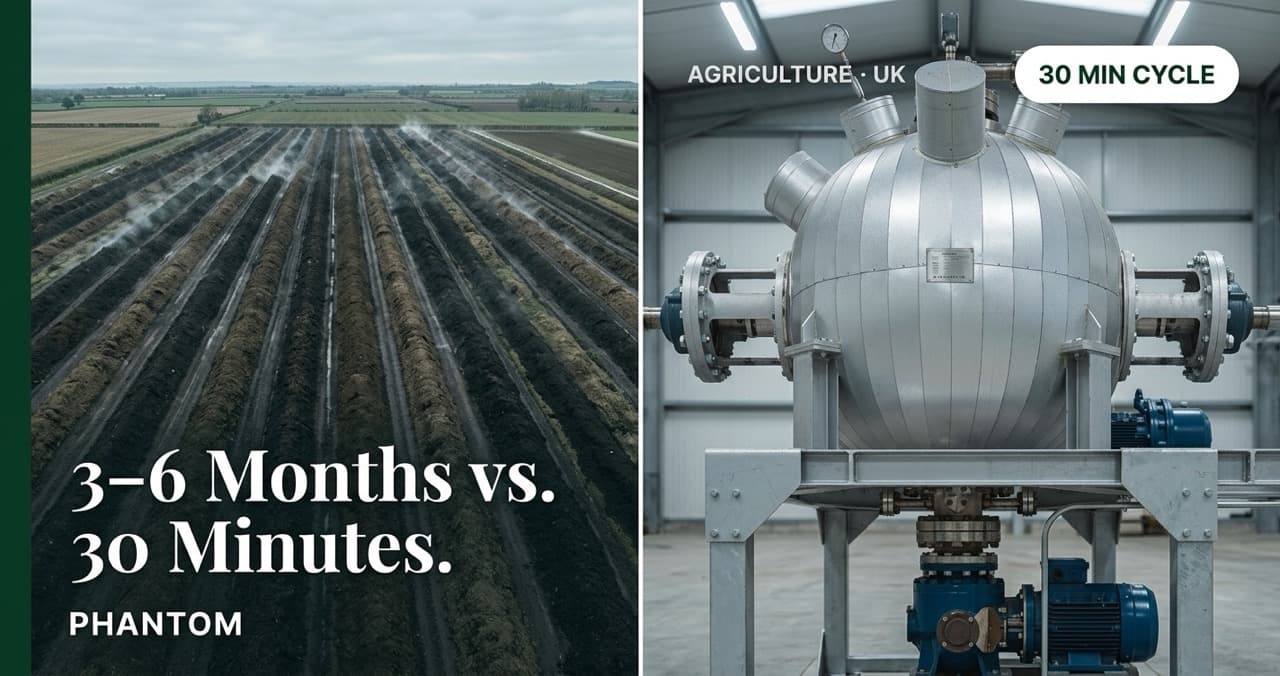
The PHANTOM 3M3 system specifications highlight a capacity of 3 tonnes per cycle in a 190 cm diameter pressure vessel rated to SUS 304 stainless steel, operated by a standard kerosene boiler at an estimated operating cost of ¥5,000 per cycle — approximately $33 USD at current exchange rates per cycle. Total system footprint: 5 × 7 × 7 metres. Total system weight: 12 tonnes. Installation-ready for on-site deployment at any facility generating more than 1.5–2 tonnes of biological waste per day.
If you are currently contracting disposal at $80–200 per tonne, or running fuel-intensive incineration at $150+ per tonne in operating costs, the arithmetic of the PHANTOM system is not complex. It is a correction.
High-Moisture Waste Treatment: Real Cost vs. Real Value
Data applies to waste streams at 70–80% moisture — blood, fish offal, viscera
| Processing Factor | 🔥 Wet-Waste Incineration (e.g. Inciner8 i8-200A) |
⚙️ Conventional Rendering | 💧 PHANTOM Subcritical Hydrolysis |
|---|---|---|---|
| Process 75–80% moisture waste directly? | ❌ Requires pre-drying to <40% moisture | ⚠️ Drying step adds 30–40% energy cost | ✅ Moisture is the reaction medium |
| Fuel / energy cost per tonne | $150–188 100–125 L diesel (i8-200A) |
€51.80 (~$56 USD) total op. MDPI Sustainability, 2020 |
~$12–25 electrical + boiler only |
| Recoverable product value / tonne | $0 sterile ash only (7–10% weight) |
$150–300 MBM $175–375/t + tallow |
$200–550+ hydrolysate + lipids + fertiliser |
| EU Method 1 compliance 133°C / 3 bar / 20 min |
Exceeds via 850°C+ incineration | Requires separate Method 1 step for Cat. 1/2 | Exceeds by 47–117°C and 7–37 bar |
| Odour / fugitive emissions | Stack: NOx, SOx, dioxins, particulates | 63+ VOCs — H₂S and TMA | Zero — sealed pressure vessel |
| CO₂ / climate impact | Highest — 1,707 g CO₂e/kWh PLOS Climate, 2022 |
Moderate — thermal drying + steam | Lowest — no combustion, carbon in product |
| Processing cycle time | 2–8+ hours per batch | 3–8 hours (batch rendering) | 30–35 minutes |
| GCC / zero liquid discharge | Poor — ash + scrubber liquid waste | Moderate — significant process water | Excellent — uses waste moisture only |
| Prion / BSE destruction | Complete (>850°C) | Requires separate 133°C Method 1 step | Complete — up to 116°C above prion threshold |
Data sources: Inciner8 product specifications · MDPI Processes 2024 · FAO SOFIA 2024 · USDA AMS Nov 2025 · EC 1069/2009 · NIST Water Properties · ACS Analytical Chemistry · Global Market Insights 2024
Eliminate your biosecurity risk, stop buying incinerator fuel, and begin processing wet waste on-site. Contact the Phantom team for a facility-specific assessment, processing capacity analysis, and output revenue projection.
⚠️ Disclaimer: The information provided in this article is for general informational and educational purposes only and does not constitute legal, regulatory, financial, engineering, or agronomic advice. Cost figures, energy calculations, product valuations, and regulatory compliance claims are illustrative and based on published third-party data, laboratory conditions, and field studies cited herein. Actual results will vary based on feedstock composition, local regulatory requirements, equipment configuration, energy pricing, and operational practices. Regulatory frameworks (EU, US, GCC) are subject to change. Always conduct independent testing, seek qualified professional advice, and verify compliance with applicable local, national, and international standards before commencing commercial operations or making capital equipment purchasing decisions.
Frequently Asked Questions
The PHANTOM 3M3 model processes 3 tonnes per cycle in approximately 15–20 minutes of active hydrolysis (total cycle time including loading and unloading approximately 30–35 minutes). At roughly two 3-tonne cycles per hour (~6 t/h), a single unit processes around 60 tonnes in a standard 10-hour day, rising to approximately 120–132 tonnes at 20–22 hours of continuous operation, depending on waste composition and loading efficiency. A 40-tonnes-per-day requirement is therefore well within a single unit's capacity. Contact the Phantom engineering team for a site-specific capacity assessment.
Yes. The PHANTOM system processes organic waste streams (blood, offal, bones, fish viscera, shells, scales, connective tissue) and plastic waste (PEs, PET, PP, PS) in the same vessel. Organic fractions are hydrolysed to recoverable protein, lipid, and mineral products. Plastic fractions are volume-reduced with residual solid processed as fuel feedstock. Metal, glass, and stone are not processed and must be pre-screened; they exit unchanged as inorganic residue.
PHANTOM operating parameters of 200–250°C at 20–27 bar provide an operating margin of 47–116°C above the standard temperature used for prion inactivation (134°C steam sterilisation per CDC/WHO protocol). At these temperatures, prion protein (PrPSc) structures undergo physical hydrolysis — fragmented into amino acid fractions. For formal EU Category 1/2 regulatory approval via Article 20 of EC 1069/2009, Phantom supports operators in preparing documentation for national competent authority and EFSA review.
The PHANTOM process introduces no prohibited substances to the waste stream — processing uses only water and thermal energy. No organic solvents, no alkaline chemicals, no biological additives. Halal certification of the resulting protein hydrolysate and agricultural products requires assessment by the relevant national halal certification body in the destination market, but the PHANTOM process itself creates no barrier to certification.
Cite this article: Phantom Ecotech Research Team. (2026, March). "Fishery & Slaughterhouse Wet Waste Treatment." Phantom Ecotech. https://phantomecotech.com/blog/fishery-slaughterhouse-wet-waste-treatment#hydrothermal-food-waste-disposal
Published: March 2026. Last updated: March 2026. Author: Phantom Ecotech Research Team.
Key Sources & Citations: FAO SOFIA 2024 · FAO Food Outlook November 2024 · MDPI Sustainability 2022 (slaughterhouse byproducts) · MDPI Sustainability 2020 (Greek slaughterhouse cost study) · Ferraro et al., 2020 (global fish processing discards) · Melgosa et al., 2021, Foods, MDPI (cod bone subcritical water) · Koh et al., 2019 (BSA subcritical hydrolysis) · Polymers 2023, MDPI (feather keratin) · Scientific Reports 2021 (crustacean chitin) · Joshi & Ahmed, 2016 (autogenous combustion threshold) · Blanes-Vidal et al., 2009 (H₂S odour) · EC 1069/2009 ABP Regulation · 40 CFR Part 432 (NPDES) · Mordor Intelligence GCC Waste Management Market 2026 · NIST Thermophysical Properties of Water · PLOS Climate, 2022 · ScienceDirect 2024 (MSW moisture-efficiency study)
Related reading: subcritical water hydrolysis machine — ROI Calculator & Specs | Zero-Emission Industrial Waste Treatment | Livestock Manure to Organic Fertiliser | UK Farm Slurry Disposal vs On-Site Treatment | ROI of an Industrial Waste Processing Machine | Contact Phantom for a site assessment →