Landfill Cost Analysis
The Real Cost of Landfill in 2026 — And What You Can Do About It
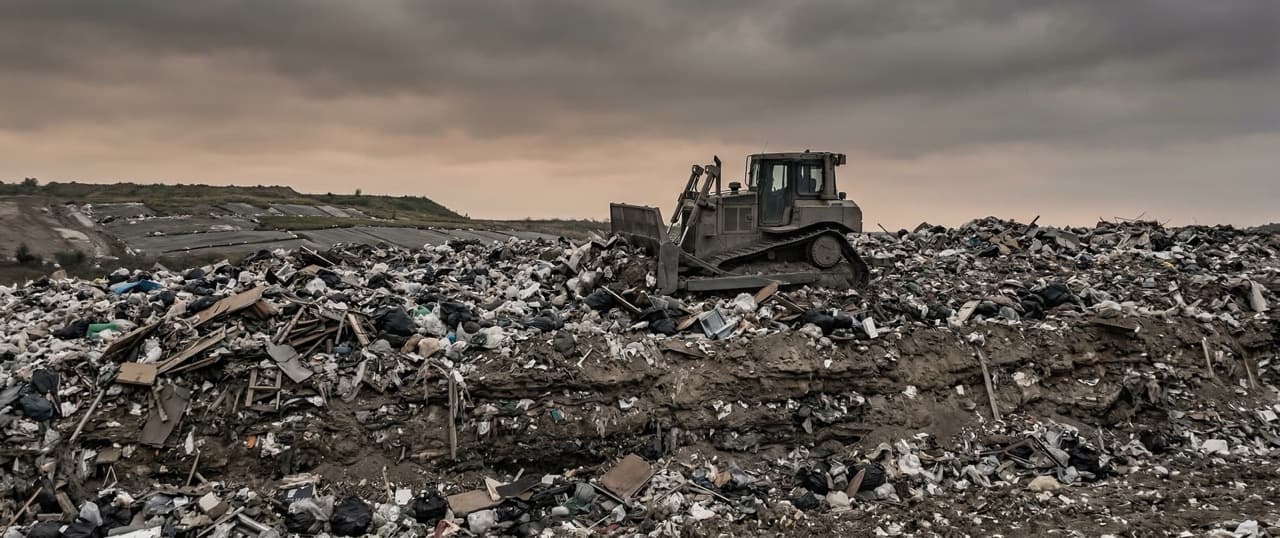
UK landfill tax is £130.75/tonne. Add gate fees, haulage, and CSRD Scope 3 liability, and you are paying £205–285/t to bury something PHANTOM converts on-site for ~£11/t.
£130.75/t
Landfill Tax 2026/27
Up 21.6% in a single year
£205–285
All-In Cost / Tonne
Organic/mixed industrial waste
~£11/t
PHANTOM On-Site Cost
At continuous operation
99.7%
Scope 3 Reduction
vs landfill per 500t/yr
Full Cost Analysis
What Landfill Actually Costs Per Tonne in 2026
| Cost Component | Per Tonne (UK 2026) |
|---|---|
| UK landfill tax — standard rate | £130.75 |
| Landfill gate fee | £20–40 |
| Waste collection / haulage | £30–60 (distance dependent) |
| Internal handling labour | £10–25 |
| Waste contractor management fee | £15–30 |
| Total — organic / mixed industrial | £205–285/tonne |
| Total — clinical / hazardous | £400–700+/tonne |
At 500 tonnes/year: £102,500–£142,500 in disposal costs — every year, with no return. PHANTOM converts that same waste for approximately $33/cycle (≈ ¥5,000) per 3 tonnes — approximately £5,500/year operating cost. Avoided disposal cost: £97,000–£137,000/year. For the full CFO-level model, see the PHANTOM ROI guide.
Cost Trajectory
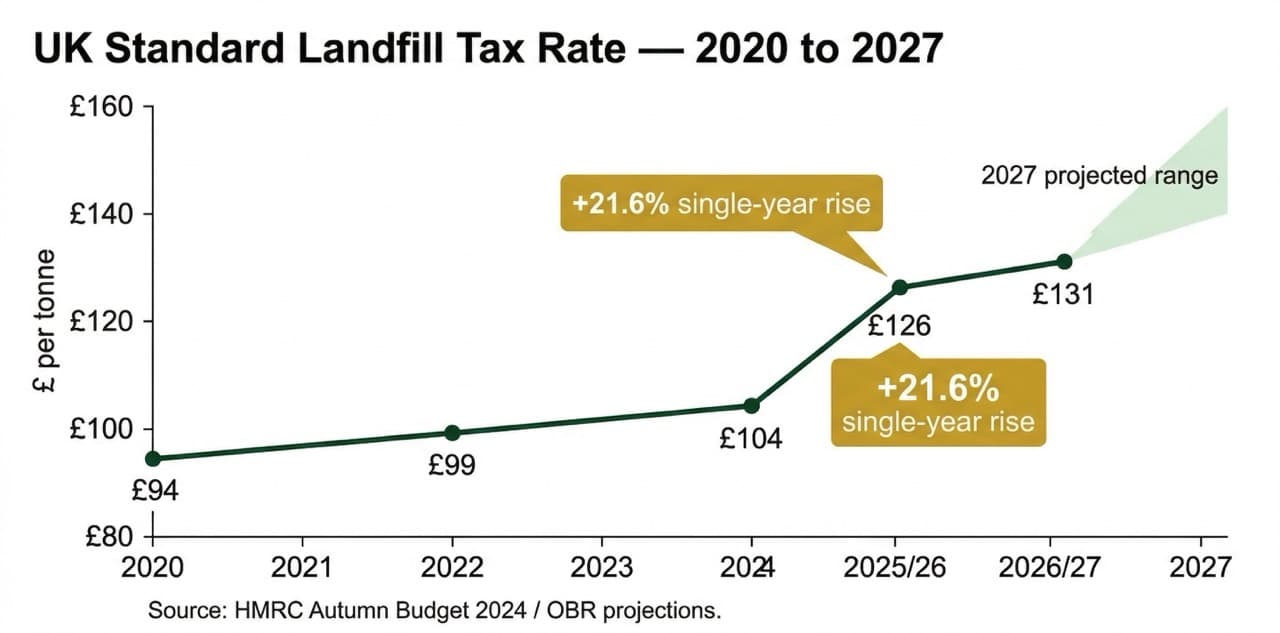
UK Landfill Tax 2020–2027: It Only Goes One Way
| Year | UK Landfill Tax (Standard Rate) | Annual Change |
|---|---|---|
| 2020 | £94.15/t | — |
| 2022 | £98.60/t | +2.3% |
| 2024 | £103.70/t | +5.2% |
| 2025/26 | £126.15/t | +21.6% — largest single-year rise |
| 2026/27 | £130.75/t | +3.6% |
| 2027+ | £140–160/t (OBR projected) | Upward trajectory expected |
Source: HMRC / OBR Autumn Budget 2024
Every year a facility delays on-site treatment, its landfill cost baseline rises. The 2025/26 increase alone — £22.45/t — represents an additional £11,225/year in disposal costs for a facility handling 500 tonnes. The PHANTOM ROI calculation improves with every landfill tax increase.
ESG Liability
Landfill as a Mandatory Scope 3 Disclosure
Methane Generation
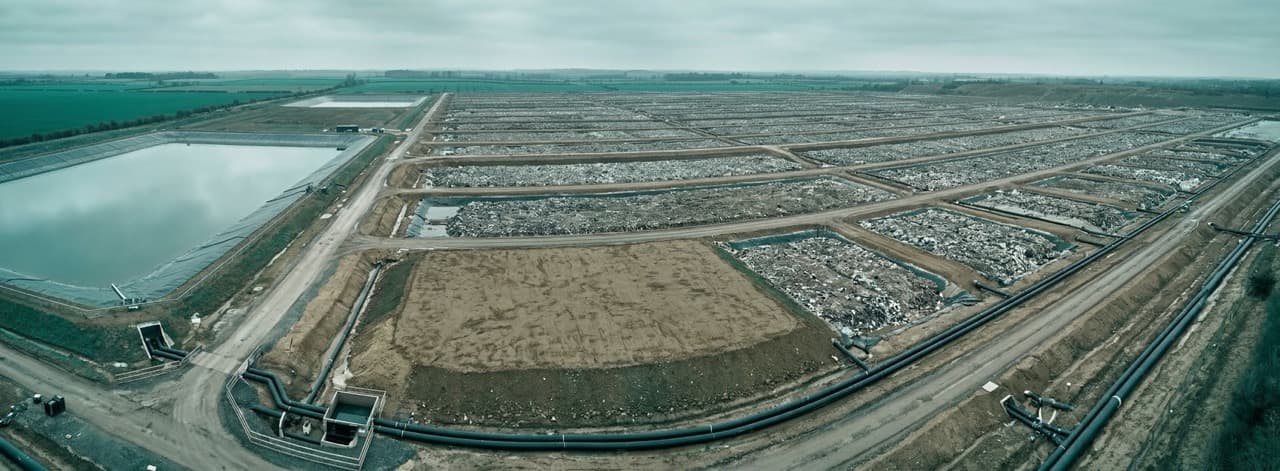
Organic waste in landfill decomposes anaerobically generating methane — GWP 84× CO₂ over 20 years. Real-world landfill gas capture: 60–85%. Scope 3 contribution from 500t organic waste landfilled: approximately 250–400 tonnes CO₂e.
CSRD Category 5
From 2025, mandatory CSRD Scope 3 reporting (Category 5) requires companies above EU disclosure thresholds to account for waste-related emissions. Landfill creates a documented, growing ESG liability that cannot be managed away without changing the waste treatment method.
PHANTOM on-site treatment reduces Scope 3 Category 5 emissions by approximately 99.7% versus landfill for a 500-tonne/year facility — from ~250–400 tonnes CO₂e to under 1 tonne. A site-specific carbon analysis is included with every PHANTOM technical proposal for customers with net-zero or CSRD obligations.

The Transition
Three Things That Happen Simultaneously
01
Disposal cost eliminated
The £130.75/t tax, gate fee, haulage, and contractor management fee all disappear from your P&L.
02
Operating cost replaces it
PHANTOM costs ~$33/cycle for 3 tonnes — approximately £11/t. Approximately 5–8% of current all-in landfill cost.
03
Output pathway emerges
For clean organic inputs, sterile solid residue can pursue compost or bio-coal end-of-waste pathways. Liquid output can be applied as fertiliser for clean organic inputs after nutrient analysis and regulatory assessment.
Regulatory Timeline
The End of Landfill as Default Strategy
EU Landfill Directive bans all recyclable/recoverable waste from landfill from 2030. UK Environment Act targets mirror this. Germany, Austria, Netherlands, Belgium, and Sweden have already enacted national bans on organic waste landfilling.
| Year | Event | Implication for Operators |
|---|---|---|
| 2025 | CSRD Scope 3 Category 5 mandatory | Landfill emissions must appear in ESG disclosures |
| 2026/27 | UK landfill tax £130.75/t — upward trajectory | Disposal costs increase every budget cycle |
| 2028 | EU ETS includes incineration | Alternative-to-landfill route also gets more expensive |
| 2030 | EU Landfill Directive — recoverable waste banned | Forces treatment decision for EU operators |
| 2031+ | UK equivalents expected | Domestic regulatory pressure on industrial landfill |
PHANTOM's manufacturing lead time is approximately 6 months from contract. Operators targeting a pre-2028 transition should begin their site assessment in 2026.
Frequently Asked Questions
What is the total all-in cost of landfill per tonne in the UK in 2026?▾
The full cost includes: UK landfill tax standard rate £130.75/t (HMRC 2026/27), landfill gate fee £20–40/t, haulage £30–60/t, internal handling labour £10–25/t, waste contractor management fee £15–30/t — totalling £205–285/t for organic and mixed industrial waste. For clinical and hazardous waste, all-in costs reach £400–700+/t.
How does landfill create Scope 3 ESG liability under CSRD?▾
CSRD mandatory Scope 3 reporting (Category 5 — waste generated in operations) requires companies above EU disclosure thresholds to account for methane generated by organic waste decomposing in landfill. Methane has a Global Warming Potential 84 times that of CO₂ over 20 years. Even at 60–85% capture rates, landfilled organic waste creates a documented Scope 3 liability that must appear in mandatory ESG disclosures. PHANTOM's on-site treatment eliminates this liability.
Will the UK landfill tax keep rising?▾
Yes. The 2025/26 single-year increase of 21.6% — from £103.70 to £126.15/t — was the largest in the tax's history, confirmed by the OBR. The 2026/27 rate is £130.75/t. OBR projections indicate continued increases toward £140–160/t by 2027+. There is no regulatory pathway that reduces this figure. Every year a facility delays on-site treatment, its landfill cost baseline rises.
How quickly can a facility exit its landfill contract after installing PHANTOM?▾
PHANTOM's installation timeline: free site assessment (weeks 1–2), proposal and contract (weeks 2–7), manufacturing (months 1–7), installation and commissioning (month 7–8), operational (month 8+). For most facilities, a pre-2027 operational start is achievable for 2026 contracts. Operators targeting a pre-landfill-escalation transition should begin their assessment now.
Start Your Landfill Exit Today
Free site assessment. Waste stream analysis, volume audit, ROI projection. No commitment. Results within 5 business days.
UK landfill tax rates from HMRC 2026/27. OBR projections are indicative. CSRD applicability depends on company size and jurisdiction. Scope 3 figures are estimates. Figures for informational purposes only and do not constitute financial, legal, or procurement advice. ~1.27 USD/GBP.