PHANTOM vs Incineration: Why the Industry Is Moving On
Incineration burns waste and generates dioxins, fly ash, and growing EU carbon costs. PHANTOM converts the same organic waste streams in 30 minutes — without combustion, without carbon liability.
Before the detail
When Incineration Is Still the Right Choice
PHANTOM is not the right solution for every operation. Incineration remains appropriate in specific scenarios:
- Waste volumes above 50 t/day with no interest in output recovery
- Waste is predominantly dry inorganic material (metal, glass, stone) that cannot be pre-sorted
In every other scenario — organic, medical, food, agricultural, and mixed plastic waste at facility scale — PHANTOM outperforms on emissions, cost trajectory, output value, and regulatory exposure from 2028 onward.
Head-to-Head
PHANTOM vs Incineration
Sixteen criteria. See where the economics, emissions, and regulatory exposure diverge.
| Criterion | PHANTOM | Incineration |
|---|---|---|
| Processing time | 30–35 min/cycle | Hours (continuous burn) |
| Dioxin emissions | Zero — no combustion | Present — scrubbers required, trace still emitted |
| CO₂ from waste | None — boiler fuel only | ~0.9–2.9 t CO₂/t waste burned |
| Fly ash | None | ~25–30 kg/tonne (classified hazardous) |
| Fly ash disposal cost | None | £150–300/tonne of ash |
| Odour | Zero — sealed pressure vessel | Combustion suppresses odour; stack emissions remain |
| Solid output | Sterile inert residue — compost/bio-coal pathway for clean organic inputs | Hazardous fly ash — additional disposal cost |
| Liquid output | Sterile effluent (trade effluent consent req’d); fertiliser route for clean organic inputs | None |
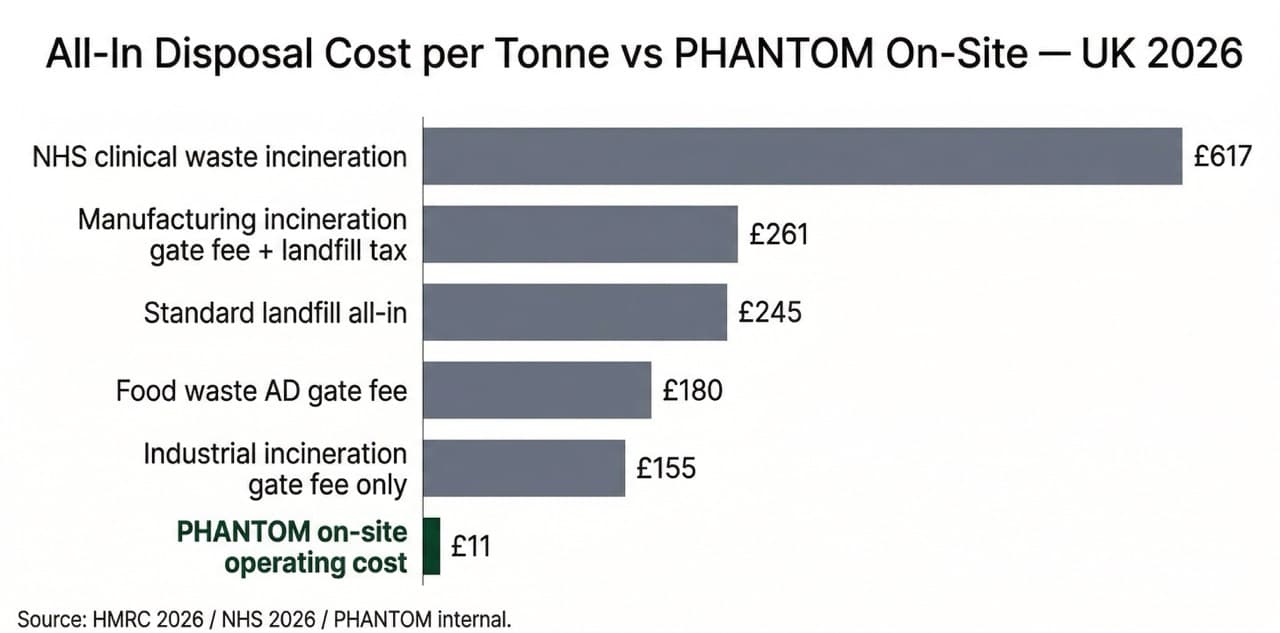
| Operating cost | ~$33/cycle (~£11–16/t) | £130–617/t gate fee (UK 2026) |
| EU ETS from 2028 | Zero — no combustion | Direct carbon liability per tonne incinerated |
| Capital cost | ~£1.37M (~$1.75M) | £15M–£150M+ dedicated facility |
| Planning / permitting | Low — no air quality permit required | Years of environmental impact assessment |
| NIMBY risk | Zero — no visible emissions, indoor | High — persistent community opposition to new incinerators |
| Pathogen sterilisation | >99.9999% (IStAATT Level III validated) | >99.9% (high-temperature combustion) |
| Wet / high-moisture waste | Yes — water is the reaction medium | Requires additional fuel to combust wet waste |
| 10-year maintenance interval | Yes — boiler inspection only | No — continuous refractory, scrubbers, fans |
Regulatory Timeline
Where Incineration Is Heading After 2028
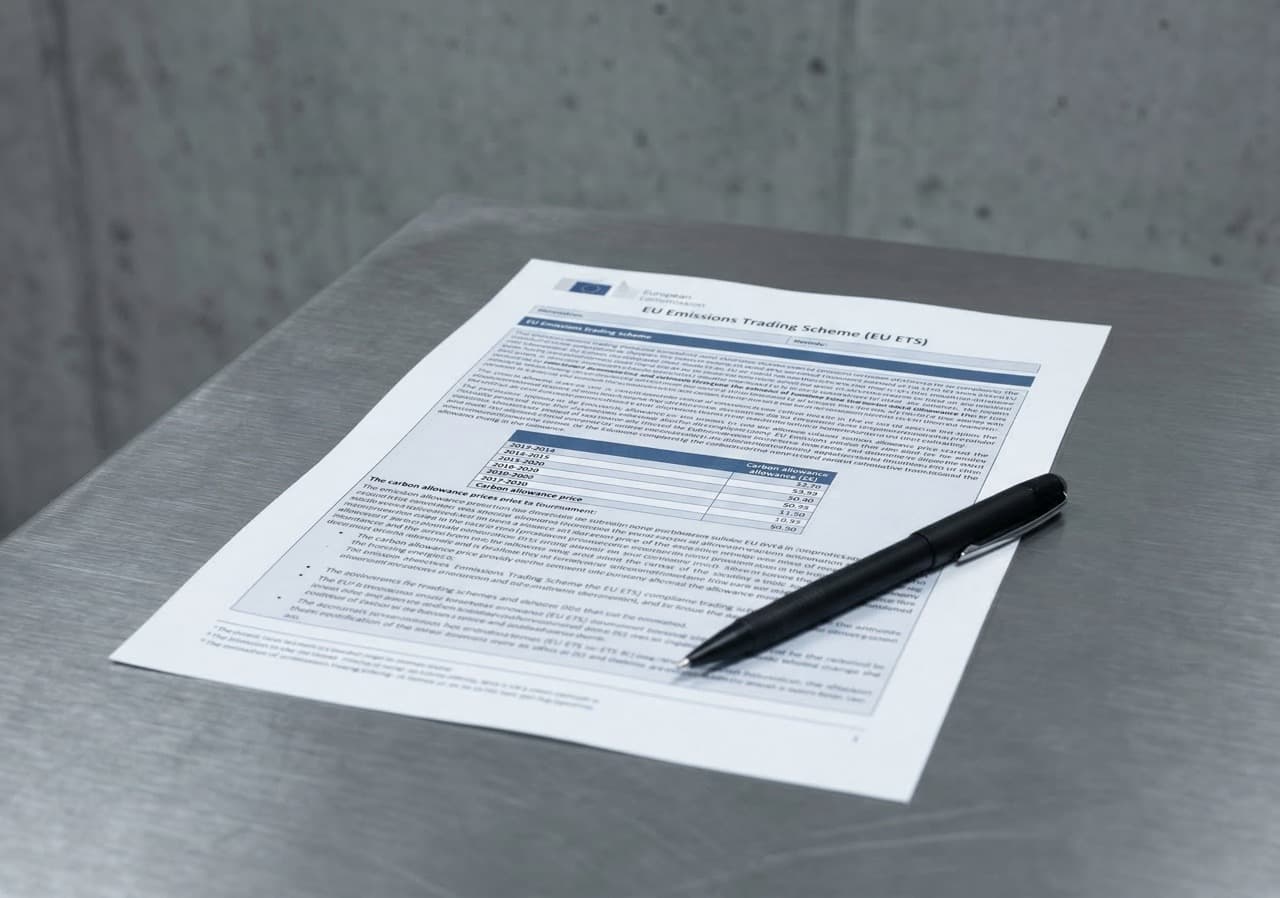
The EU Emissions Trading Scheme (EU ETS) extends to the waste sector in 2028. At current carbon price trajectories of €70–100 per tonne of CO₂, operators incinerating 10,000 tonnes per year face an additional €700,000–€1,000,000 in annual costs — on top of tightening emission limits under the revised Industrial Emissions Directive. The cost gap between incineration and PHANTOM will widen every year from 2028 onward.
| Year | Event | Impact on incineration operators |
|---|---|---|
| 2025 | CSRD Scope 3 mandatory reporting | Incineration CO₂ must appear in ESG reports |
| 2026 | UK landfill tax £130.75/t | All-in gate fee + tax = £150–160/t standard industrial |
| 2027 | EU IED revised — tighter emission limits | Higher compliance cost for incinerators |
| 2028 | EU ETS includes waste sector | Carbon cost added per tonne incinerated — est. €70–100/t CO₂ |
| 2030 | EU Landfill Directive — recoverable waste banned | Forces treatment decision |
| 2035 | UK Environment Act municipal waste targets | Pressure on local authority incineration contracts |
Note: PHANTOM installations take 6–8 months from contract to commissioning. Operators evaluating a pre-2028 transition should begin their site assessment now.
The Numbers
Three Emissions Categories PHANTOM Eliminates
Dioxins & Furans
Form when chlorinated materials combust below 850°C during cool-down. Even modern incinerators with scrubbers emit trace dioxins. WHO has no safe exposure threshold. PHANTOM: physically impossible — no combustion.
Fly Ash
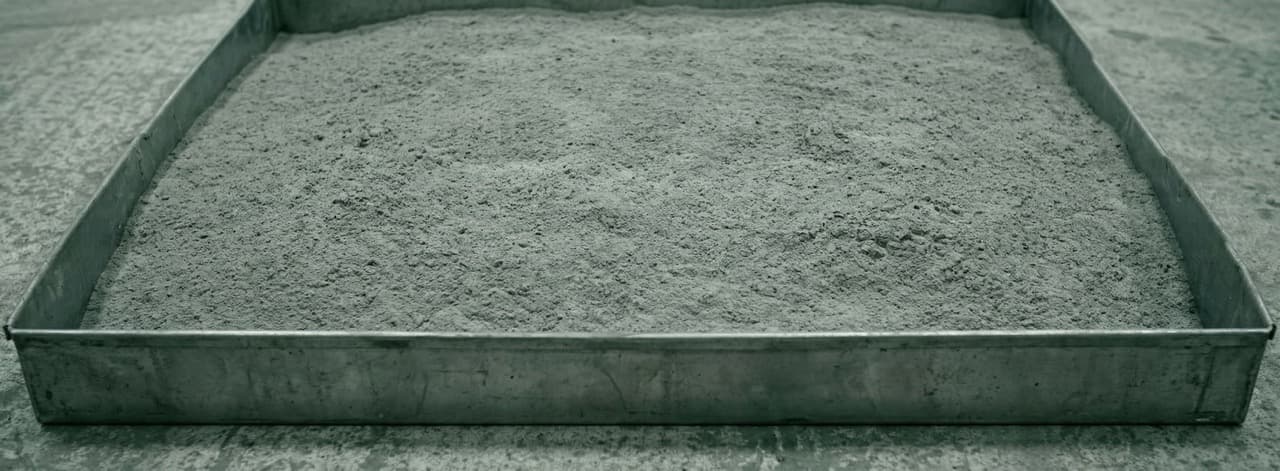
~25–30 kg hazardous ash per tonne incinerated. Classified hazardous waste in the UK and EU. Specialist landfill required: additional £150–300/t. PHANTOM: zero fly ash.
Direct CO₂ from Waste
Burning 1 tonne of mixed municipal waste produces ~0.9–1.3 t CO₂. Burning 1 tonne of plastic produces ~2.9 t CO₂. PHANTOM: no direct process CO₂ from waste — boiler fuel only.
Common Questions
Can PHANTOM replace our existing incineration contract entirely?▾
For most facility-scale operators (hospitals, farms, food processors), yes — provided your organic waste stream is within PHANTOM’s 24-tonne/day capacity at continuous operation. PHANTOM eliminates the incineration gate fee (£130–617/tonne), haulage cost, and downstream disposal requirement, replacing them with on-site operating costs of approximately £33 per 3-tonne cycle (~£11–16/tonne).
What is the EU ETS impact on incineration costs from 2028?▾
From 2028, the EU Emissions Trading Scheme extends to the waste sector. At current EU ETS carbon price trajectories (€70–100/tonne CO₂), a facility incinerating 10,000 tonnes per year faces approximately €700,000–€1,000,000 in additional annual carbon costs. PHANTOM has zero combustion and therefore zero ETS carbon liability.
Does PHANTOM produce fly ash like incineration?▾
No. PHANTOM produces no fly ash. Incineration generates approximately 25–30 kg of hazardous fly ash per tonne of waste burned, requiring licensed specialist landfill at £150–300 per tonne of ash. PHANTOM’s solid output is sterile, inert residue — not classified as hazardous waste.
Will we face planning opposition for a PHANTOM installation?▾
Unlikely. PHANTOM has no smokestack, no combustion, and no visible atmospheric emissions. It does not trigger air quality permitting requirements and falls outside the planning categories that generate community opposition to incinerators. Many installations are approved as standard industrial equipment under permitted development rights.
Related Comparisons
Compare PHANTOM to Other Technologies
Autoclaves sterilise but don’t decompose. See how PHANTOM eliminates the downstream disposal contract entirely.
AD requires 30–60 day retention and planning consent for digestate. PHANTOM treats in 30 minutes on-site.
Composting takes 6–12 weeks and produces only compost. PHANTOM can treat contaminated and mixed organic waste.
Landfill tax is rising to £130.75/t in 2026 and bans are expanding. PHANTOM eliminates the gate fee entirely.
Ready to Calculate Your Incineration Savings?
Our team will assess your current incineration contract costs, waste volumes, and site requirements — and provide a detailed ROI comparison within 5 business days.
UK disposal rates based on 2026 industry averages. EU ETS projections based on current carbon price trajectory. Figures for informational purposes only and do not constitute financial, legal, or procurement advice. Actual results depend on waste composition, contract terms, jurisdiction, and site conditions. ~1.27 USD/GBP.