Industrial Waste Processor — Machine Specifications
Features & Specifications
Complete technical specifications for the PHANTOM system. Engineered for industrial-scale performance, regulatory compliance, and long-term reliability.
Input Capacity
Per cycle · normal waste
Cycle Min
3t, incl. load/unload
Volume Reduction
Average output
Major Maintenance
Service interval
System Architecture
Core System Components
Three integrated components working in harmony to deliver consistent, reliable waste treatment at scale.
Processing Unit
Round-Type Pressure Vessel
SUS 304 stainless-steel furnace (190cm diameter on 3t model) rated for continuous operation at subcritical conditions. 3 tonnes in, ~1.8 tonnes out per cycle.
- 3t input → ~1.8t output per ~30 min
- Pressure-sealed design
- Automated cycle control
- Easy material extraction
Steam Generation
Integrated Boiler System
Kerosene-fired boiler (standard) generates and injects superheated steam to achieve and maintain precise subcritical water conditions. ~$33/cycle (≈ ¥5,000).
- Operating: 200–250°C, 2–2.7 MPa (20–27 atm)
- Kerosene boiler (LNG/LPG/diesel optional)
- Automated injection control
- Heat recovery optimised
Control System
Automated Operation
PLC-based control system monitors and adjusts all parameters in real time. Remote monitoring capability for facility management.
- Real-time parameter control
- Safety interlock system
- Data logging and reporting
- Remote monitoring ready
System Overview
PHANTOM Complete System Layout
Click on the numbered markers to explore each component
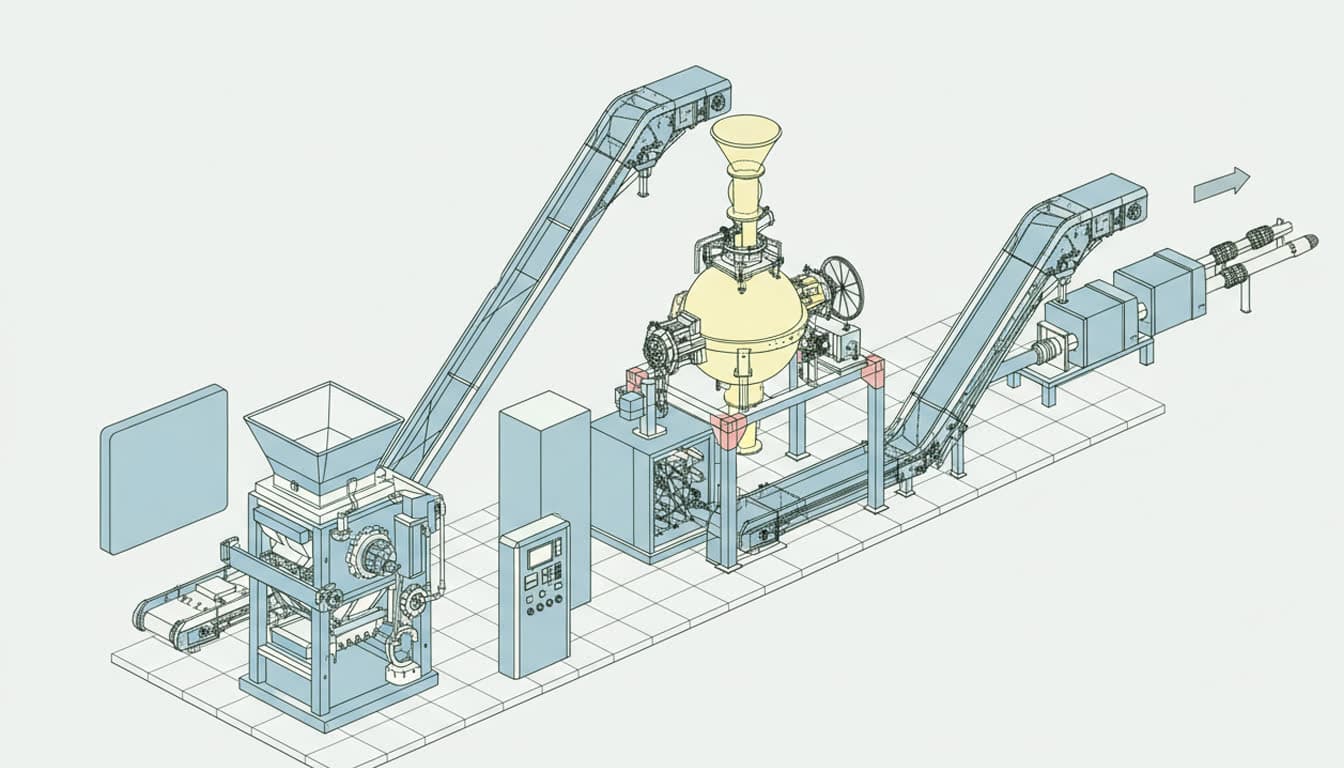
Select a component to view details
Click any numbered marker on the diagram above
Technical Specifications
Detailed System Data
Key performance and operational parameters for the PHANTOM standard configuration.
| Parameter | Value | Notes |
|---|---|---|
| Vessel Material | SUS 304 Stainless Steel | Corrosion-resistant, high-pressure grade |
| Processing Capacity | 0.5 – 3 tonnes per batch | By tank volume: 0.5–3 m³. Mass figure is for normal-density waste; bulky light waste is volume-limited. |
| Cycle Time | ~30–35 min | Full cycle incl. loading/unloading; ~15–20 min active hydrolysis |
| Operating Temperature | 200–250°C | Vessel rated to a maximum of 270°C; subcritical operating point within the 100–374°C range |
| Operating Pressure | 2–2.7 MPa (20–27 atm) | Boiler generates steam at ~3 MPa (30 atm), 1 t/h |
| Volume Reduction | ~60% | Typical for mixed organic waste |
| Sterilisation Rate | 99%+ | Complete pathogen elimination |
| Dioxin / Furan Emissions | Zero | Non-combustion process |
| Power Supply | 380V / 3-phase / 50-60Hz | Standard industrial power |
| Water Usage | ~200–500 litres per cycle | Varies by batch size |
| Fuel Source | Kerosene boiler (standard) | LNG, LPG, diesel also supported |
| Noise Level | 75–80 dB at 1m | No hearing protection required |
| Dimensions (3t unit) | 5m × 7m × 7m (L×W×H) | Compact site footprint |
| Installation Type | Modular / containerised | Indoor or outdoor deployment |
| Major Maintenance | Every 10 years | Gasket replacement only |
| Vessel Diameter (3t) | 190 cm | SUS 304 pressure vessel |
| Inlet Size (3t) | 30 cm | Waste input port |
| System Weight (3t) | 12 tonnes | Total installed weight |
| Output per Cycle (3t) | ~1,800 kg | From 3,000 kg input (~60% reduction) |
| Operating Cost | ~$33/cycle (≈ ¥5,000) | Fuel and utilities combined |
| Output Types | Compost · Feed · Fuel | Selectable by input waste stream |
Lineup
Available Models
Choose the right capacity for your operation. All models share the same core technology and quality standards.
← Swipe to compare all four models →
| Specification | 0.5t | 1t | 2t | 3t |
|---|---|---|---|---|
| Tank Volume | 0.5 m³ | 1 m³ | 2 m³ | 3 m³ |
| Per-Cycle Capacity (normal waste) | 500 kg | 1,000 kg | 2,000 kg | 3,000 kg |
| Daily Throughput | ~10 t/day | ~20 t/day | ~40 t/day | ~60 t/day |
| Cycle Time | ~30 min | ~30 min | ~30 min | 30–35 min |
| Dimensions (L×W×H) | ~6×2×2.5 m | ~8×2.5×3 m | ~10×3×3.5 m | 5×7×7 m |
| System Weight | ~3 t | ~4 t | ~10 t | 12 t |
| Vessel Diameter | 80 cm | 110 cm | 160 cm | 190 cm |
| Inlet Size | 20 cm | 20 cm | 30 cm | 30 cm |
| Power Requirement | ~30 kW | ~50 kW | ~65 kW | ~80 kW |
| Water Usage / Cycle | ~200 L | ~300 L | ~400 L | ~500 L |
| Output per Cycle | ~300 kg | ~600 kg | ~1,200 kg | ~1,800 kg |
| Cost per Cycle | ~$33 USD | ~$33 USD | ~$33 USD | ~$33 USD |
All models share identical core technology, safety systems, and control architecture. Each model is defined by its tank volume (0.5–3 m³). Daily throughput assumes ~20 cycles/day; each 3-tonne cycle is ~30–35 min including loading/unloading (~15–20 min active hydrolysis). Per-cycle mass figures assume normal-density waste — for lightweight, bulky waste each cycle is limited by the tank volume rather than by weight. Values are approximate and may vary by configuration.
Installation
How to Get Started
From initial consultation to full operation — a clear, structured process.
Proposal (Free)
Discuss your requirements. We provide a tailored proposal including system size, configuration, and budget estimate at no cost.
Contract & Deposit
Agree on specifications and sign the contract. A 50% deposit initiates manufacturing of your custom unit.
Manufacturing
Your PHANTOM system is built to specification. Typical lead time is approximately 6 months from contract signing.
Installation & Training
Our team handles delivery, on-site installation, commissioning, and comprehensive operator training.
Operating Costs
Minimal Running Expenses
PHANTOM is engineered for extremely low ongoing costs.
Fuel for Boiler
The primary operating cost is fuel for the steam-generating boiler. The system's heat recovery optimisation keeps fuel consumption efficient.
Gasket Replacement
The only scheduled maintenance component is periodic gasket replacement — required approximately every 10 years. No other major parts need servicing.
Site Preparation
Site Utility Requirements
What your facility needs to provide before installation day. Use this as a checklist for your engineering team.
Electrical
- 380V, 3-Phase, 50/60Hz
- Main breaker: 100–200A (model dependent)
- Dedicated circuit for boiler and PLC
- Emergency stop accessible within 3m
Water Supply
- Standard municipal water line
- Minimum 40 PSI (2.8 bar) pressure
- ¾" connection point within 5m of unit
- Drain access for liquid discharge
Compressed Air
- Pneumatic valve operation
- 6–8 bar (90–120 PSI)
- ~10 CFM minimum flow rate
- ¼" quick-connect fitting
Connectivity
- Ethernet drop for remote monitoring
- RJ45 within 10m of control panel
- Static IP recommended
- Optional: 4G modem for cellular backup
Site Layout
Footprint Configuration Options
PHANTOM's modular design supports multiple layout configurations to fit constrained or irregular factory floors.
Option A
Straight-Line Configuration
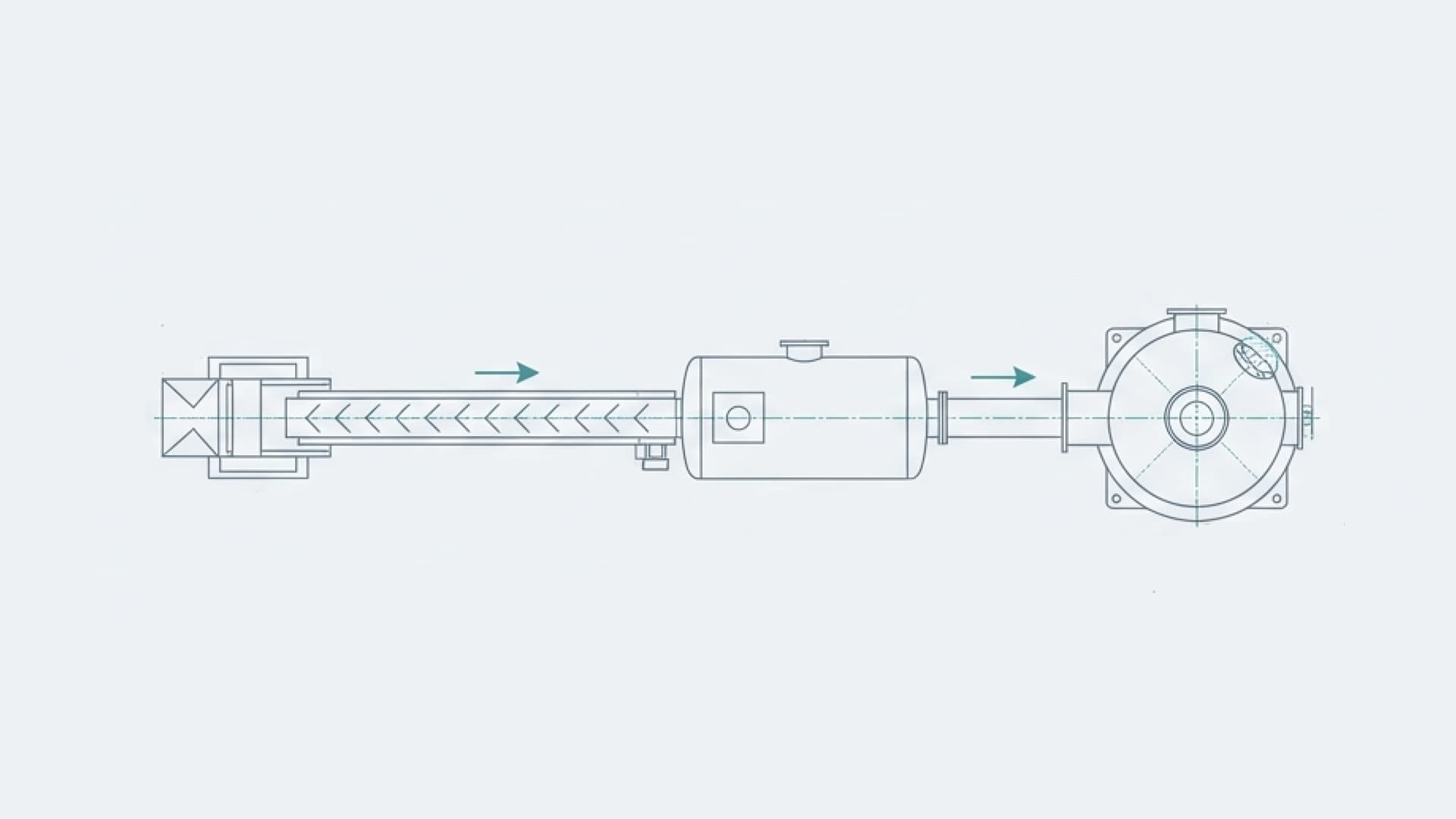
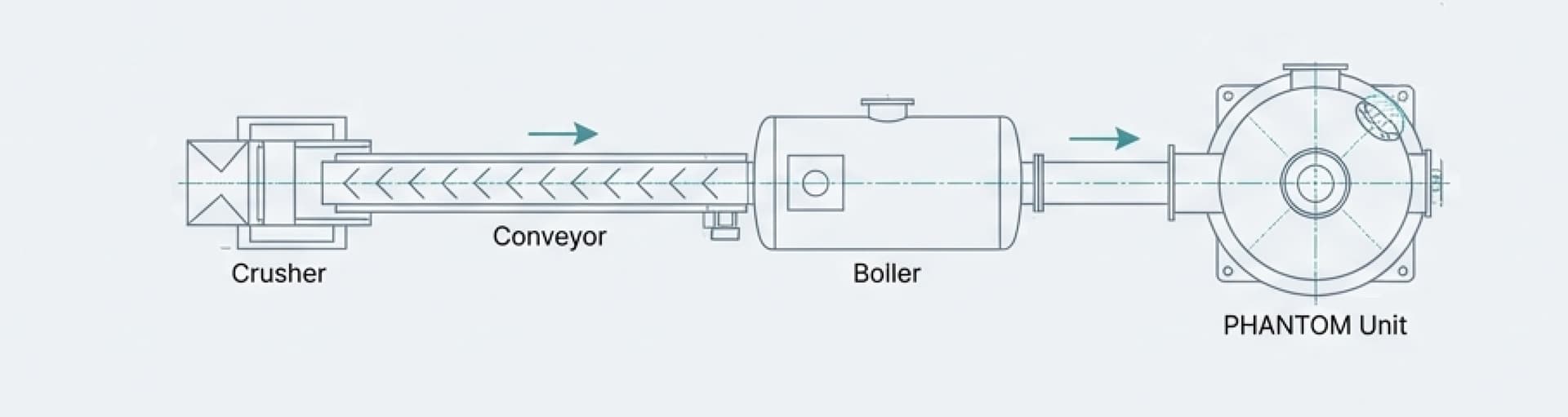
All components arranged in a single row: Input Hopper → Grinder → Reactor → Output Conveyor. Ideal for long, narrow spaces or loading dock areas.
Footprint: ~12m × 3m (3t model)
Option B
L-Shape Configuration
Conveyor bends 90° at the reactor, with the output stage running perpendicular. Fits corner spaces and allows separate input/output zones for safety and logistics.
Footprint: ~8m × 6m (3t model)
Custom configurations available on request. Our team provides site-specific layout drawings during the proposal stage.
Get Full Technical Specifications
Contact us for the complete datasheet, installation requirements, and custom configurations.
Frequently Asked Questions
The PHANTOM system requires a level, load-bearing concrete pad rated for the unit's total operating weight (3–15 tonnes depending on model). Standard industrial-grade concrete (150mm minimum thickness) is sufficient for the 0.5t and 1t models. The 2t and 3t models benefit from reinforced concrete with rebar mesh. The system produces minimal vibration during operation — no special isolation pads or dampening foundations are required. We provide exact foundation drawings and load specifications during the proposal stage.
No. PHANTOM is deliberately designed using industry-standard components wherever possible. Valves, fittings, pressure gauges, and electrical components are sourced from major industrial suppliers (e.g. Parker, Swagelok, Siemens) and can be procured locally in most markets. The only proprietary component is the spherical reactor vessel itself, which is engineered for a 10-year service life before requiring major inspection. Gaskets and seals are standard industrial specifications and readily available.
The PHANTOM system operates at approximately 75–80 dB at 1 metre distance — comparable to a standard dishwasher or office air conditioning unit. The primary noise source is the boiler and steam injection phase, which lasts a few minutes per cycle. During the main hydrolysis phase, the system is significantly quieter. Standard hearing protection is not required for nearby workers, though we recommend it as best practice in any industrial environment.
PHANTOM can be installed both indoors and outdoors. The containerised models include weather-rated enclosures suitable for outdoor deployment in most climates. For extreme cold environments (below -10°C sustained), we recommend an insulated enclosure or heated shelter to prevent water line freezing during idle periods. The control panel should be protected from direct rain and moisture — either inside the container or under a simple canopy. No climate-controlled building is required.