Article Series
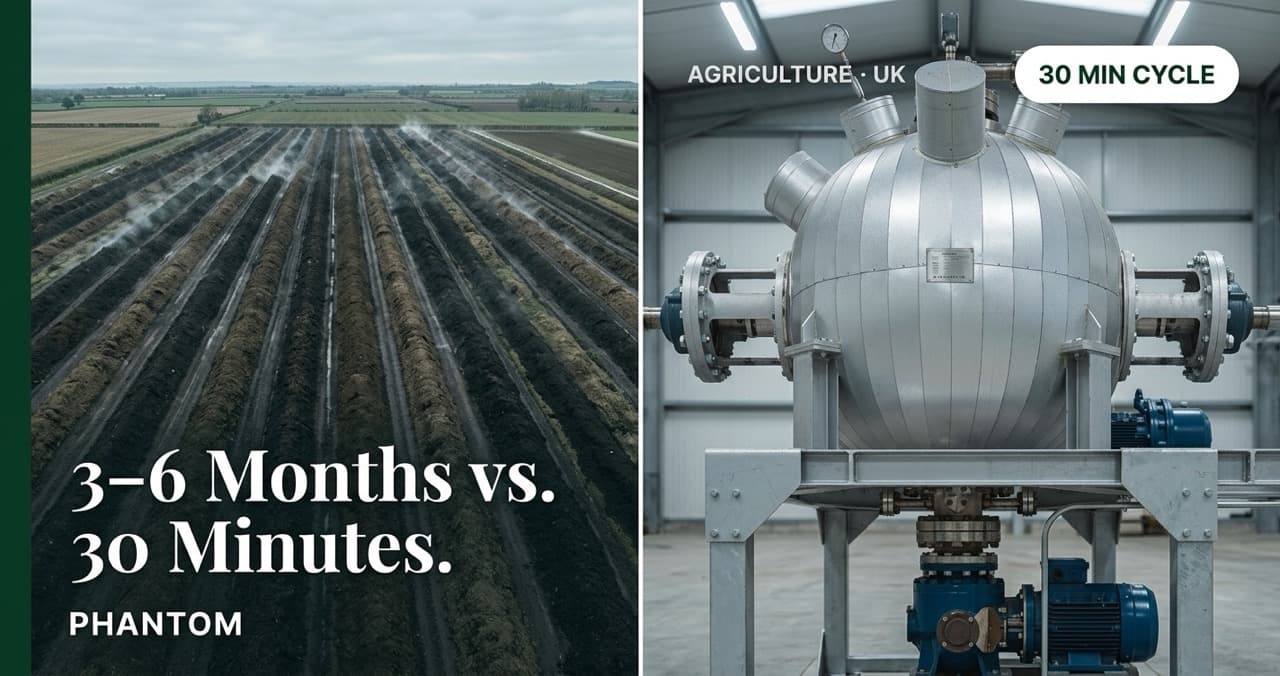
The difference between composting and subcritical water hydrolysis is the difference between a slow biological negotiation with nature and a precise, engineered chemical reaction. Composting deploys microorganisms over months; subcritical water hydrolysis deploys physics and chemistry in under 30 minutes — with sterile, uniform, and immediately usable outputs.
If you arrived here from our guide on turning livestock manure into high-quality fertilizer, you already understand the what. This article answers the how and why — specifically, why the reaction mechanism makes all the difference for industrial-scale operators.
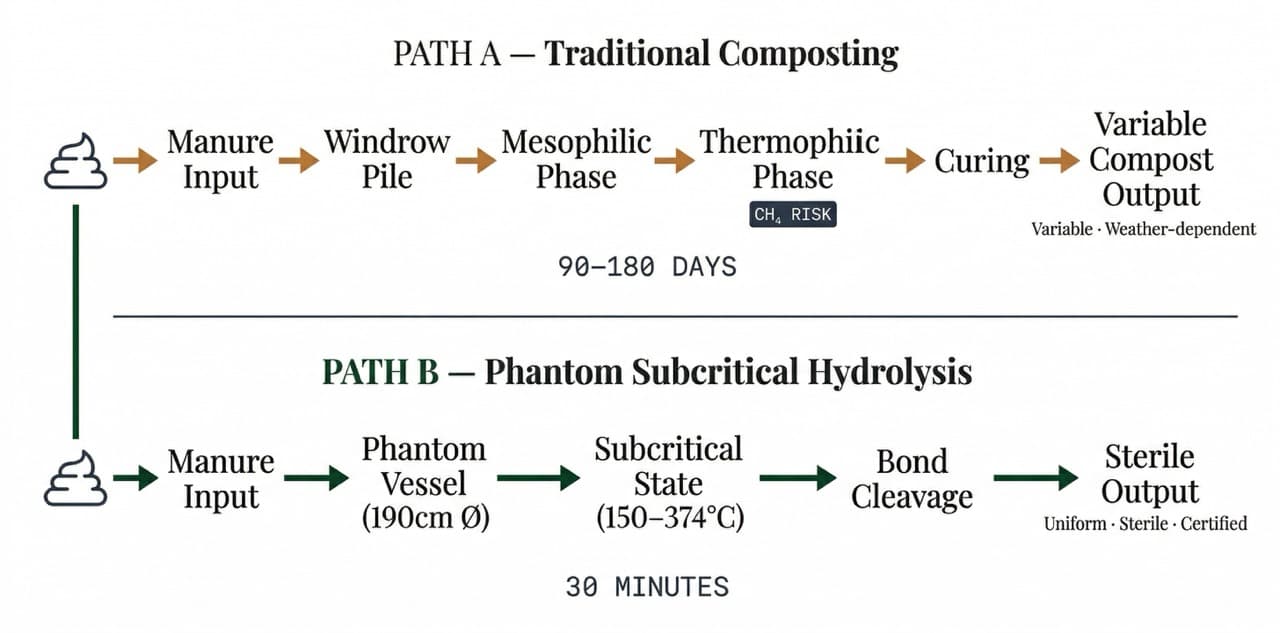
What Actually Happens Inside a Compost Pile?
Aerobic composting is biological decomposition: billions of microorganisms consume organic matter, breaking complex polymers into simpler compounds. The result is humus — a stable soil amendment. The constraint is time, weather, and microbial variability.
The chemistry is elegant but uncontrolled. Here's the mechanism:
- Mesophilic phase (10–40°C): Initial bacteria colonise easily-digestible sugars and proteins. Heat begins to build.
- Thermophilic phase (40–70°C): Heat-tolerant bacteria accelerate decomposition. Pathogens begin to die off if temperatures hold.
- Cooling & Curing phase: The pile cools. Fungi and actinomycetes complete lignin breakdown. Humus forms.
- Maturation: Carbon-to-nitrogen (C:N) ratio stabilises around 10:1 to 20:1 — the benchmark for a "finished" compost.
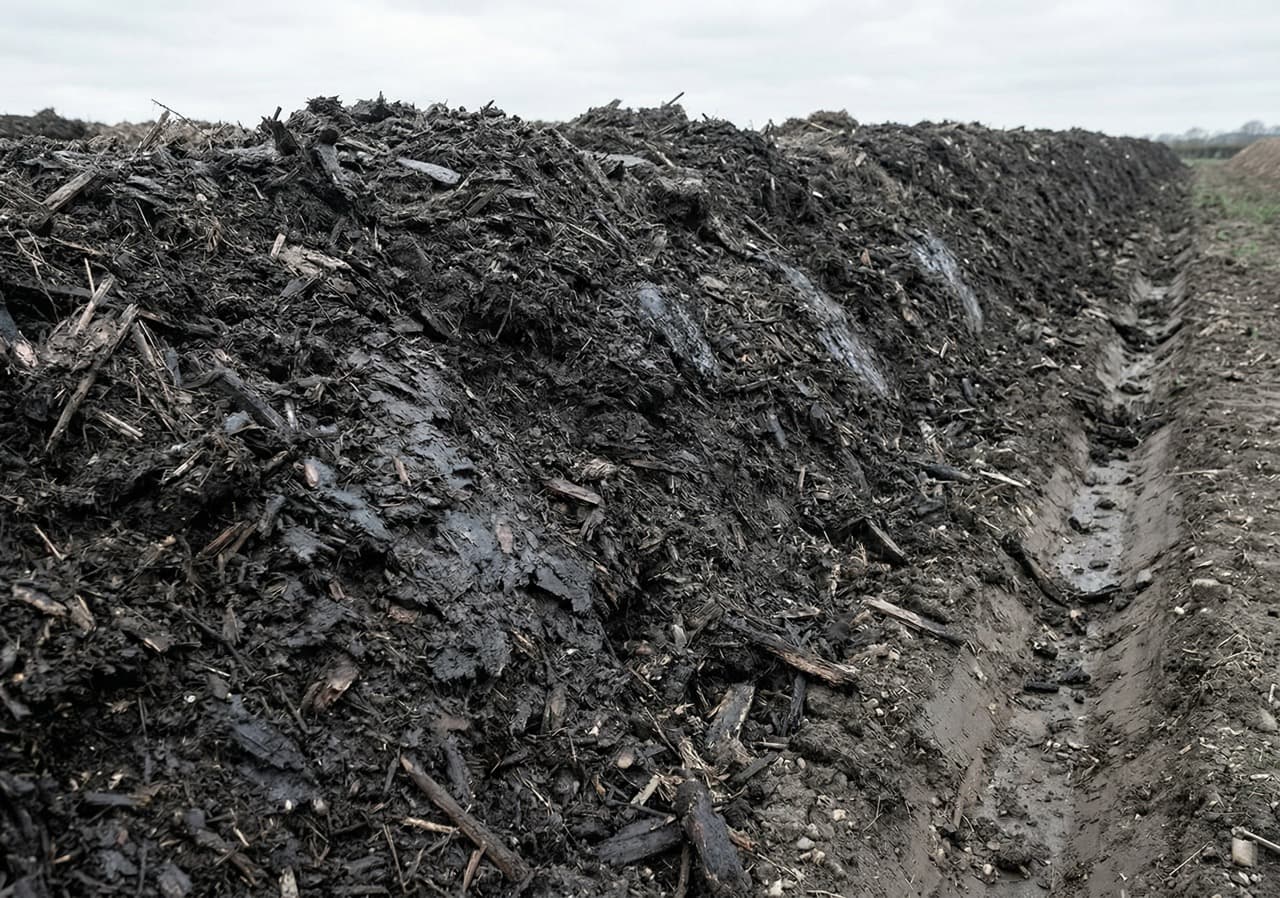
This applies to standard agricultural operations with sufficient land, dry climates, and low urgency on output quality. It does NOT apply to high-density livestock operations, wet climates, or any waste stream requiring pathogen certification.
Scenario: A 500-head cattle farm generating 5 tonnes of manure daily needs a minimum of 1.5 hectares dedicated to windrow management, plus 90–180 days before the first usable batch. Accept the 6-month lag, or re-engineer the process.
What Actually Happens Inside a Subcritical Water Hydrolysis Vessel?
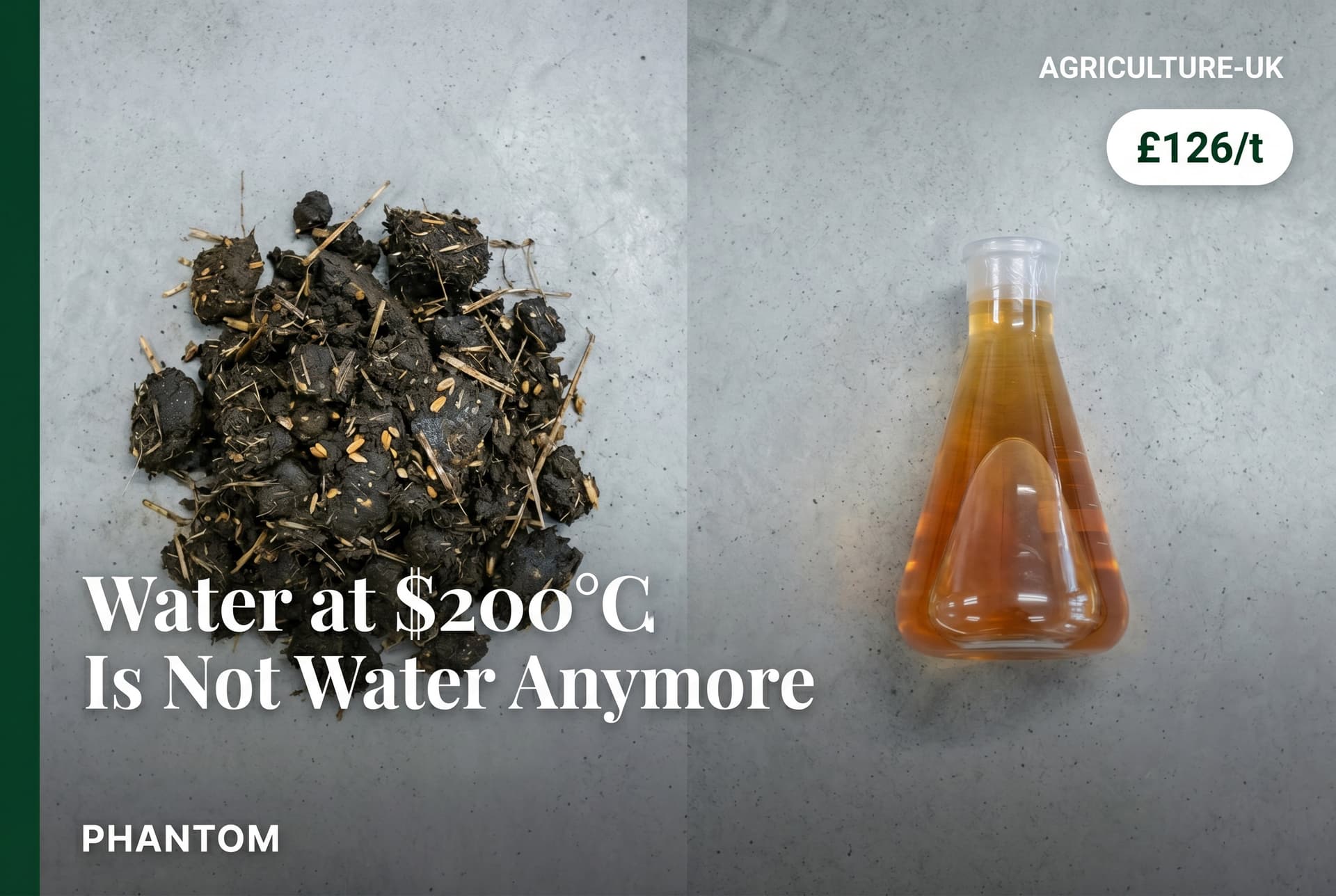
Subcritical water hydrolysis is a thermochemical reaction: water under elevated temperature (150–374°C) and pressure is forced into a state where it behaves simultaneously as an acid and a base, cleaving organic molecular chains in minutes — not months.
This is the reaction the Phantom system is engineered around. The mechanism inside the vessel proceeds as follows:
- Pressurisation: The sealed pressure vessel (SUS 304 stainless, 190 cm diameter) is loaded with up to 3 tonnes of organic waste.
- Subcritical state initiation: Kerosene boiler-driven steam raises internal conditions. Water dissociates into H⁺ and OH⁻ ions at elevated rates.
- Bond cleavage: H⁺ ions attack ester and peptide bonds in proteins, fats, and polysaccharides. OH⁻ ions simultaneously saponify lipids. Both reactions proceed in parallel.
- Output segregation: The vessel releases a sterile, low-molecular-weight slurry — the basis for liquid fertilizer (diluted 500× with seawater), compost, or fuel depending on input feedstock.
Full cycle time: ~30–35 minutes including loading/unloading (~15–20 minutes active hydrolysis). Continuous operation of 20–22 hours/day achievable.
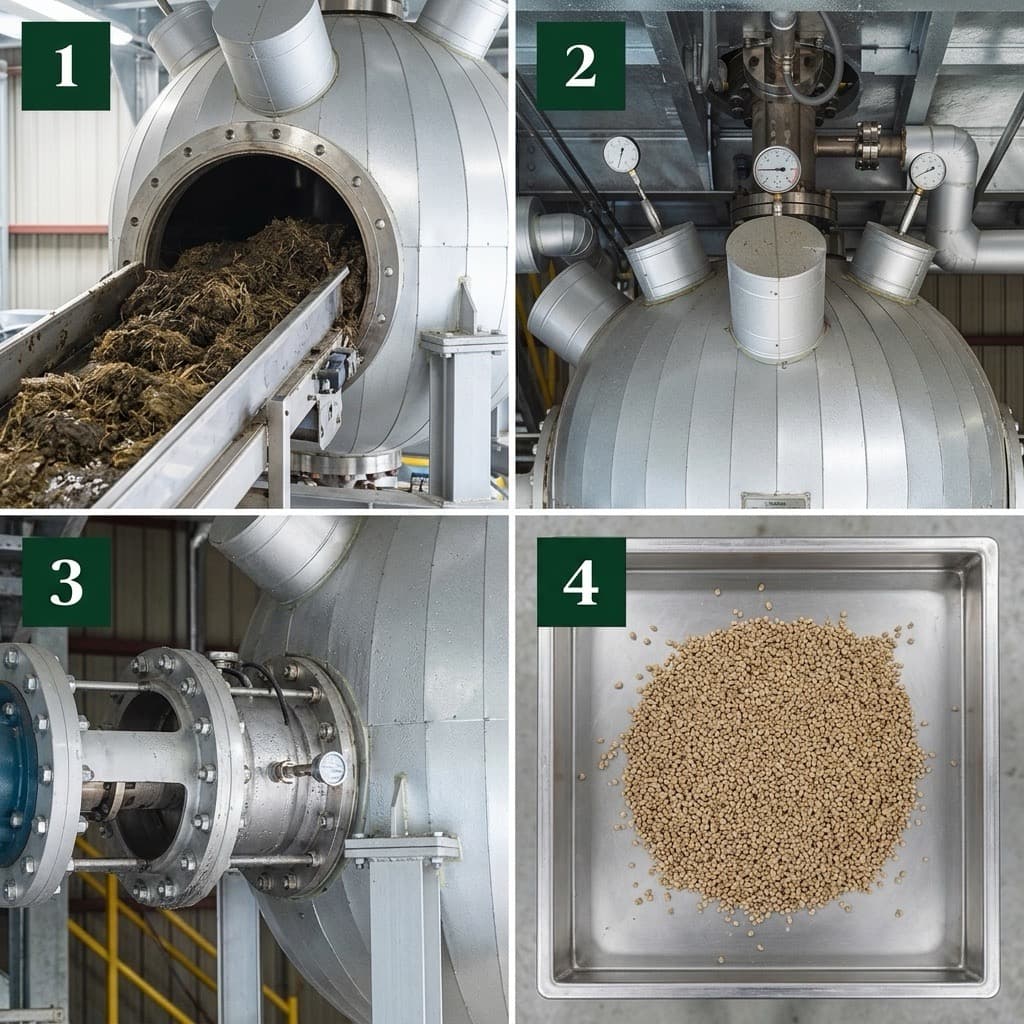
This applies to livestock manure, food waste, fish/shellfish biomass, medical organic waste, and oil sludge. It does NOT apply to glass, metal, or stone. Addition polymers (PE, PP, PS) resist subcritical water hydrolysis — their carbon-carbon backbone requires supercritical conditions or pyrolysis to break.
Scenario: The same 500-head cattle farm. Install the Phantom 3M3 system. Process 3 tonnes per cycle, recover ~1.8 tonnes of usable output, and complete the same daily volume in under 10 hours — with zero acreage dedicated to waste.
The Engineering Verdict — Head-to-Head Comparison
On every measurable engineering parameter — time, space, emissions, output consistency — subcritical water hydrolysis outperforms aerobic composting for industrial livestock operations. The comparison below is not an opinion; it is a specification sheet.
| Feature | Traditional Composting | Subcritical Water Hydrolysis (Phantom) |
|---|---|---|
| Timeframe | 3–6 Months | 30 Minutes |
| Space Required | Large land footprint (acreage) | Compact (industrial footprint) |
| Odour / Pests | High — attracts flies and rodents | Zero (closed-loop sealed system) |
| Climate Impact | Releases CH₄ during decomposition | Near-zero (CO₂ only from boiler) |
| Output Quality | Variable — weather and microbial-dependent | Uniform and sterile — batch-consistent |
| Pathogen Elimination | Conditional — requires sustained 55°C+ | Absolute — subcritical temps guarantee sterilisation |
| Operator Control | Low — biological process | High — temperature, pressure, duration all programmable |
| Operating Cost | Labour-intensive, long-horizon | ~£26 per cycle (kerosene boiler at rated throughput) |
Key engineering insight: Composting's Achilles heel is its dependence on biological variance. A single rainfall event, a temperature drop, or a C:N ratio imbalance can extend decomposition by weeks and compromise output sterility. Subcritical water hydrolysis eliminates all three variables. The reaction is governed by thermodynamics, not biology.
Phantom Ecotech — Engineering Comparison
Composting vs. Subcritical Water Hydrolysis
The Numbers Don't Negotiate.
| Parameter | Composting | Phantom Hydrolysis |
|---|---|---|
| Timeframe | 3–6 Months | 30 Minutes |
| Space Required | Acreage | Industrial Footprint |
| Odour / Pests | High | Zero (Sealed) |
| Climate Impact | CH₄ Emissions | Near-Zero |
| Output Quality | Variable | Uniform & Sterile |
| Operator Control | Low (Biological) | Full (Programmable) |
The numbers in this table are not academic. A composting operation processing 1,500 tonnes per year is carrying a 90–180 day cycle time, an unmeasured CH₄ liability, and variable output that cannot be certified for downstream contracts.
The reason operators continue composting is not that it works — it is that until recently, no compact on-site system existed that could sterilise and convert solid organic waste into liquid fertiliser in under an hour without specialist operators or significant infrastructure.
If the comparison above reflects your operation's constraints, the next step is a site-specific output and payback calculation.
Get a Site Assessment →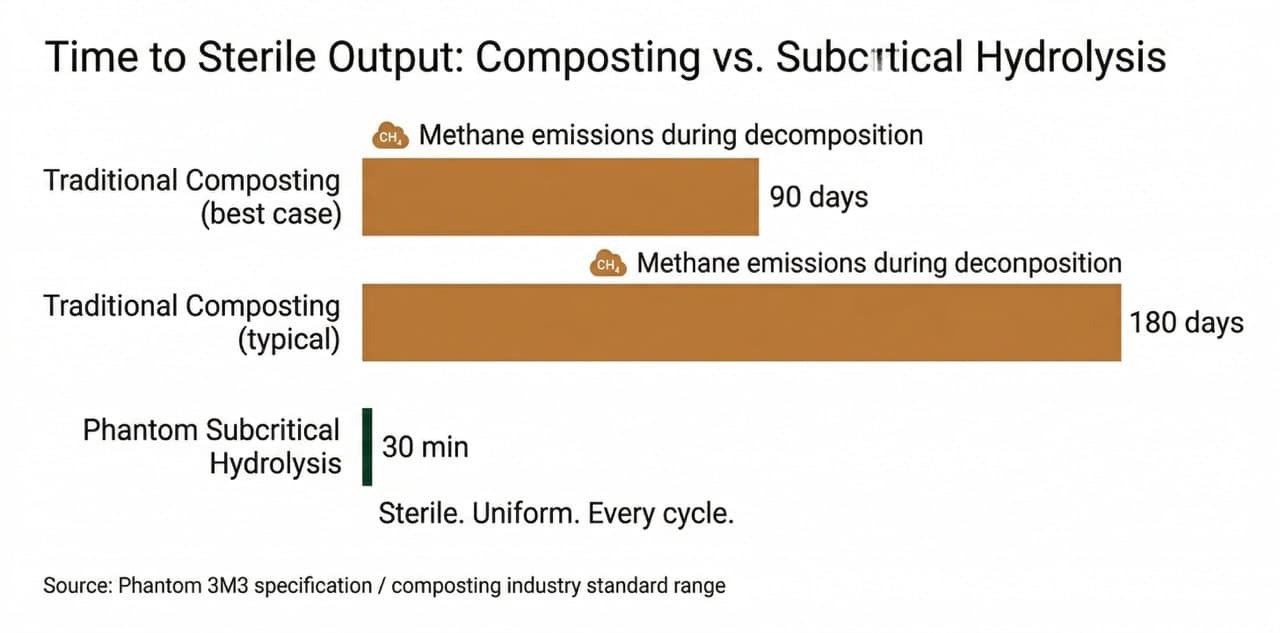
Why Does Methane Matter — And Why Composting Has a Climate Problem?
Poorly managed compost emits methane (CH₄), a greenhouse gas 28× more potent than CO₂ over a 100-year horizon (GWP100, IPCC AR6). The Phantom system's only emission source is boiler CO₂ — a known, quantifiable, and far smaller footprint.
The mechanism of methane generation in composting:
- Anaerobic pockets form inside large windrow piles where oxygen cannot penetrate.
- Methanogenic archaea colonise these oxygen-deprived zones.
- CH₄ is produced and vented directly to atmosphere — uncontrolled, unmeasured, unreported.
In a closed-loop hydrolysis system, anaerobic pockets are physically impossible. The pressure vessel maintains uniform distribution via a round furnace design and stirring device. No uncontrolled biological activity occurs.
This applies to any operation in a jurisdiction with Scope 1 emission reporting requirements (EU ETS, Japan GX League, emerging Southeast Asian frameworks). It does NOT apply to open-air composting operations where ESG auditing is not yet required — though the regulatory trajectory globally is toward mandatory disclosure.
Scenario: A food processing facility's compost operation generates an unquantified CH₄ liability across 3 hectares of windrows. When the site undergoes an ESG audit in preparation for a supply chain compliance requirement, that liability becomes a documented Scope 1 emission with no audit trail. Adopting zero-emission industrial waste treatment eliminates the exposure entirely — the hydrolysis vessel has no methane pathway.
What About Output Quality — Can Compost Match Hydrolysate?
No. Compost output quality is fundamentally weather-dependent and microbially variable. Phantom hydrolysate is sterile, low-molecular-weight, and chemically consistent batch-to-batch — enabling precision agricultural application and buyer specification compliance.
Composting output variability stems from:
- C:N ratio drift during wet seasons
- Incomplete pathogen kill if thermophilic phase temperatures are not sustained
- Heavy metal concentration in livestock manure that composting cannot remove — note: subcritical water hydrolysis does not destroy or neutralise heavy metals either; elemental metals (copper, zinc) are conserved by thermodynamics and partition into the solid residue or liquid fraction. Input feedstock testing for heavy metal load is a mandatory pre-process step for both methods
- Weed seed viability — conventional compost cannot guarantee full sterilisation
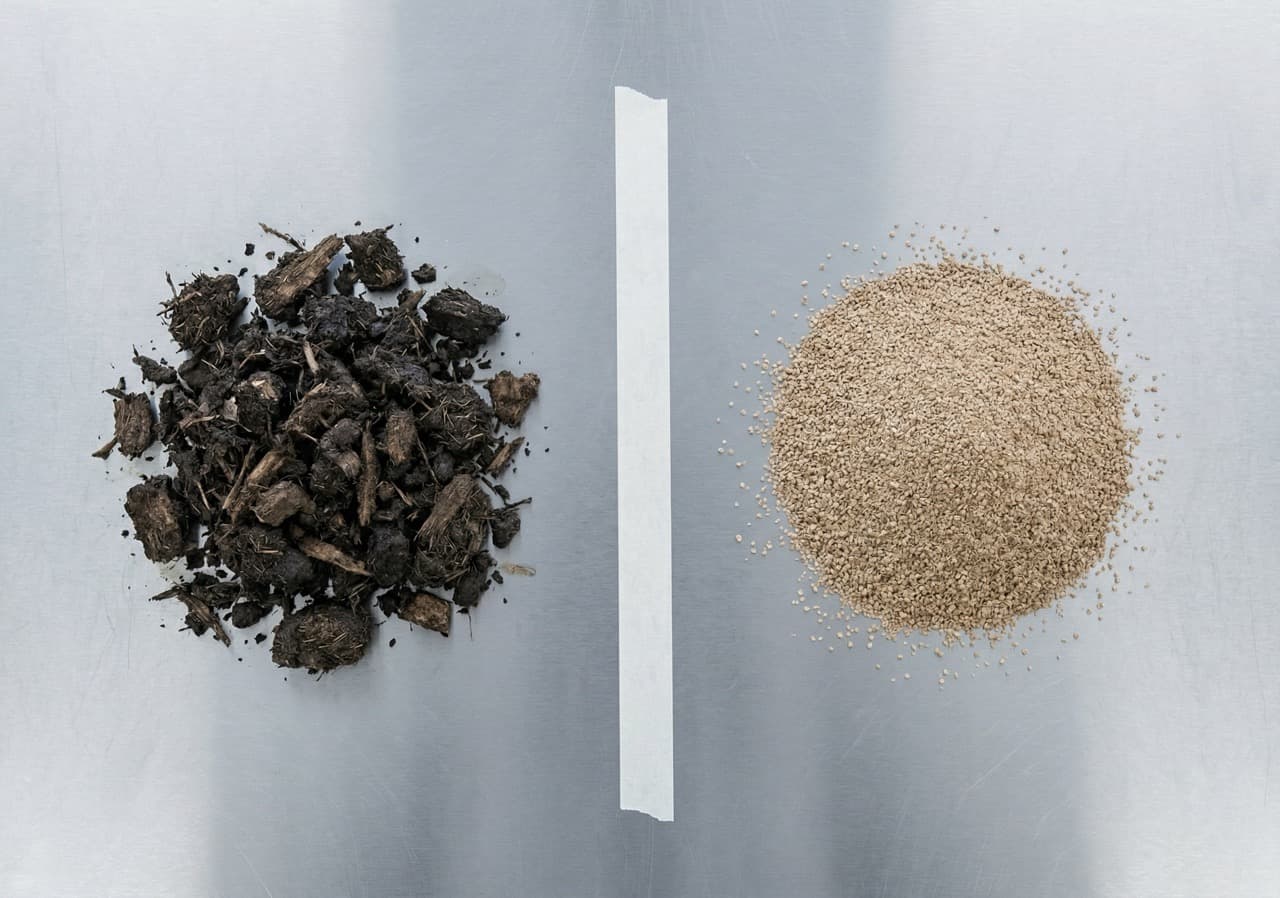
Phantom hydrolysate characteristics:
- Pathogen-free: subcritical temperatures guarantee complete sterilisation
- Consistent molecular weight profile per feedstock type
- Liquid fertilizer fraction (80% seawater blend) diluted 500× — agronomic validation of the liquid fraction is recommended before direct field application, as phytotoxic intermediates may require aerobic stabilisation or pH adjustment
- Compost fraction suitable for direct agricultural use without curing lag
For plant engineers specifying output standards: if your downstream agricultural contract requires a certified sterile input, composting requires expensive third-party testing per batch. Phantom's process parameters (temperature, pressure, duration) are the certification — built into the reaction itself.
The financial case is documented in the full ROI analysis for industrial waste processing machines, which quantifies the value of consistent, certifiable output versus variable compost revenue.
How Hydrolysis Handles Waste Streams Composting Cannot
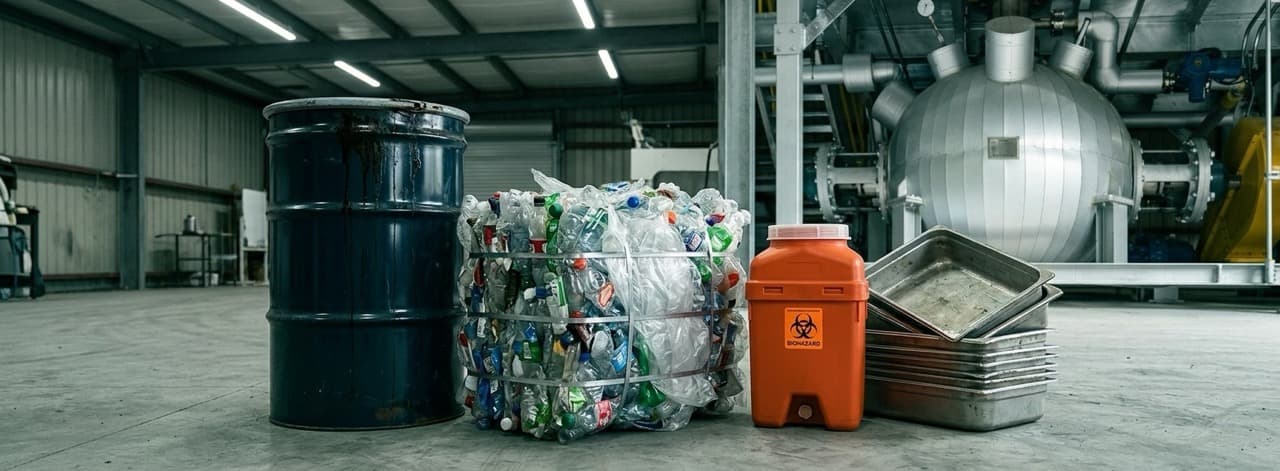
Composting is limited to organic matter with manageable C:N ratios. Subcritical water hydrolysis processes additional waste streams that composting cannot touch — including oil sludge, medical waste, and selected plastic types — consolidating what would otherwise require multiple disposal contracts.
For operations managing mixed waste streams, composting hits a hard wall. Here is where the Phantom system extends beyond the compost paradigm:
- Plastics — PET and condensation polymers: Hydrolysable under subcritical conditions. Enables industrial plastics treatment within the same facility, offering monomer recovery or volume reduction. Note: addition polymers (PE, PP, PS) are not chemically hydrolysed by subcritical water — fuel recovery from PE/PP/PS requires a downstream pyrolysis step outside the vessel
- Oil sludge: Converted to usable fuel output
- Medical waste and used diapers: Sterilised and composted — no incineration required. See the nursing home diaper disposal cost guide for the full cost comparison
- Wooden building materials: Fuel conversion pathway
- Fishery and slaughterhouse byproducts: Full treatment guide at fishery and slaughterhouse wet waste treatment
For a livestock operator also managing packaging waste, veterinary disposables, or fish/shellfish processing byproduct, the Phantom system consolidates what would otherwise require three separate waste contracts.
Conclusion: Stop Calculating the Cost of Waiting
The difference between composting and subcritical water hydrolysis is not a matter of preference — it is a matter of engineering generation. Composting is a biological tool invented before industrial agriculture existed. Subcritical water hydrolysis is a thermochemical process engineered for the volumes, sterility standards, and emissions accountability that modern operations now face.
The calculus is direct:
- Every month of composting lag is a month of tipping fee exposure, methane liability, and variable output
- Every Phantom cycle is 30 minutes, ~£26 in fuel costs, and a sterile, certified-quality output
The question is not whether the technology works. The question is how long your operation can afford to run on a 6-month cycle when a 30-minute one exists. Calculate your ROI based on your specific waste volume and current disposal costs.
Ready to replace your composting operation with a system that closes the loop in 30 minutes?
→ Contact Phantom Ecotech for a Site Assessment
Stop calculating losses. Install the solution.
Frequently Asked Questions
For high-volume operations, yes. The Phantom system processes the same manure volume in a fraction of the time, with guaranteed sterility and no land footprint. Operations with ESG reporting obligations, premium fertilizer contracts, or neighbouring communities should evaluate hydrolysis as the primary solution. Small-scale farms with available land and no sterility requirements may still find conventional composting adequate.
The Phantom 3M3 processes up to 3 tonnes per cycle at approximately £26 in fuel costs (kerosene boiler). Full TCO analysis — including land opportunity cost, labour, and emissions liability — is available through a Phantom site consultation.
Output quality is governed by input feedstock type and operator-controlled reaction parameters (temperature, pressure, duration). For consistent feedstock such as cattle manure, batch-to-batch variation is minimal. Agronomic validation of the liquid fraction is recommended before direct field application, as phytotoxic intermediates may require aerobic stabilisation or pH adjustment.
Unlike incineration, subcritical water hydrolysis produces no smoke, dioxins, toxic gases, or incinerator ash. Regulatory classification is typically closer to a pressure vessel or industrial processing system than an incinerator. Specific permitting requirements vary by jurisdiction — contact Phantom Ecotech for a pre-assessment.
⚠️ Disclaimer: The information in this article is for general informational purposes only and does not constitute legal, regulatory, financial, or agricultural advice. Cost figures, performance estimates, and payback projections are illustrative and based on publicly available industry data and PHANTOM EcoTech internal modelling. Actual results depend on waste composition, feedstock type, site conditions, and jurisdiction. Always seek independent professional advice before making capital investment decisions.