Article Series
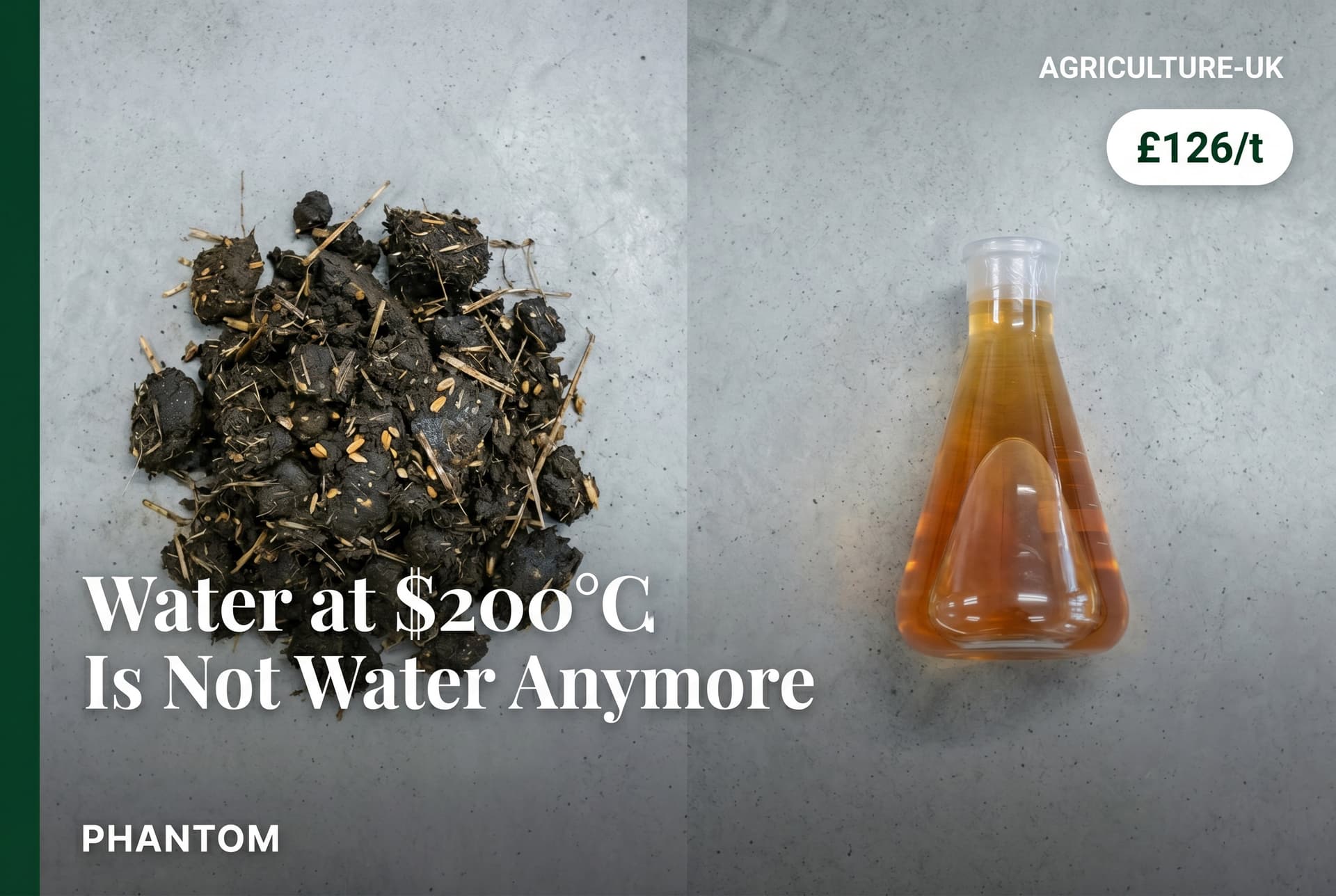
UK livestock operations, fisheries, and slaughterhouses pay £35–£180/tonne to dispose of organic wet waste — then spend £280–£460/tonne on synthetic NPK to replace the nutrients they just sent away. The consolidated annual disposal cost for a mid-scale operation runs £200,000–£680,000 before NVZ penalty exposure is counted. Subcritical water hydrolysis processes the same mixed streams on-site in 30 minutes, eliminating haulage contracts and converting disposal liability into liquid fertiliser and sterile compost.
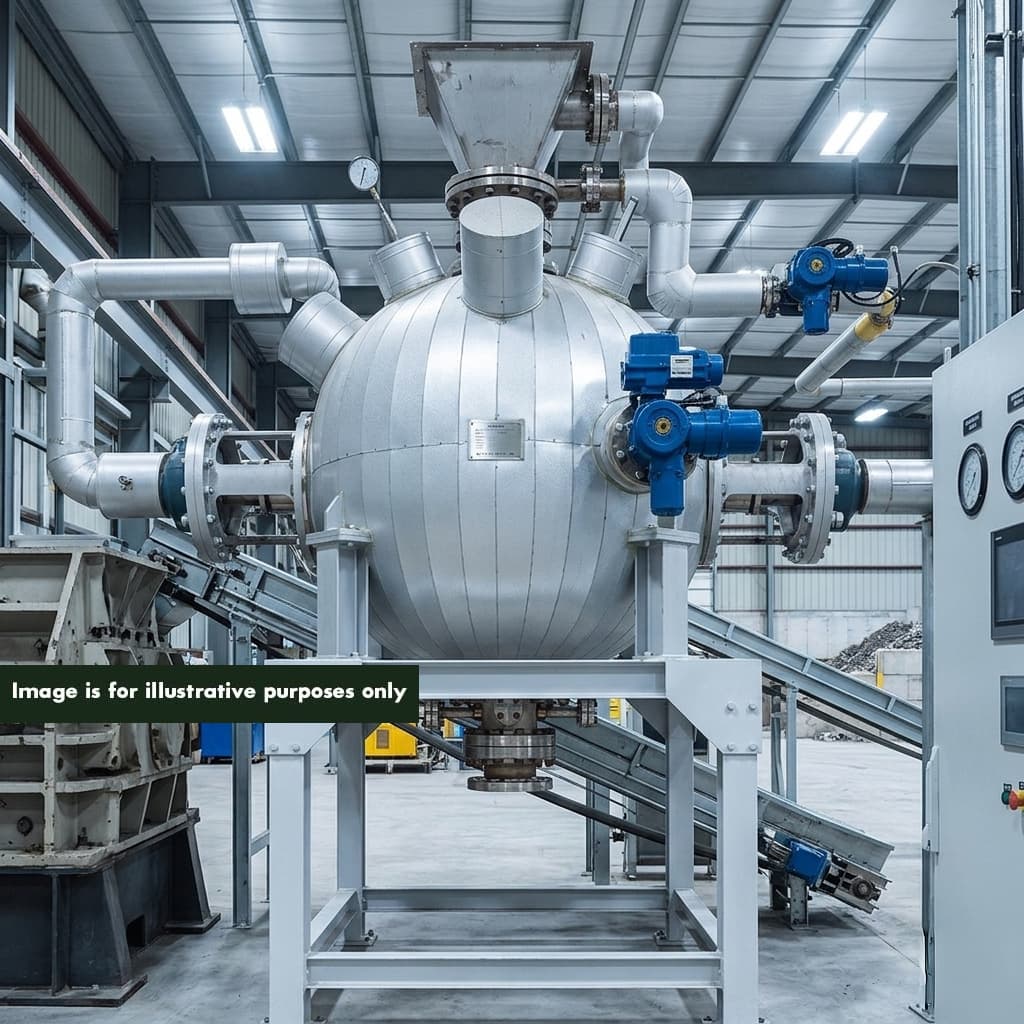
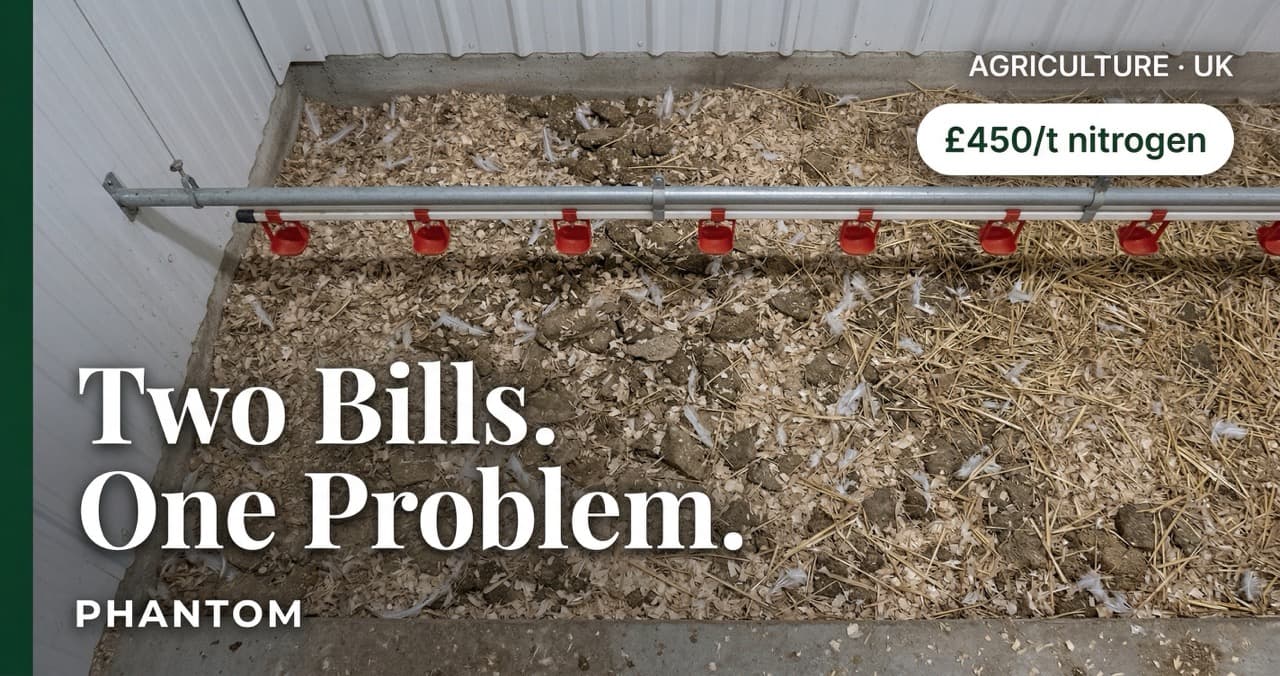
UK livestock operations, fisheries, and slaughterhouses are losing cash on slurry haulage and AD gate fees while simultaneously losing the fertiliser value locked inside every tonne of wet organic waste they send off-site. Understanding subcritical water hydrolysis for agricultural waste treatment is the starting point for every farm operator who wants to stop paying twice — once to dispose of organic waste, and again to replace the nutrients it contained.
The numbers are not subtle. Independent analysis of UK farm disposal contracts puts slurry haulage between £35 and £85 per tonne for standard dairy and pig operations, rising to £120–£180 per tonne for mixed contaminated streams that AD plants reject at the gate. NVZ-restricted farms face additional storage infrastructure costs — typically £80,000–£200,000 for compliant lagoon expansion — or penalty exposure under the Farming Rules for Water. On a 500-head dairy unit generating 8,000 tonnes of slurry per year, the annual disposal cost alone can exceed £400,000 before regulatory risk is priced in.
How Much Is UK Slurry Haulage Actually Costing Livestock Operations Per Year?
The annual cost of slurry disposal for a mid-scale UK livestock operation is typically £200,000–£680,000 when haulage, storage compliance, and AD gate fees are consolidated — before NVZ penalty exposure or synthetic fertiliser replacement costs are counted.
- Dairy (500 head): 7,000–9,000 tonnes slurry/year × £35–£65/tonne haulage = £245,000–£585,000
- Pig (1,000 sow): 4,000–6,000 tonnes/year × £45–£80/tonne = £180,000–£480,000
- Poultry (100,000 birds): 800–1,200 tonnes litter/year × £55–£95/tonne = £44,000–£114,000
- Slaughterhouse (500 tonnes/week throughput): paunch and gut waste disposal at £90–£150/tonne
- NVZ lagoon compliance capex (one-time): £80,000–£220,000 depending on herd size and existing infrastructure
This applies when the farm relies on contracted haulage for primary disposal. It does NOT apply if the farm has existing AD infrastructure with spare capacity and a proven offtake agreement for digestate — in that narrow case, AD economics may hold.
Scenario: A Lincolnshire pig unit with 1,200 sows received a haulage quote renewal at £72/tonne in January 2024 — up 31% from the prior contract, driven by contractor fuel and driver cost inflation. Simultaneously, the unit received a Farming Rules for Water advisory notice for field application timing violations during a wet autumn. Total projected annual waste disposal liability: £374,000. Synthetic nitrogen replacement cost from hauled slurry: an additional £28,000/year.
Does Anaerobic Digestion Actually Work for Mixed Agricultural Wet Waste?
Anaerobic digestion works reliably for single-stream, pre-sorted organic inputs. It does not reliably work for the contaminated, mixed organic streams that most UK livestock operations actually generate.
- AD plants require feedstock with consistent C:N ratios — mixed slurry, gut waste, fish offal, and silage rejects fail this without expensive pre-treatment
- AD gate rejection rates for mixed agricultural waste: 20–40% of delivered loads at commercial plants
- Minimum retention time: 15–25 days — incompatible with continuous high-volume generation
- Digestate from contaminated inputs is frequently downgraded to non-agricultural grade, eliminating fertiliser value recovery
- On-farm AD infrastructure capex: £500,000–£2.5M, with 8–14 year payback periods
- Available AD gate access is contracting in most UK regions, not expanding
This applies when the waste stream is mixed and the operation lacks pre-sorting infrastructure. It does NOT apply to large arable-integrated estates running dedicated single-feedstock AD with guaranteed digestate offtake — that model still works economically.
Scenario: A Yorkshire poultry processor sending mixed gut, feather, and litter waste to a regional AD plant was informed in Q3 2023 that contaminated loads would be refused without £18,000 in pre-treatment modification. The alternative — landfill at £95/tonne — was the only remaining option for 40% of weekly waste volume.
What Are the Real NVZ Compliance Costs UK Farms Are Not Calculating?
NVZ non-compliance carries financial and operational penalties that most farm FinOps models undercount by 60–80% — because they model only the direct fine, not the indirect cascade.
- Direct Farming Rules for Water penalty (EA enforcement): £1,000–£10,000 per notice
- Cross-compliance deduction from BPS/SFI equivalent: 5–25% of payment depending on severity and repeat status
- Mandatory storage upgrade when enforcement notice is issued: £80,000–£200,000, no appeal deferral once ordered
- Red Tractor and RSPCA Assured audits: both now include waste and water compliance checks
- CSRD Scope 3 reporting: food manufacturing buyers are contractually requiring carbon and waste disposal data from Tier 1 agricultural suppliers — non-compliant farms are being removed from preferred supplier lists
This applies to any farm within a designated NVZ with winter closed periods and slurry storage below 6-month capacity. It does NOT apply if the farm is outside an NVZ with no planned reclassification — though EA NVZ boundary reviews are extending coverage to approximately 58% of UK agricultural land by 2026.
Scenario: A Cheshire dairy operation received a cross-compliance deduction of 12% on its BPS payment following an NVZ audit — £23,400 in lost direct payment in a single year. The lagoon upgrade required to resolve the enforcement notice was quoted at £148,000. Total two-year compliance cost: £171,400 for a waste problem that generated zero revenue.
If your food manufacturing buyers are beginning to request Scope 3 waste disposal data from your operation, the compliance exposure compounds significantly beyond NVZ penalties alone. The CSRD supply chain pressure arriving from food processors — Scope 3 reporting obligations now cascading to Tier 1 agricultural suppliers — represents the next urgent compliance dimension for any farm selling directly to major retailers or food manufacturers.
How Does Subcritical Water Hydrolysis Compare Against Slurry Hauling and AD?
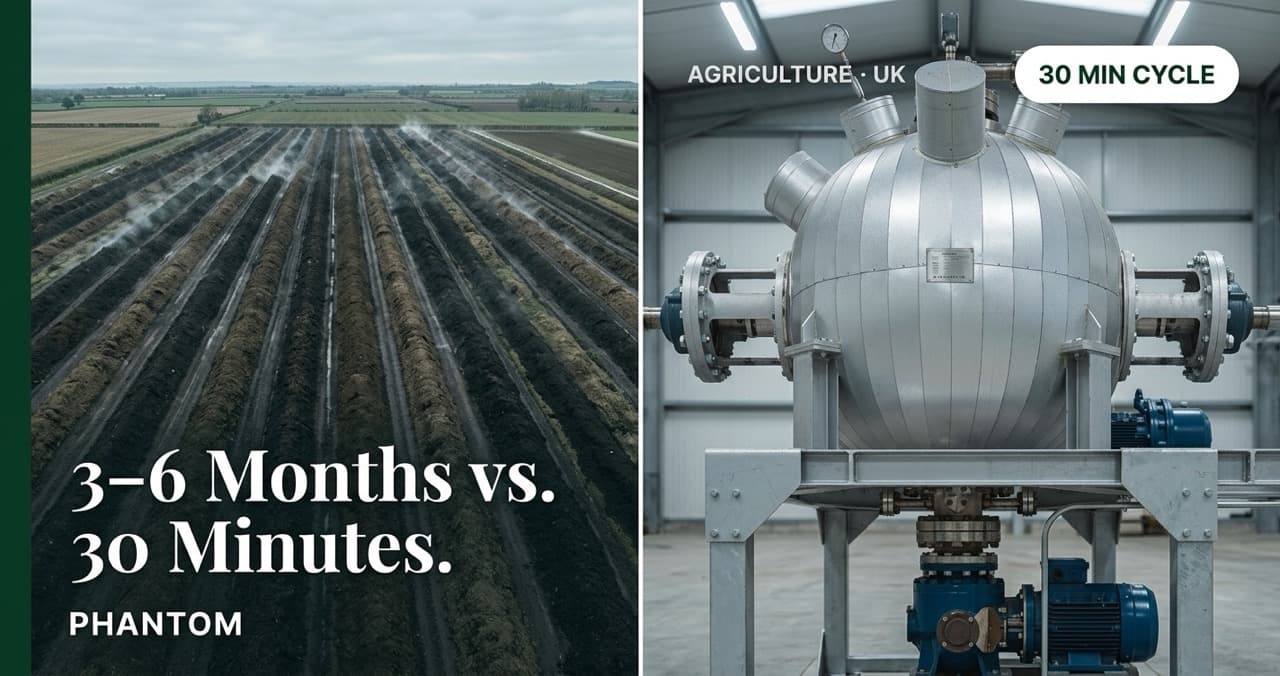
Subcritical water hydrolysis processes mixed organic agricultural waste in 30 minutes on-site, without pre-sorting, and without AD gate fees. At ~£5–£9/tonne fuel OPEX, it replaces £35–£180/tonne haulage and eliminates AD rejection risk.
| Factor | Slurry Haulage | On-Farm AD | PHANTOM Hydrolysis |
|---|---|---|---|
| Processing time | 1–5 days (scheduling) | 15–25 days | ~30 minutes/cycle |
| Mixed stream acceptance | Partial | No (pre-sort required) | Yes |
| Output value | None | Digestate (variable grade) | Liquid fertiliser + compost |
| Haulage cost | £35–£180/tonne | £0 (on-site) | £0 (on-site) |
| Running cost | Fuel surcharges apply | £15–£30/tonne equivalent | ~£5–£9/tonne fuel OPEX (kerosene boiler) |
| NVZ storage impact | None | None | Reduces storage requirement ~60–70%; closed-period spreading rules still apply to output |
| Capital cost | £0 (opex model) | £500K–£2.5M | Contact for quote |
| Emissions | Haulage fleet CO₂ | Fugitive CH₄ risk | Boiler CO₂ only — no stack emissions, no dioxins |
Energy OPEX — Model This Explicitly. The PHANTOM 3M3 runs on a kerosene boiler. Heating a 3-tonne wet organic load to subcritical conditions requires approximately 15–25 litres of kerosene per cycle — approximately £15–£26 at current UK commercial pricing. At 16–20 cycles per operational day, annual fuel OPEX runs approximately £87,000–£190,000 depending on run rate. Per-tonne: roughly £5–£9. Substantially below the £35–£180/tonne haulage cost it replaces — but it must be modelled explicitly. The calculator below includes it.
NVZ Output Storage — The Honest Position. On-site hydrolysis reduces raw waste volume by approximately 60%, converting it to processed liquid fertiliser. That output is still subject to NVZ closed-period spreading restrictions — you will need output storage tanks sized for approximately 4 months of production, or an established local offtake agreement with agricultural buyers. The storage requirement does not disappear; it shrinks materially and converts from a lagoon compliance liability into a tradeable liquid asset.
For the full technical breakdown of the ROI model for industrial waste processing, including payback period sensitivity analysis, see our dedicated guide.
This applies when the operation generates 1–3 tonnes of mixed organic wet waste per day. It does NOT apply to operations generating under 500kg/day where capital payback periods extend beyond viable planning horizons.
Calculate Your Farm's ROI: On-Site Treatment vs. Slurry Haulage
On-Site Treatment vs. Slurry Haulage
Disposal cost saved · Fertiliser value recovered · Fuel OPEX · Payback period
Which Agricultural Waste Streams Can PHANTOM Process Without Pre-Sorting?
PHANTOM processes the full range of mixed organic wet waste streams generated by UK livestock operations, fisheries, and slaughterhouses in a single cycle — without the pre-sorting that AD plants require.
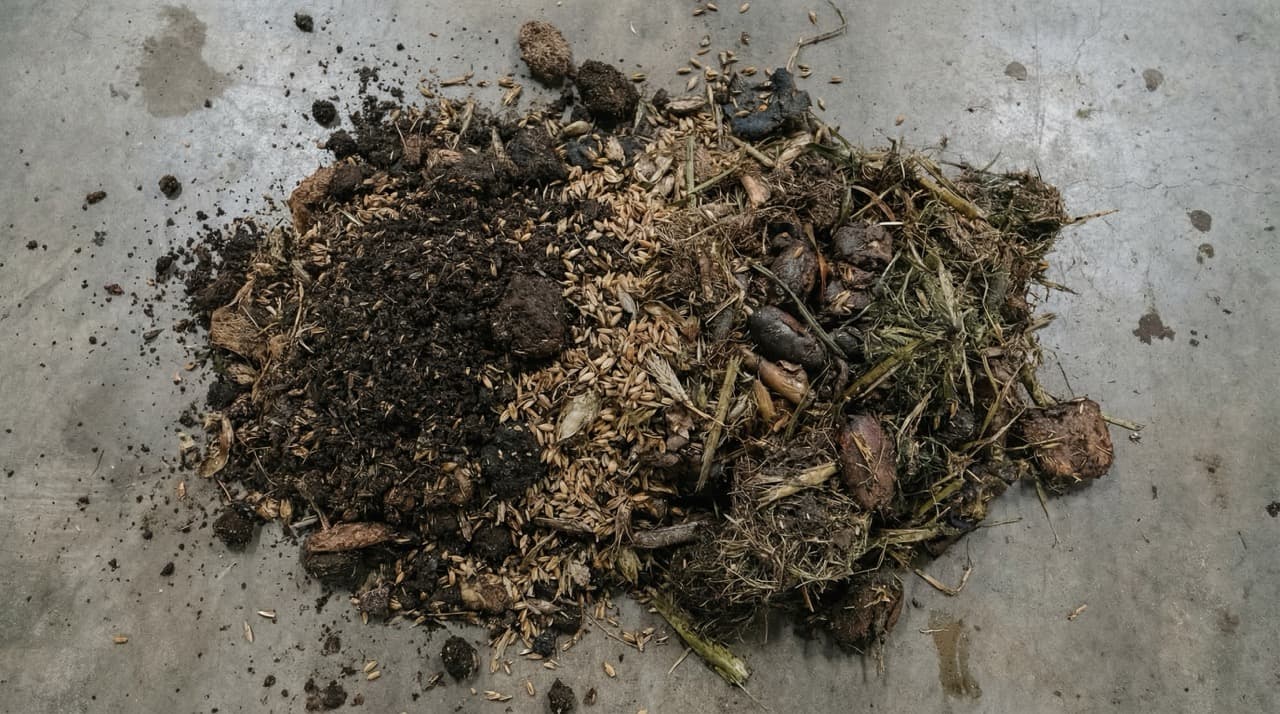
- Livestock manure and slurry (dairy, pig, poultry, sheep)
- Livestock urine and wash-down water (high nitrogen recovery)
- Paunch and gut waste from slaughterhouses
- Fish and shellfish processing offal, bones, and liquor
- Food waste and organic kitchen residue
- Silage rejects and wet agricultural byproduct
- Wood chips, organic packaging, and natural fibre waste
This applies to organic, hydrolysable materials with moisture content above 40%. It does NOT apply to glass, metal ear tags, synthetic polymers above 20% of batch weight, or stone — these must be removed before loading. Standard farm waste streams require no pre-sorting beyond removal of obvious metal contamination.
For fisheries and slaughterhouses specifically, the full wet waste treatment economics guide covers protein hydrolysate recovery rates, amino acid fertiliser output specs, and processing capacity modelling. For manure-to-fertiliser certification pathways — including OMRI, EU, and JAS organic market access — see the livestock manure subcritical hydrolysis guide. Farms also generating clean crop residues alongside slurry may qualify for a separate output route — see the clean cellulosic waste bioethanol pathway guide.
Scenario: A Scottish salmon processing operation generating 4 tonnes/day of mixed offal, skin, bone, and organic packaging waste. Prior disposal cost: £120/tonne (~$153/tonne) to a licensed waste contractor. Post-PHANTOM: on-site processing to liquid organic fertiliser sold to local agricultural suppliers at £22/tonne (~$28/tonne). Net swing per tonne: £142 (~$180). Estimated annual financial impact: approximately £207,000 (~$263,000). Note: this scenario assumes an established local offtake agreement — operations without a buyer relationship must factor output storage infrastructure into the capital plan.
The Real Cost Structure UK Farms Are Missing
The structural root cause is this: UK farms are paying £35–£180/tonne to haul nitrogen, phosphorus, and amino acids off-site, then spending £280–£460/tonne on synthetic NPK to replace what they just sent away. AHDB analysis found that the average UK dairy unit loses approximately £31,000/year in recoverable fertiliser nitrogen through slurry disposal alone, before phosphorus and potassium are counted.
Anaerobic digestion was supposed to solve this — but AD gate rejection rates for mixed streams, 15–25 day retention times, and £500K–£2.5M capital requirements mean that the vast majority of UK agricultural wet waste never reaches a value-recovery pathway at all. The nitrogen leaves. The bill arrives. The NPK order is placed. The cycle repeats.
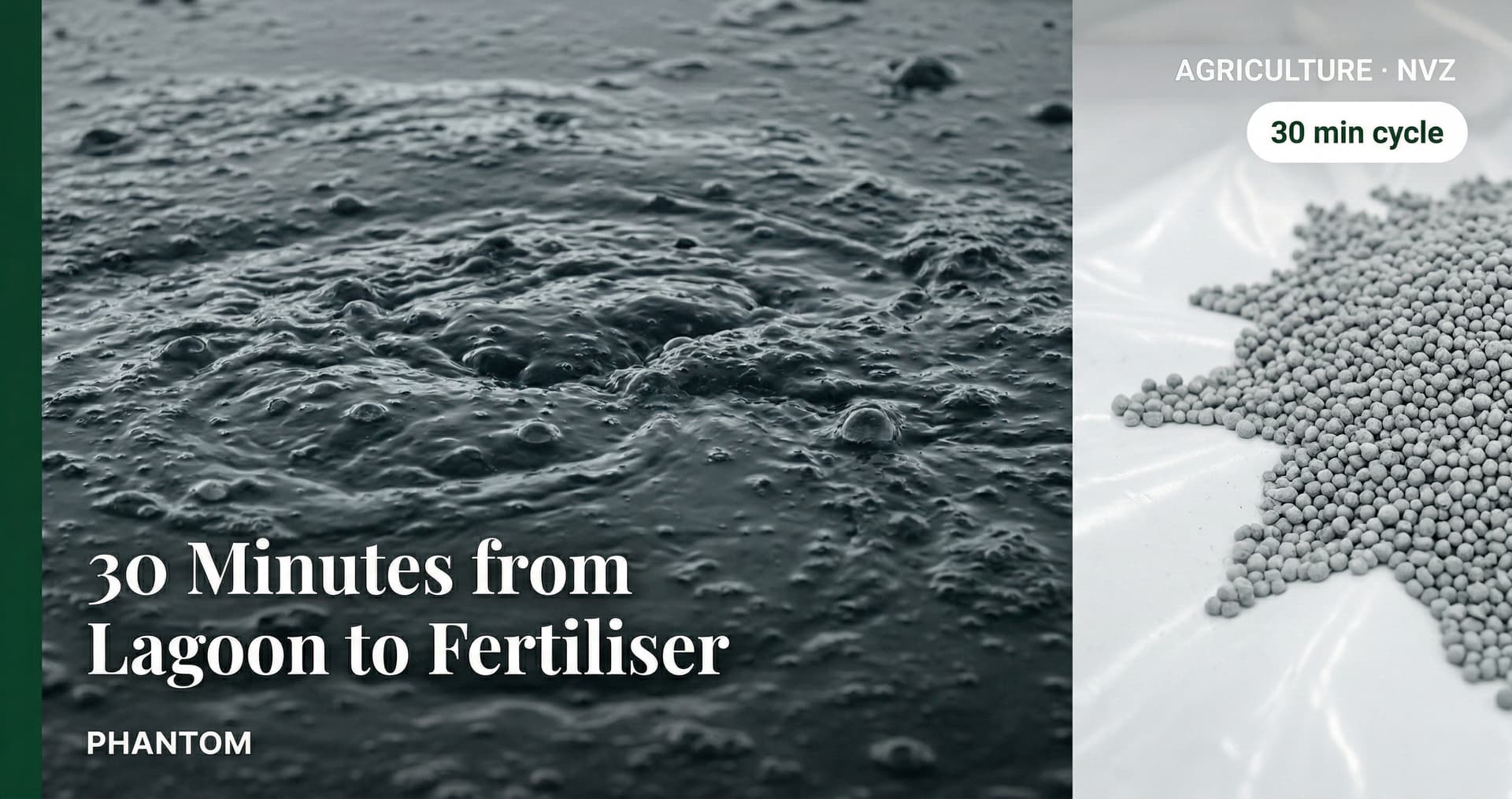
That is the structural irrationality that on-site subcritical water hydrolysis is designed to break permanently. By processing 3 tonnes of mixed organic wet waste in 30 minutes on-site — without haulage, without pre-sorting, without AD gate fees — PHANTOM converts the disposal liability into liquid fertiliser and sterile compost before the next shift begins. The nitrogen does not leave the farm. The haulage contract gets cancelled. The synthetic NPK order shrinks. And on-site storage pressure reduces materially as waste volume drops by up to 60% per cycle.
For the complete technical specification, waste stream compatibility by EWC code, and regulatory compliance overview, see the zero-emission industrial waste treatment guide.
UK slurry haulage costs £35–£85/tonne for standard dairy and pig operations, rising to £120–£180/tonne for contaminated mixed streams that AD plants reject. On a 500-head dairy unit generating 8,000 tonnes/year, annual disposal costs routinely exceed £400,000 before NVZ compliance risk is priced in.
In England, NVZ closed periods for spreading slurry on arable land run from 1 August to 31 October on sandy and shallow soils, and from 15 October to 31 January on all other soils. Livestock farms must maintain minimum 6-month slurry storage capacity to comply. Violations trigger EA enforcement notices, cross-compliance deductions of 5–25% of BPS/SFI payments, and mandatory storage upgrades costing £80,000–£200,000.
Yes. Subcritical water hydrolysis processes mixed organic wet waste — including contaminated slurry, paunch and gut waste, fish offal, and silage rejects — in a single cycle without pre-sorting. AD plants reject 20–40% of mixed agricultural waste loads due to inconsistent C:N ratios; PHANTOM accepts the same streams without pre-treatment.
PHANTOM reduces raw waste volume by approximately 60% per cycle, converting slurry into processed liquid fertiliser. This materially reduces the volume requiring EA-standard lagoon storage. Output fertiliser requires standard liquid fertiliser tanks for approximately 4 months of production during NVZ closed periods — a substantially lower compliance burden than maintaining and inspecting a full-capacity slurry lagoon.
For a mid-scale UK livestock operation generating £200,000–£680,000/year in disposal costs, the indicative PHANTOM payback period is 1.5–3.5 years, depending on current disposal contract rates, fertiliser output value, and daily operating cycles. The ROI calculator above models net annual benefit, fuel OPEX (kerosene), and payback period for dairy, pig, poultry, sheep, slaughterhouse, and fishery operations.
Sources: AHDB Nutrient Management Guide (RB209), Environment Agency Farming Rules for Water enforcement data, UK Landfill Tax Schedule 2025/26, Farming Connect AD gate fee survey data 2023, EA NVZ boundary review 2024.
Disclaimer: All figures are for informational and illustrative purposes only and are based on publicly available industry data and indicative contractor pricing. This article does not constitute legal, financial, regulatory, or procurement advice. NVZ compliance obligations vary by farm location, soil type, and EA designation — consult your Environment Agency area officer and an agricultural compliance specialist before making operational decisions. PHANTOM system capex and OPEX figures are indicative; contact Phantom Ecotech for a site-specific assessment.