Article Series
What Is Generator Responsibility for Industrial Waste?
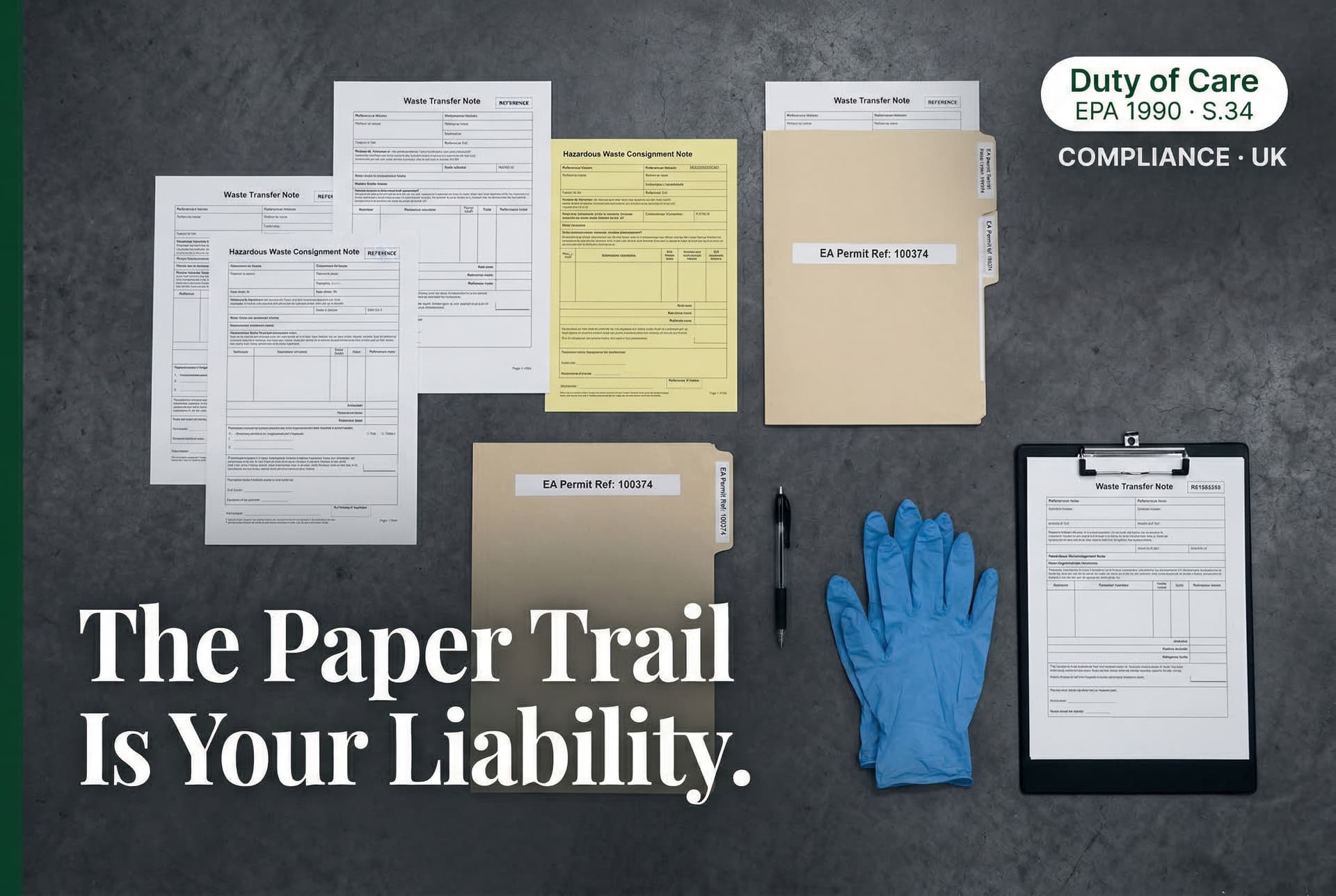
Every UK business that produces controlled waste is legally responsible for its safe management from generation to final disposal — under Section 34 of the Environmental Protection Act 1990. This duty of care does not transfer when waste leaves your site: if your contractor illegally disposes of waste, you may still face prosecution.
Four obligations that define generator responsibility:
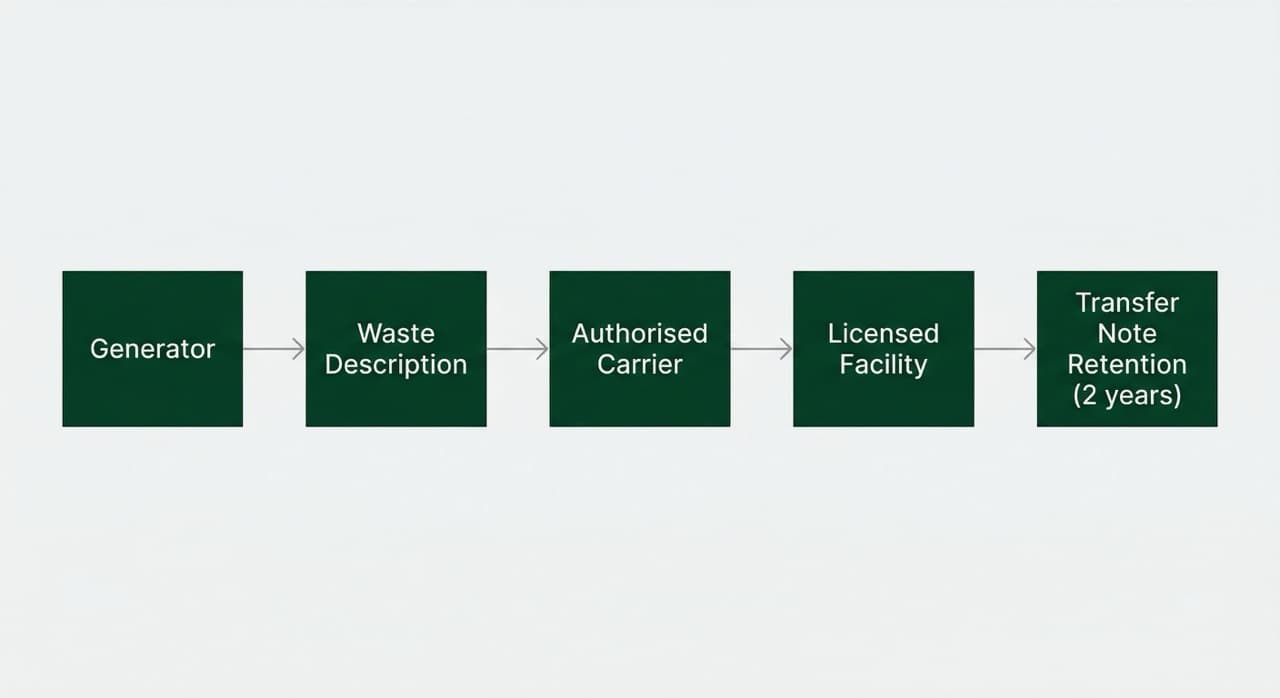
- Accurate description: waste must be correctly classified using EWC codes and described accurately on waste transfer notes
- Authorised carriers: waste may only be transferred to a person authorised to transport, treat, or dispose of it (EA-registered waste carrier)
- Documentation: a waste transfer note (WTN) or consignment note (for hazardous waste) must be completed for every transfer and retained for a minimum of 2 years
- Reasonable steps: the generator must take all reasonable steps to prevent unauthorised disposal — "fly-tipping by your contractor" is not a defence if you failed reasonable due diligence checks
Applies to: every UK business generating controlled waste — manufacturing, food processing, healthcare, construction, retail, agriculture.
Does NOT apply to: household waste generated by private individuals (household waste is exempt from Section 34 duty of care, though waste from home businesses is included).
Example: A manufacturer produces 200 tonnes/year of process waste. They use an EA-registered carrier and sign correct WTNs. The carrier illegally landfills the waste. The EA investigates and finds the generator used a carrier with an expired registration without checking. Result: prosecution under Section 34 with an unlimited fine.
Generator responsibility is one of the most under-appreciated compliance obligations in UK environmental law. Large fines — including unlimited Crown Court penalties — have been issued to businesses that believed they had discharged their duty simply by signing a waste transfer note. Understanding the full scope of what Section 34 requires, how Extended Producer Responsibility (EPR) adds a second compliance layer, and how on-site treatment changes the calculation entirely is essential for any operations director or environmental compliance manager.
This article is part of the Zero-Emission Industrial Waste Treatment series — covering non-combustion waste treatment across industrial, manufacturing, and regulatory contexts.
The Duty of Care — What It Requires Step by Step
Step 1: Waste Classification
All controlled waste must be classified using European Waste Catalogue (EWC) codes before it can be legally transferred. The correct EWC code determines: which disposal routes are permitted for that waste type; whether hazardous waste provisions apply (starred codes indicate hazardous waste, triggering consignment note requirements); and the full documentation and pre-notification obligations.
Getting the EWC code wrong — even inadvertently — can constitute a breach of duty of care. Common industrial EWC codes include:
| EWC Code | Description |
|---|---|
| 07 06 01* | Aqueous washing liquids and mother liquors (hazardous) |
| 12 01 05 | Plastics shavings and turnings |
| 15 01 02 | Plastic packaging |
| 16 01 19 | Plastics from vehicle maintenance |
| 19 12 04 | Plastic and rubber from waste treatment |
| 20 01 25 | Edible oils (food industry) |
For complex mixed waste streams — such as process residues containing both organic and plastic fractions — the EWC classification can be contested and should be confirmed with the EA or a licensed waste management consultant before transfer.
Step 2: Carrier Authorisation Check
All waste carriers operating in England must hold a current registration with the Environment Agency. In Wales, authorisation is granted by Natural Resources Wales (NRW); in Scotland, by SEPA; in Northern Ireland, by the NIEA. Generators must verify carrier registration before waste is collected from their site — and must retain evidence of the check, including the date on which it was conducted.
A carrier whose registration has lapsed is not an authorised person under Section 34. Transferring waste to a lapsed or unregistered carrier is a breach of duty of care regardless of whether the generator was aware of the lapse. The EA's public carrier register is searchable online and should be checked prior to every new engagement and periodically for ongoing contractors.
Step 3: Waste Transfer Notes
For non-hazardous controlled waste: a waste transfer note must be completed and signed by both the transferor (the generator or their agent) and the transferee (the carrier or facility operator) for each individual transfer. Where the same waste type is collected regularly from the same site by the same carrier, a season ticket WTN can cover multiple collections over a period of up to 12 months — reducing administrative burden while maintaining compliance.
For hazardous waste: consignment notes are required instead of WTNs. These are more detailed — requiring the pre-notification of the receiving facility, the use of specific EA consignment note forms, and retention for a minimum of 3 years. Pre-notification must be made before the waste moves.
Both WTNs and consignment notes must be retained for a minimum of 2 years from the date of transfer and must be produced for inspection by the EA on request.
Step 4: Reasonable Steps
Section 34 requires the generator to take "all reasonable steps" to prevent waste from being treated, kept, or disposed of unlawfully. In practice, this means:
- Conducting and documenting carrier registration checks before each engagement
- Physically visiting (or obtaining independent verification of) the receiving treatment or disposal facility, particularly for new or unfamiliar contractors
- Ensuring waste descriptions on transfer notes are accurate and match the actual waste being transferred
- Not accepting unusually low disposal prices without investigating the disposal route — underpriced disposal is a recognised indicator of illegal activity
The EA guidance note on duty of care makes clear that a generator who employs an illegal operator cannot rely on ignorance as a defence if basic due diligence checks were not carried out.
Extended Producer Responsibility (EPR) — The Packaging Obligation
What EPR Is
Extended Producer Responsibility is a regulatory framework that makes producers financially responsible for the end-of-life management of the products and packaging they place on the market. Rather than externalising disposal costs onto local authorities and taxpayers, EPR internalises those costs within the supply chain of the businesses that created the packaging obligation.
UK Packaging EPR (2025 Reforms)
The UK Packaging EPR framework applies to obligated producers — businesses handling above 50 tonnes of packaging per year with annual turnover above £2 million. Obligations include registration with the EA, quarterly data reporting by material type, and EPR fee payment funding local authority recycling infrastructure. From 2026, fees become modulated by recyclability rating — creating a direct financial incentive to reduce packaging volume and shift to recyclable formats.
As a generator responsibility matter, EPR is a compliance obligation that sits alongside duty of care — not instead of it. A business that correctly reports its EPR tonnage but uses an unregistered carrier to dispose of the packaging residues has satisfied one obligation while breaching another.
For the full EPR fee structure, modulation schedule, PRN obligations, and Plastic Packaging Tax interaction — and how on-site treatment eliminates EPR disposal fees — see the UK EPR 2025 compliance guide →.
Non-compliance with UK Packaging EPR registration and reporting requirements carries escalating consequences: failure to register by the annual deadline triggers automatic Fixed Monetary Penalties; under-reporting of packaging volumes can result in retrospective fee demands plus interest; incorrect material classification may constitute a regulatory breach subject to EA enforcement notice. Repeat non-compliance can result in criminal prosecution and public registration of the offence — visible to procurement officers and ESG auditors conducting supply chain due diligence.
How On-Site Treatment Changes the Generator Responsibility Calculation
For generators currently using off-site disposal contractors, every tonne of waste transferred creates a layered documentation obligation: a WTN or consignment note per collection, a carrier registration verification, EA records to retain for 2–3 years, and potential liability exposure if the contractor fails compliance obligations down the chain.
The aggregate administrative and legal burden of managing a complex waste portfolio through multiple licensed contractors is significant — and grows with the volume and diversity of waste streams handled.
The On-Site Treatment Model
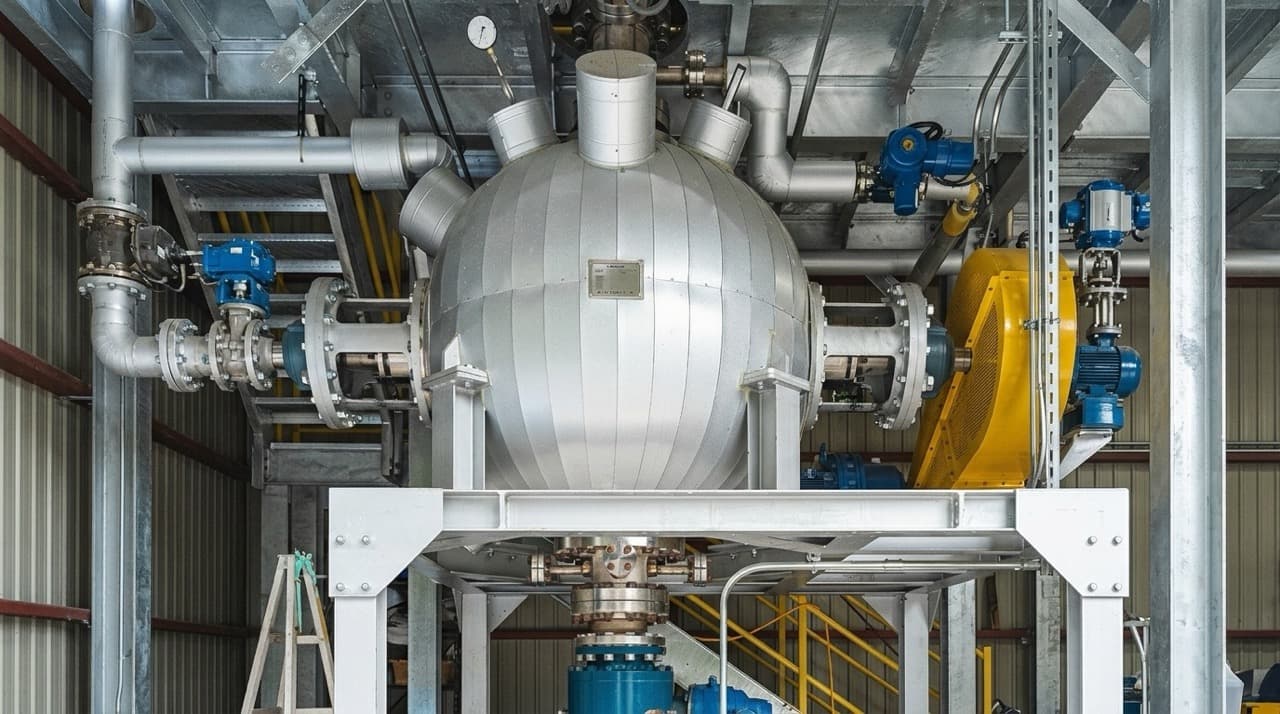
When waste is processed on-site via PHANTOM subcritical water hydrolysis, the duty of care applies to the inputs — but the certified outputs (sterile solid residue pursuing end-of-waste pathways; liquid fertiliser for clean organic inputs) are no longer controlled waste. They become commercially tradeable resources. This structural shift has direct compliance implications:
- Fewer transfer notes required, as certified outputs leave the site under commercial sales transactions rather than waste transfer documentation
- Reduced carrier contract and registration verification burden for the treated fraction
- Lower Environment Agency audit exposure for the largest waste streams
- A cleaner, more defensible Scope 3 Category 5 disclosure for CSRD reporting — with on-site treatment generating a verifiable, quantified diversion record
The compliance cost saving — reduced legal overhead, carrier verification, documentation management, and potential fine exposure — is a component of the full ROI calculation that on-site treatment enables but that is rarely quantified in standard disposal cost comparisons. For facilities with significant organic, medical, or mixed organic-plastic waste streams, see the PHANTOM organic waste treatment machine for throughput specifications and full ROI modelling. For a facility-specific assessment of generator responsibility liability reduction, request a free site review.
For the broader manufacturing regulatory picture, see UK manufacturing waste compliance costs for the full regulatory cost stack, manufacturing waste carbon footprint for Scope 3 category mapping, and ROI of an industrial waste processing machine for the full cost-benefit framework including compliance cost avoidance. For the landfill tax liability that compounds with every generator responsibility failure, see UK landfill tax rates and generator liability.
Waste Crime — Why Generator Responsibility Extends Beyond Paperwork
The Environment Agency defines waste crime as the illegal disposal, treatment, or transportation of waste — including fly-tipping, illegal waste sites, and illegal export of waste. UK waste crime costs the economy an estimated £924 million per year according to EA estimates, with the costs ultimately borne by legitimate businesses, landowners, and local authorities.
For generators, the risk is not abstract. Businesses that use under-checked or suspiciously underpriced contractors face:
- Criminal prosecution if the contractor is found to be operating illegally and the generator failed reasonable due diligence obligations
- Association with fly-tipping sites where waste bearing the generator's details is discovered
- EA enforcement notices requiring the generator to fund cleanup of illegally deposited waste originating from their site
- Public register entry in the EA's waste crime conviction register — accessible to procurement officers, ESG auditors, and sustainability-credentialed customers conducting supply chain screening

Minimum due diligence for every waste contractor engagement: verify EA carrier registration before each new engagement; request and retain a copy of the carrier's waste management licence or registered exemption; and physically verify — or obtain independent confirmation — that the receiving treatment or disposal facility exists, is permitted, and is operating legally. The cost of these checks is negligible. The cost of failing to make them can be unlimited.
Frequently Asked Questions
Under Section 34 of the Environmental Protection Act 1990, every business that produces, imports, keeps, stores, transports, treats, or disposes of controlled waste has a duty of care. This requires: describing waste accurately using EWC codes; packaging and labelling it correctly; using only authorised persons to carry, treat, or dispose of it; and completing and retaining a waste transfer note (or consignment note for hazardous waste) for a minimum of 2 years.
Breach of Section 34 duty of care is a criminal offence. Penalties: unlimited fine on conviction in Crown Court; up to 12 months imprisonment for individuals; Environment Agency can issue Fixed Monetary Penalties of up to £300 as a civil sanction for minor breaches. The EA also maintains a public register of waste crime convictions accessible to procurement officers and sustainability auditors.
UK Packaging EPR (implemented via the UK Packaging Waste Regulations 2023 and 2025 reforms) requires obligated producers of packaging above threshold volumes to register with the Environment Agency, report packaging data, and pay fees funding local authority collection and recycling costs. From 2025, EPR fees vary by material type and recyclability — incentivising reduced packaging and recyclable material substitution.
On-site treatment via PHANTOM subcritical water hydrolysis converts waste into sterile outputs that can pursue end-of-waste classification — removing the material from the controlled waste stream entirely. This eliminates: the requirement for consignment notes (for the treated output from clean organic inputs), the need for licensed carrier contracts, haulage documentation, and the EA transfer note trail for the treated fraction. The duty of care applies to the process inputs; the certified outputs become resources, not waste.
Figures are for informational purposes only and do not constitute legal, financial, or procurement advice. UK regulatory requirements and disposal rates based on 2026 industry data. ~1.27 USD/GBP.