Article Series
If your procurement team is asking for a datasheet, this is it. The PHANTOM organic waste treatment machine runs at 200–250°C and ~20–27 bar pressure, completing a full hydrolysis and sterilisation cycle in approximately 30 minutes per batch. Four capacity tiers cover approximately 4 tonnes/day to 27 tonnes/day — all on-site, zero incineration contract, zero stack emissions.
Choosing the wrong tier is the most expensive mistake a buyer makes. This guide gives you the operating parameters, the sizing formula, and the site requirements for each PHANTOM configuration — so you size correctly the first time.
This article is part of the Zero-Emission Industrial Waste Treatment series — covering non-combustion waste treatment across industrial, manufacturing, and regulatory contexts.
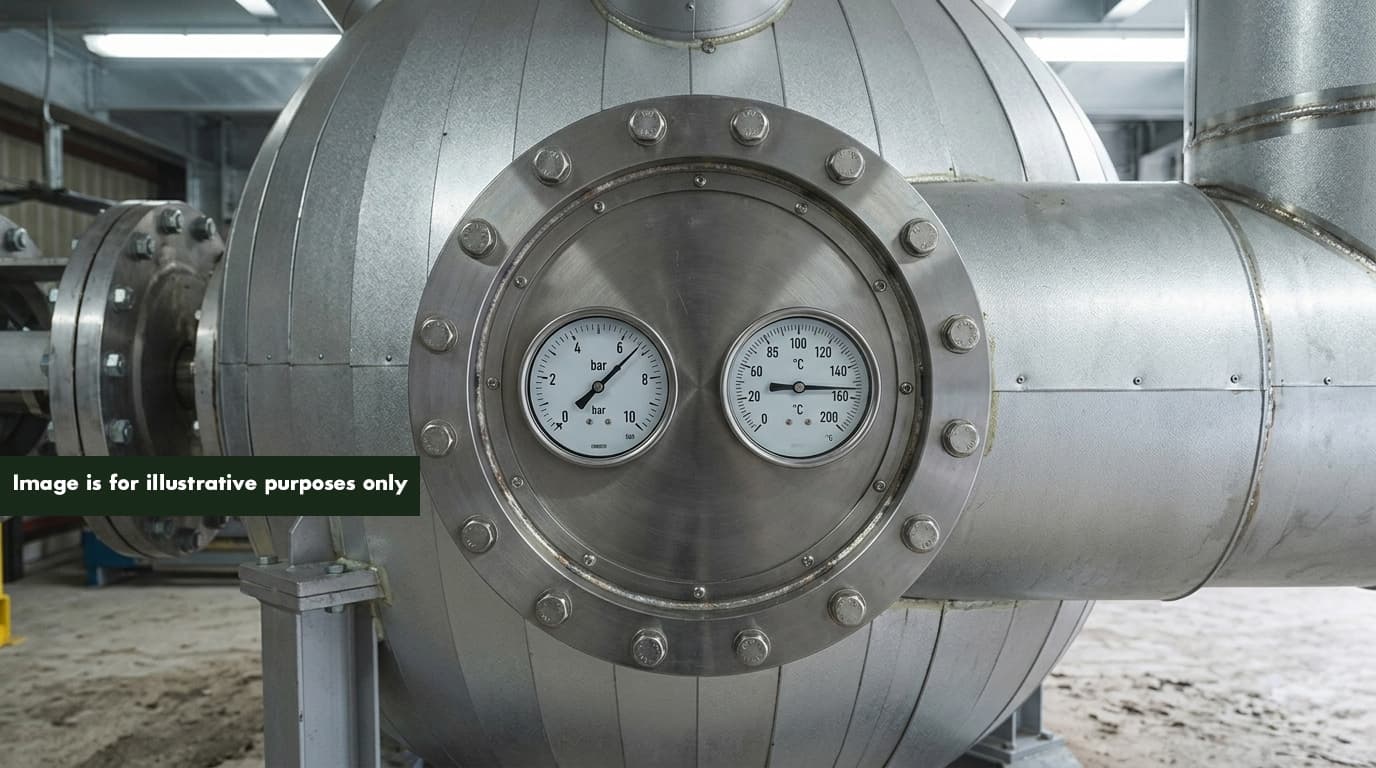
What Operating Temperature and Pressure Does the PHANTOM Machine Run At?
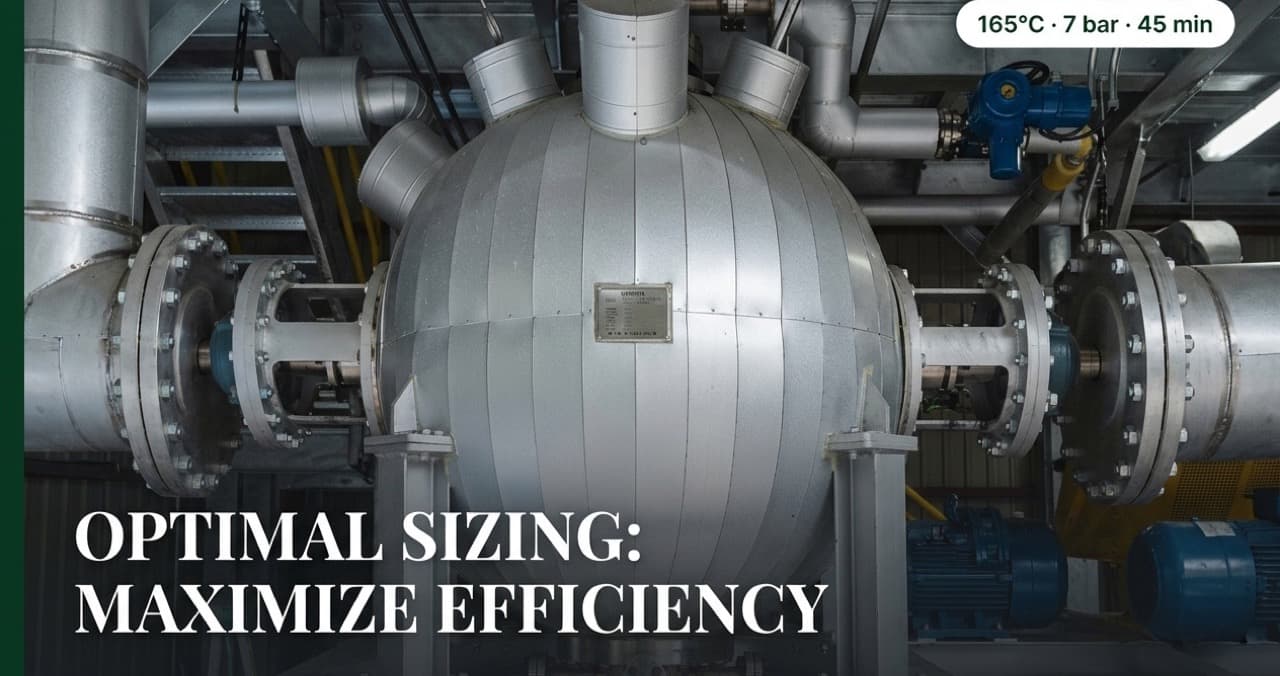
The PHANTOM operates at 200–250°C and ~20–27 bar pressure — an approximately 30-minute batch cycle that exceeds the EN ISO 17665-1 sterilisation threshold, with no combustion, no flue, and no atmospheric emission permit required.
The PHANTOM operates at 200–250°C and ~20–27 bar pressure — conditions that reliably destroy all Class B pathogens, prion proteins, and chemical oxygen demand in a single batch cycle, without any external pressurisation equipment or combustion.
- Process temperature: 200–250°C (held for minimum 20 minutes per batch)
- Operating pressure: ~20–27 bar (no external compressor required)
- Total cycle time: ~30 min (all models) — ~15–20 min active hydrolysis plus loading and unloading
- Sterilisation validation: Exceeds EN ISO 17665-1 threshold of ≥134°C, satisfying HTM 07-01 requirements for clinical waste
- Thermal source: Electric resistance heating — no combustion, no flue gas, no stack permit
This applies to any operator processing organic or clinical waste on-site in the UK. It does not apply to chemically stabilised inorganic waste streams (e.g., heavy metal sludges, PCB-contaminated materials) — those require a separate treatment pathway.
Micro-Example: In my experience, the first question a chief engineer asks is: "Do you need a boiler?" No. The PHANTOM's water jacket reaches 200–250°C using direct electric heating. The ~20–27 bar operating pressure is a product of that temperature — you are not running a pressure vessel that requires a registered pressure systems safety inspector on-site for daily operation.
What Batch Sizes and Throughput Tiers Does the PHANTOM Come In — And How Do You Choose?
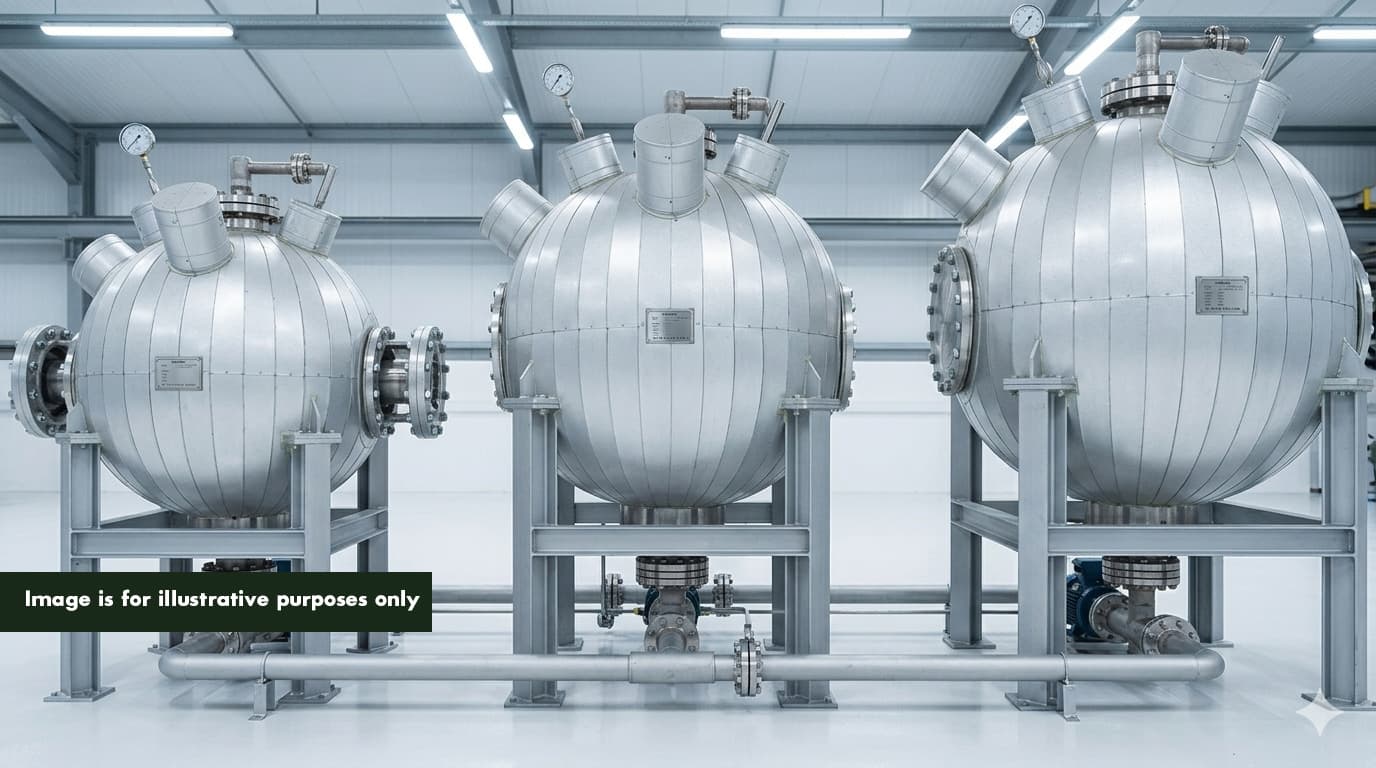
The PHANTOM is available in four configuration tiers: the PHANTOM 0.5t, PHANTOM 1t, PHANTOM 2t, and PHANTOM 3t — designed to match the waste volumes generated by care homes and clinics, mid-size food processors and poultry farms, NHS trusts or large industrial sites, and regional multi-site processing hubs respectively.
- PHANTOM 0.5t — 500 kg per batch | ~8–10 batches/day | ~4–5 tonnes/day | ~1,500 tonnes/year at 85% utilisation
- PHANTOM 1t — 1,000 kg per batch | ~8–10 batches/day | ~8–10 tonnes/day | ~3,000 tonnes/year at 85% utilisation
- PHANTOM 2t — 2,000 kg per batch | ~8–10 batches/day | ~16–18 tonnes/day | ~5,500 tonnes/year at 85% utilisation
- PHANTOM 3t — 3,000 kg per batch | ~8–10 batches/day | ~24–27 tonnes/day | ~8,000 tonnes/year at 85% utilisation
- Custom parallel configuration — two or three PHANTOM 3t units in parallel for 16,000–24,000 tonnes/year
This applies when you are processing organic waste streams with consistent moisture content above 40%. It does not apply when your primary waste stream is inert, low-moisture, or already sorted for high-value recycling — subcritical hydrolysis is optimised for wet, protein-rich, or biologically active materials.
Micro-Example: A 95-bed nursing home generating 280 kg/day of incontinence and food waste sits comfortably within the PHANTOM 0.5t's throughput envelope at ~60% capacity utilisation — leaving headroom for peak days without overflow to incineration contractors.
How Do I Calculate the Right PHANTOM Tier for My Facility?
Use peak daily waste volume, not average. Most facilities undersize by 20–35% by designing around mean daily arisings.
Sizing formula:
- Measure your 90th-percentile daily waste volume (not the arithmetic mean)
- Add 15% buffer for operational variance and future growth
- Divide by 8 batches/operational day to get required batch size
- Round up to the next PHANTOM tier
Example: A food processing facility averaging 3,800 kg/day with a 90th-percentile peak of 5,100 kg/day needs: 5,100 × 1.15 = 5,865 kg/day ÷ 8 = 733 kg/batch minimum. That rounds up to the PHANTOM 1t — not the 0.5t unit some vendors would recommend based on the 3,800 kg average.
This applies when your facility generates consistent daily organic waste volumes above 500 kg/day with measurable peak variance. It does not apply to intermittent or seasonal generators — for those, commission a feasibility assessment before committing to a fixed-tier configuration.
What Utilities and Site Requirements Does the PHANTOM Machine Need?
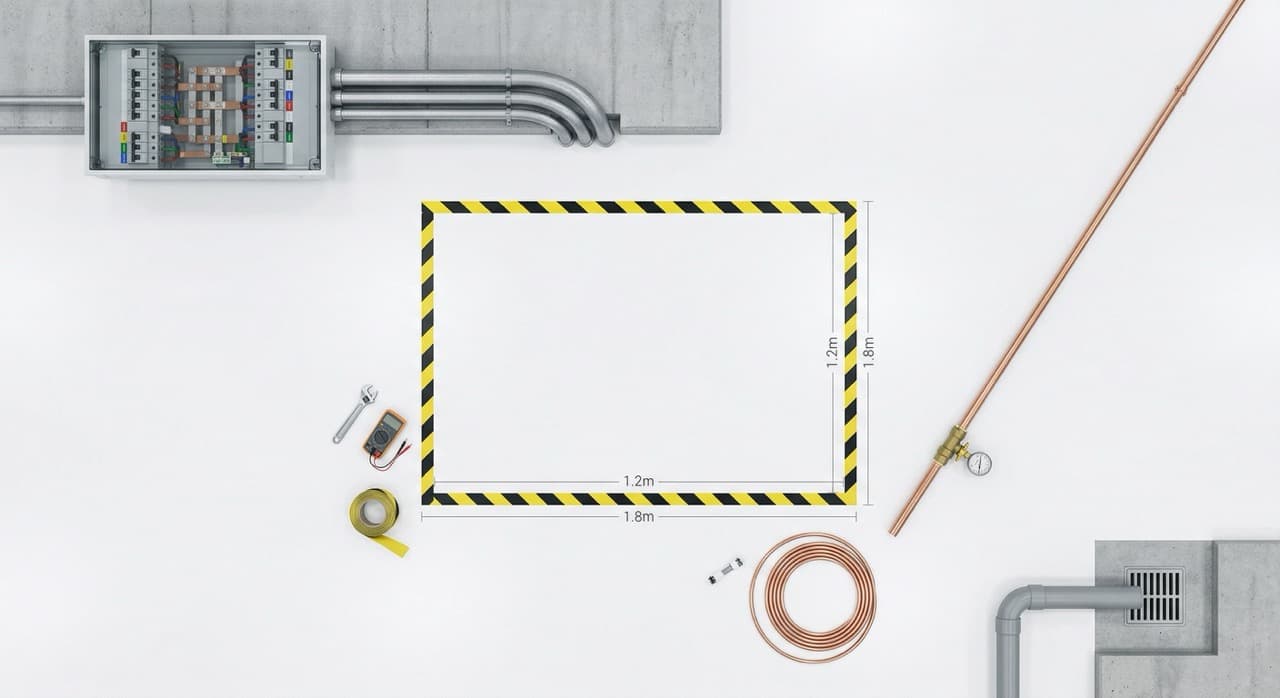
The PHANTOM requires a single-phase or three-phase electrical supply, a mains water connection, and a drain point — it needs no gas line, no boiler room, no specialist flue, and no incineration bay.
Site utility requirements by tier:
- PHANTOM 0.5t: 32A three-phase (400V) | ~18 kW peak draw | 1.8m × 1.2m footprint (2.16 m²) | 1,200 kg floor load | 50mm waste outlet
- PHANTOM 1t: 63A three-phase (400V) | ~38 kW peak draw | 2.4m × 1.6m footprint (3.84 m²) | 2,200 kg floor load | 75mm waste outlet
- PHANTOM 2t: 125A three-phase (400V) | ~85 kW peak draw | 4.2m × 2.2m footprint (9.24 m²) | 5,200 kg floor load | 110mm waste outlet with integral balancing tank
- PHANTOM 3t: 200A three-phase (400V) | ~120 kW peak draw | 5.0m × 2.8m footprint (14.0 m²) | 7,500 kg floor load | 110mm waste outlet with integral balancing tank
This applies when you have an existing service corridor or plant room with power and water nearby. It does not apply if your site has no three-phase supply within 30 metres — in that case, a transformer upgrade is required before installation, adding 4–8 weeks to the commissioning timeline.
Micro-Example: A district general hospital refurbishment had already allocated 12 m² for a second autoclave. The PHANTOM 1t fitted in 3.84 m² of that allocation — the surplus 8 m² became clean linen storage. The NHS facilities manager said it was the first waste equipment spec that required fewer utilities than what it replaced.
Which Waste Streams Is the PHANTOM Certified to Accept?
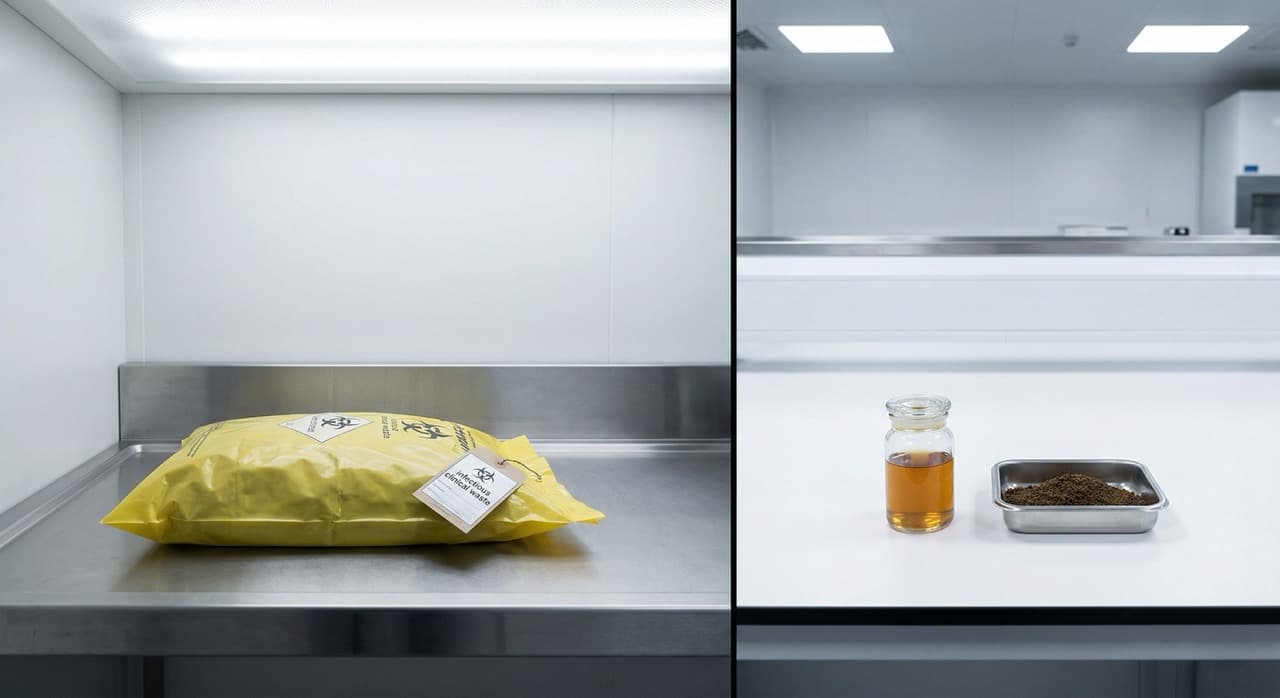
The PHANTOM is certified to process Class A and Class B clinical waste (per HTM 07-01), mixed organic food waste, agricultural byproducts including manure and slaughter offal, and soft-fraction plastics mixed with organic content — covering the major wet waste streams generated by healthcare, food production, and agriculture.
- Clinical and infectious waste (HTM 07-01 Class A/B): soft tissue, PPE, absorbent pads, incontinence products, anatomical waste
- Food and catering waste: pre- and post-consumer, mixed, including proteins, fats, and cooked food
- Agricultural organic waste: poultry litter, livestock manure, abattoir offal, fishery byproduct
- Soft-fraction mixed plastics: polythene films, single-use packaging mixed with food residue (≤30% plastic fraction by weight)
- Pharmaceutical-adjacent organic matrices: expired organic pharmaceuticals in soft capsule or liquid form (non-cytotoxic only)
This applies when waste is fed with a moisture content of ≥40% and no single rigid piece exceeds 100mm in any dimension for the PHANTOM 0.5t/1t, or 200mm for the PHANTOM 2t/3t. It does not apply to sharps, glass, hard-rigid clinical devices, cytotoxic waste, or heavy metals — these require pre-segregation prior to loading.
For operators processing UK non-incineration medical waste streams, the PHANTOM's input certification eliminates the grey-area classifications that force clinical waste into expensive incineration contracts by default.
Micro-Example: In commissioning at a food manufacturer in the East Midlands, the waste stream contained ~22% polythene film by weight. The PHANTOM 1t processed it without modification — the film hydrolyses partially and the remainder exits as a clean, separated plastic fraction in the solid output stream.
PHANTOM Output vs Licensed Waste Disposal: What Does Sterile Residue Get You?
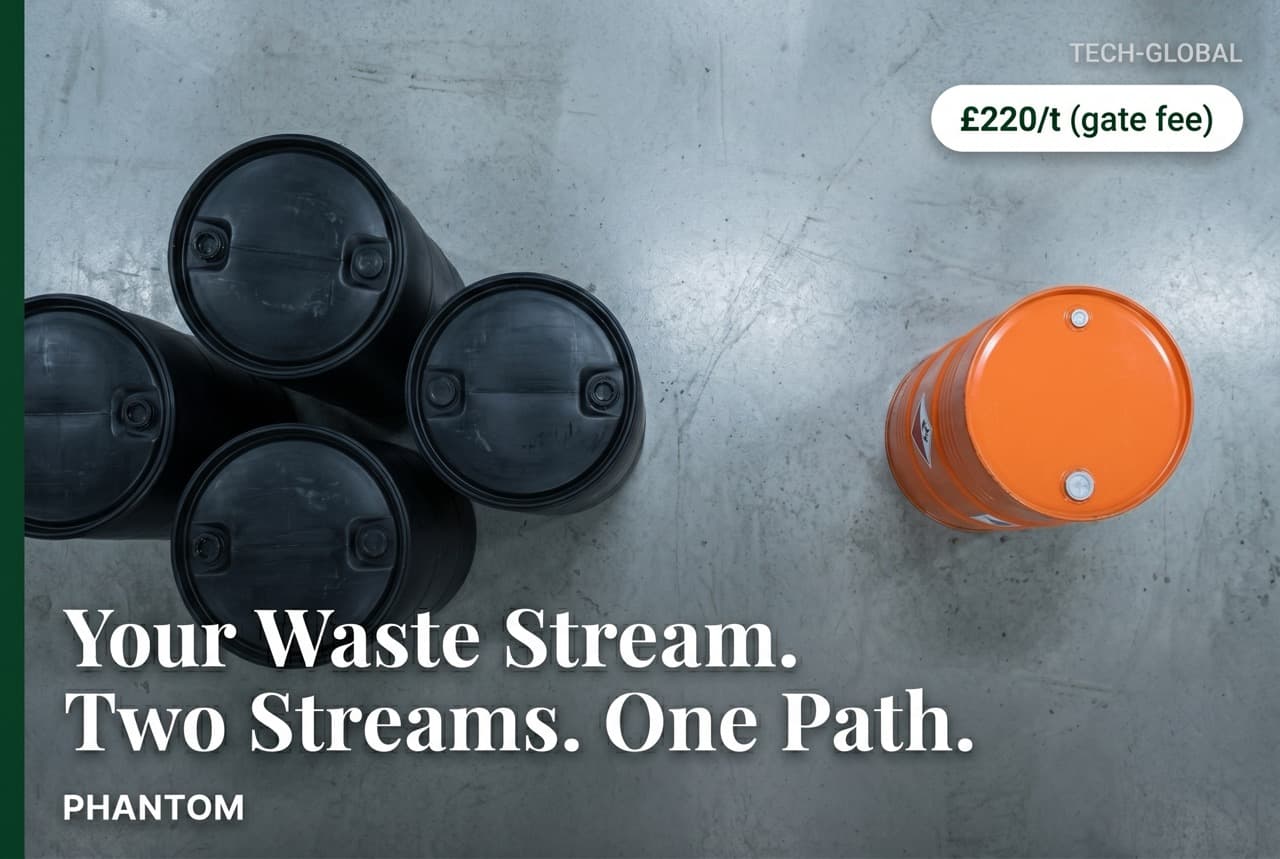
Every PHANTOM batch produces two output streams: a sterile aqueous hydrolysate (liquid fraction) and a dry sterile solid residue. Both are certified non-hazardous, both are recoverable as agricultural inputs, and neither requires licensed waste disposal.
Liquid hydrolysate (aqueous fraction):
- Volume: ~75–85% of input mass recovered as process water
- Composition: dissolved amino acids, peptides, and mineral salts
- Pathogen status: sterile — validated log 6 reduction of indicator organisms
- pH: 6.2–7.4 (neutral range — compliant with trade effluent standards)
- Disposal route: trade effluent consent route to sewer, or agricultural irrigation subject to EA approval
Dry solid fraction:
- Volume: 10–20% of input mass
- Composition: sterile biomass residue — mineral-rich, pathogen-free
- Approval status: EA-exempt sterile residue for land application under Environmental Permitting Regulations
- Agricultural use: meets PAS 100 precursor blend or direct soil amendment (N:P:K profile matches slow-release fertiliser)
- Storage: non-hazardous dry solid — standard skip or IBC, no special waste handling required
This applies when the input stream is predominantly organic and certifiable as Class A/B clinical waste or food waste. It does not apply if the input contains ≥5% heavy metal content, cytotoxic residue, or radioactive materials — the output of those streams would require independent verification before land application.
Micro-Example: An NHS trust in the North West validated the PHANTOM's sterile solid output through UKAS-accredited laboratory testing. The result: no detectable E. coli, no Staphylococcus aureus, no spore-forming anaerobes. The residue was sent to a local composting facility as a feedstock supplement — replacing a Class B waste disposal invoice with a zero-cost material exit.
| Specification | PHANTOM 0.5t | PHANTOM 1t | PHANTOM 2t | PHANTOM 3t |
|---|---|---|---|---|
| Tank volume | 0.5 m³ | 1 m³ | 2 m³ | 3 m³ |
| Batch capacity (normal waste) | 500 kg | 1,000 kg | 2,000 kg | 3,000 kg |
| Daily throughput | ~4–5 tonnes/day | ~8–10 tonnes/day | ~16–18 tonnes/day | ~24–27 tonnes/day |
| Annual capacity | ~1,500 t/year | ~3,000 t/year | ~5,500 t/year | ~8,000 t/year |
| Process temperature | 200–250°C | 200–250°C | 200–250°C | 200–250°C |
| Operating pressure | ~20–27 bar | ~20–27 bar | ~20–27 bar | ~20–27 bar |
| Cycle time | ~30 min | ~30 min | ~30 min | ~30 min |
| Electrical supply | 32A three-phase | 63A three-phase | 125A three-phase | 200A three-phase |
| Peak draw | ~18 kW | ~38 kW | ~85 kW | ~120 kW |
| Footprint | 1.8m × 1.2m | 2.4m × 1.6m | 4.2m × 2.2m | 5.0m × 2.8m |
| Stack / flue required | No | No | No | No |
| Typical fit | Care home, clinic, small food processor | NHS ward block, food manufacturer, farm complex | NHS trust, large industrial site | Multi-site hub, regional processing centre |
Each tier is defined by its tank volume (0.5–3 m³). The kilogram batch capacity above assumes normal-density waste — for lightweight but bulky waste, each cycle is limited by the tank volume rather than by weight, so size against the volume of your waste stream, not only its mass.
Pro-Tip: The Sizing Mistake That Costs £80,000 a Year
Sizing down to save on capital cost adds £27,765/year in overflow incineration spend — and that cost repeats every year for the equipment's lifespan. The suggestion to "start with the smaller unit and scale up later" sounds prudent; the maths says otherwise.
Most facilities size their on-site treatment equipment against average daily volume — but waste arisings aren't average. Clinical wards have high-throughput days. Food processors have end-of-shift flush peaks. Farms have seasonal slaughter cycles.
When an undersized PHANTOM hits its daily limit, the overflow goes back to leading UK clinical waste contractors (Stericycle, Tradebe) charging £480–£617/tonne (~$609–$783/tonne) under NHS framework agreements (source: NHS Supply Chain framework agreements, 2025/26 rates). That's not a bad luck scenario — it's a predictable structural failure that repeats every peak day, every week, for years.
A facility generating 4,300 kg/day of clinical waste, running a PHANTOM 0.5t capped at 1,500 tonnes/year, will overflow approximately 120 tonnes/year to incineration — at £617/tonne (~$783/tonne), that's £74,040 in annual disposal spend that never goes away. Over a 10-year equipment lifespan, that's £740,400 in avoidable cost. The delta between a PHANTOM 0.5t and a PHANTOM 1t is a fraction of that figure.
The ROI of an industrial waste processing machine covers the full payback calculation — including how to model overflow cost against the capital delta between tiers. If you are ready to eliminate incineration costs permanently, contact our team for a free facility sizing assessment before you commit to any configuration.
Frequently Asked Questions
The PHANTOM operates at 200–250°C and ~20–27 bar pressure. A full batch cycle — heat-up, hold, and cool-down — takes approximately 30 minutes (about 15–20 minutes active hydrolysis, plus loading and unloading). This exceeds the EN ISO 17665-1 sterilisation threshold and satisfies HTM 07-01 requirements for clinical waste treatment.
PHANTOM comes in four tiers: the PHANTOM 0.5t (500 kg/batch, ~4–5 tonnes/day, suited to care homes and clinics), the PHANTOM 1t (1,000 kg/batch, ~8–10 tonnes/day, suited to NHS wards and food processors), the PHANTOM 2t (2,000 kg/batch, ~16–18 tonnes/day, suited to NHS trusts and large industrial sites), and the PHANTOM 3t (3,000 kg/batch, ~24–27 tonnes/day, suited to multi-site hubs and regional processing centres).
No. The PHANTOM uses electric heating with no combustion — there is no stack, no flue, and no atmospheric emission permit required. This eliminates the planning and permit overhead associated with on-site incinerators or boiler-driven autoclaves.
Each batch produces a sterile aqueous hydrolysate (liquid fertiliser precursor, 75–85% of input mass) and a dry sterile solid residue (10–20% of input mass). Both are certified non-hazardous and eligible for land application under EA exemptions — neither requires licensed waste disposal.
Figures are for informational purposes only and do not constitute legal, financial, or procurement advice. ~1.27 USD/GBP. EA permit timelines are indicative; confirm current application backlogs with the Environment Agency at time of submission.