Article Series
PCB & Hazardous Industrial Waste: Subcritical Water Hydrolysis Compatibility Guide
Hazardous industrial waste costs UK facilities between £65 and £220 per tonne to incinerate — and most of that waste does not need incineration at all. This guide breaks down exactly which hazardous waste streams are compatible with subcritical water hydrolysis (SWH) on-site treatment, and which — including PCBs — require a different route entirely. It is part of our broader guide to zero-emission industrial waste treatment, which covers every treatment method, cost structure, and compliance pathway available to UK industrial operators. Hazardous waste is the fastest-growing segment of the global industrial solid waste management market, according to TechSci Research — a market projected to reach USD 210 billion by 2030 — reflecting tightening regulation and rising volumes across manufacturing, pharmaceuticals, and chemicals.
What Makes a Hazardous Industrial Waste Stream Compatible with Subcritical Water Hydrolysis?
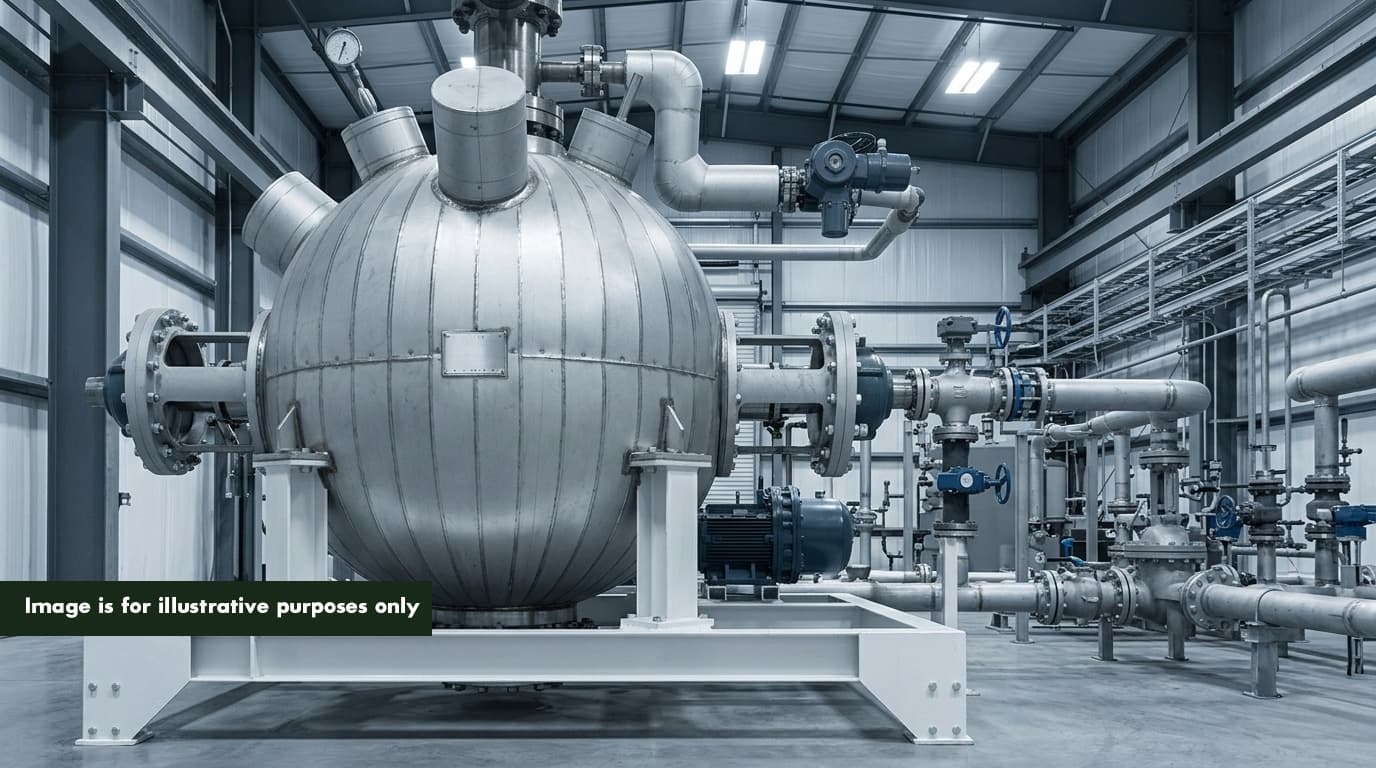
A hazardous waste stream is compatible with subcritical water hydrolysis when it has dominant organic content — proteins, lipids, cellulose, or mixed biomass — and contains no persistent organic pollutants (PCBs, dioxins, furans) above 0.005% by weight, no radioactive material, and sufficient moisture to reach operating parameters. Streams meeting these criteria can be treated on-site without incineration at a fraction of the current contracted disposal cost.
Subcritical water hydrolysis is compatible with hazardous waste streams that have a dominant organic content — proteins, lipids, cellulose, or mixed organic sludge — and that do not contain persistent organic pollutants (POPs) at regulated concentrations.
The four compatibility criteria:
- Organic content above 50% by dry weight
- Absence of chlorinated persistent organic pollutants (PCBs, dioxins, furans) above 0.005% by weight
- No radioactive content
- Sufficient moisture to allow the vessel to reach 200–250°C at ~20–27 bar within standard cycle parameters
This applies when the waste stream originates from biological processes: food manufacturing effluent, agricultural slurry, proteinaceous manufacturing residue, or contaminated organic biomass. It does NOT apply to waste streams containing persistent organic pollutants, radioactive materials, or purely inorganic heavy-metal concentrates.
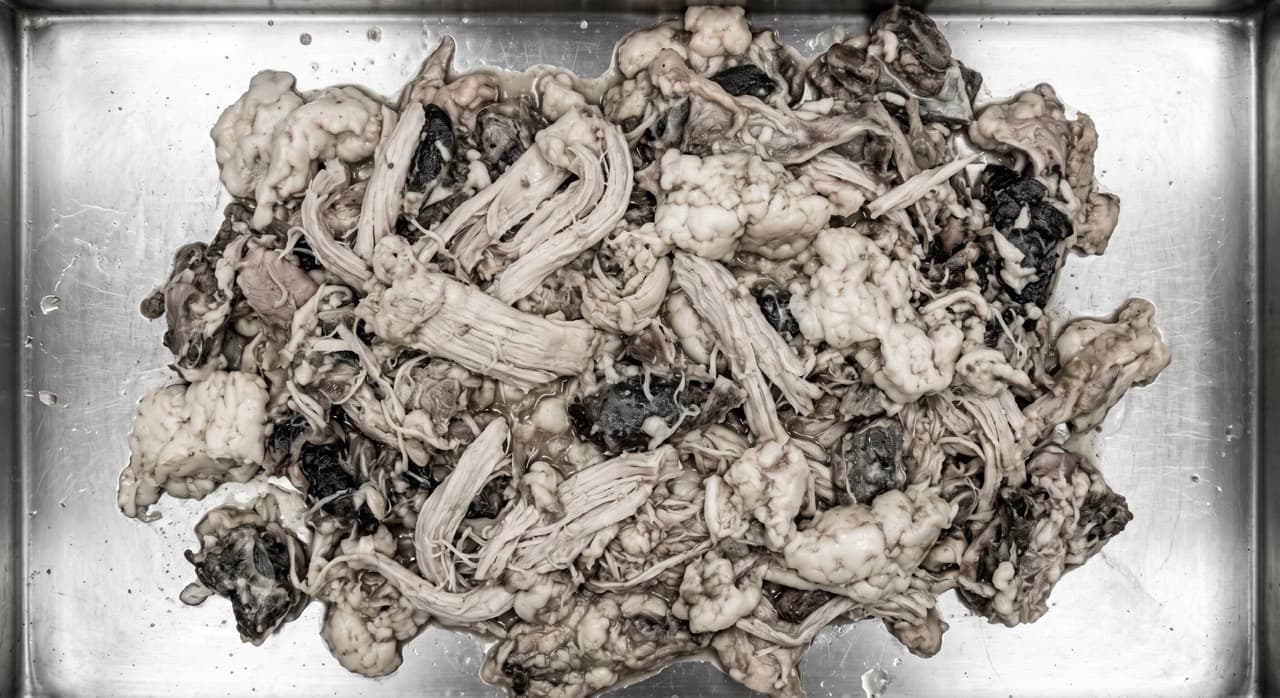
Micro-example: A food processing plant generating 8 tonnes per week of contaminated fat-and-protein slurry from rendering operations can route the entire stream to a PHANTOM 3t unit. A legacy transformer oil drum testing at 600 ppm PCBs cannot.
Can Subcritical Water Hydrolysis Destroy PCBs?
Standard subcritical water hydrolysis at 250°C and 20–27 bar cannot destroy PCBs to the standard required by the UK POPs Regulation — and at these parameters carries a significant risk of generating dioxins and furans (polychlorinated dibenzofurans — PCDFs) as by-products. Research documents up to 47-fold increases in toxic equivalency without specialist emission controls. PCB destruction requires temperatures above ~350°C with specialist oxidant addition. PHANTOM is designed and validated for organic waste: proteins, lipids, cellulose. PCBs are a different technical and regulatory category entirely.
Standard subcritical water hydrolysis at 250°C and 20–27 bar does not destroy polychlorinated biphenyls (PCBs) to the standard required by the UK POPs Regulation. At these parameters, SWH can extract PCBs from contaminated media — but cannot achieve the destruction efficiency legally required for disposal.
What the research shows:
- At 250°C for 60 minutes, subcritical water achieves 99.7% PCB mass removal from contaminated soil — but extraction is not destruction
- Reliable PCB destruction requires temperatures of 250–350°C plus an oxidant — hydrogen peroxide or sodium hydroxide — and specialist reactor controls
- At standard 250°C SWH parameters, PCB destruction efficiency is insufficient AND the process carries significant risk of generating dioxins and furans (polychlorinated dibenzofurans — PCDFs); research documents up to 47-fold increases in toxic equivalency in the early reaction stages without specialist emission controls
- This is precisely why PCBs require specialised high-temperature incineration or specific chemical dechlorination — not standard SWH. A PHANTOM unit running organic waste at 250°C and 20–27 bar would not destroy PCBs; it would create a more dangerous effluent
- PHANTOM machines are designed and validated for organic waste breakdown — proteins, lipids, cellulose, mixed biological slurries. That is where the process excels. PCB destruction is an entirely different technical and regulatory challenge
This applies when evaluating whether your facility's PCB-contaminated equipment oil, capacitor waste, or transformer fluid can be handled on-site. It does NOT apply to the treatment of organic industrial waste that is entirely free of PCBs — SWH is the correct and highly effective method for those streams.
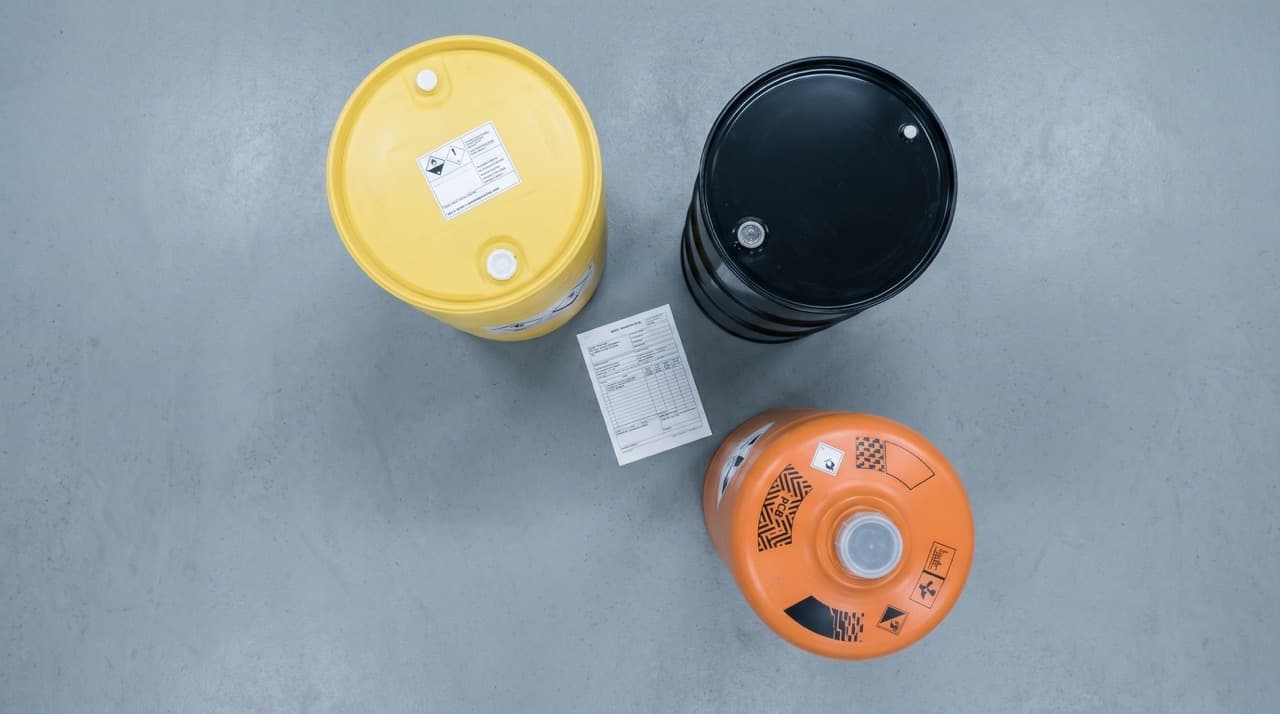
Micro-example: A facility decommissioning 1960s electrical switchgear with transformer oil testing at 550 ppm PCBs must route that waste to an EA-registered PCB disposal contractor, not to an on-site SWH unit.
What Are the UK Legal Requirements for PCB Disposal — and Has the Deadline Passed?
The UK PCB disposal deadline was 31 December 2025. All PCB-containing equipment above 0.005% concentration and 50 ml volume was required to be decontaminated or destroyed by that date under the Environmental Protection (Disposal of PCBs) Amendment Regulations 2024 (SI 2024/354). Any registered PCB equipment still in use or undisposed is now in regulatory breach. Disposal must be through an EA-authorised treatment facility — on-site destruction without appropriate authorisation is not a legal route.
Under the UK POPs Regulation (retained from EU law) and the Environmental Protection (Disposal of Polychlorinated Biphenyls and other Dangerous Substances) (England and Wales) Amendment Regulations 2024 (SI 2024/354), all PCB-containing equipment above 0.005% concentration and 50 ml volume was required to be decontaminated or destroyed by 31 December 2025.
The current legal position:
- The December 2025 deadline has passed — any registered PCB equipment still in use or undisposed is now in breach
- Registration with the Environment Agency is mandatory before disposal, even if handover to a contractor is imminent
- PCBs must be processed by an EA-authorised treatment facility — on-site destruction without appropriate authorisation is not a legal route
- SI 2024/354 (in force 6 April 2024) updated enforcement provisions and tightened registration obligations
This applies when your facility holds legacy electrical equipment manufactured before 1985 — the era when PCBs were most widely used in dielectric fluids and capacitor insulation. It does NOT apply to modern electrical equipment, which has been PCB-free since the mid-1980s.
Micro-example: A manufacturing site with pre-1985 substation transformers registered with the EA and flagged as potentially contaminated now needs to engage an EA-registered contractor without delay — the regulatory window has closed.
Which Organic Industrial Hazardous Waste Streams Are Compatible with On-Site SWH?
A wide range of industrial organic hazardous waste is fully compatible with on-site subcritical water hydrolysis: rendering by-products, food manufacturing slurry, agricultural biosolids, contaminated cooking oils, and proteinaceous industrial sludge. At 180–260°C, protein recovery yields reach 71.6–87.6% by weight and full pathogen sterilisation is achieved — without combustion, without stack emissions, and at a fraction of the contracted incineration cost.
A wide range of industrial organic hazardous waste streams are fully compatible with subcritical water hydrolysis and can be treated on-site without external incineration or offsite haulage. At temperatures between 180°C and 260°C, organic material — including high-pathogen, high-lipid, and mixed proteinaceous streams — is broken down and sterilised through ionic action, with no combustion by-products.
Confirmed compatible industrial waste streams:
- Animal-derived industrial residues: rendering byproducts, slaughterhouse offal, fish processing waste
- Food manufacturing slurry: fat-trap waste, dissolved air flotation (DAF) sludge, protein-rich effluent, contaminated cooking oils
- Agricultural processing residues: crop waste, poultry litter, contaminated organic biomass
- Industrial biosolids: proteinaceous manufacturing sludge and dissolved air flotation (DAF) sludge with biological or hazard classification
- Mixed organic industrial waste: soft packaging contaminated with food content, degradable manufacturing residues where organic fraction is dominant
PHANTOM excels specifically at converting complex organic slurries — including DAF sludge, rendering waste, and mixed food manufacturing effluent — into sterile, volume-reduced outputs. These are exactly the streams most industrial facilities are currently routing to contracted incineration at £65–£220 (~$83–$279) per tonne.
Research on SWH treatment of proteinaceous industrial biomass shows protein recovery yields of 71.6 to 87.6% by weight of the original protein content at treatment temperatures between 180°C and 260°C — demonstrating full molecular breakdown, not just volumetric reduction.
For industrial operators reviewing the polymer-specific question, our guide to hard-to-recycle industrial plastics and subcritical water hydrolysis covers compatibility and co-treatment options for contaminated plastic waste streams. For vessel specification, polymer compatibility, and Track A vs Track B input separation, see the engineering guide for industrial plastics hydrolysis.
This applies when your facility generates biologically-hazardous organic waste currently being disposed of by external incineration or contracted collection. It does NOT apply to waste streams where PCBs, dioxins, or other POPs have been confirmed at regulated concentrations.
Micro-example: A poultry processing facility generating 12 tonnes per week of mixed carcass, fat-trap, and feather waste — currently paying £140 (~$178) per tonne for contracted incineration — can route this entire stream to a 3-tonne PHANTOM unit operating at a captive cost well below £30 (~$38) per tonne.
What Does Hazardous Waste Incineration Cost in the UK in 2026 — and Will It Get More Expensive?
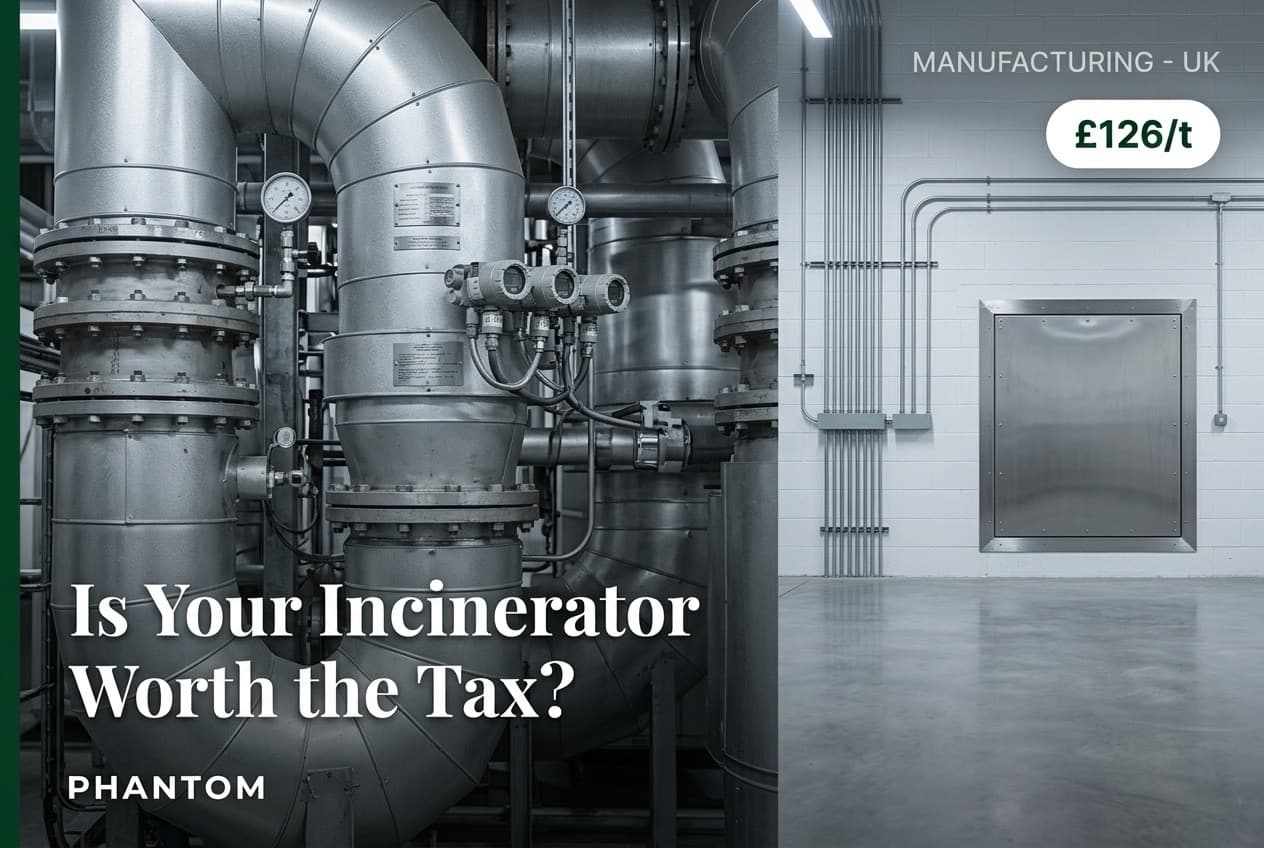
Hazardous industrial waste incineration currently costs £65–£220 (~$83–$279) per tonne, exclusive of transport. UK ETS expansion to waste incineration from 2028 adds approximately £48 (~$61) per tonne at current carbon pricing projections. PCB specialist disposal runs £150–£400 (~$190–$508) per tonne. For organic hazardous streams compatible with on-site SWH, PHANTOM captive cost falls well below £30 (~$38) per tonne — making the ETS cost escalation a calculable, avoidable liability for facilities that act before 2028.
Hazardous industrial waste incineration currently costs between £65 and £220 per tonne depending on waste classification, transport distance, and contractor rates. That range is set to widen further as the UK Emissions Trading Scheme (UK ETS) expands to include energy-from-waste and waste incineration facilities. Our detailed analysis of the UK ETS carbon costs for waste incineration covers the full gate fee trajectory by facility type through 2028.
The cost trajectory:
- Current incineration gate fee range: £65–£220 per tonne (~$83–$279/tonne) exclusive of transport
- UK landfill standard rate: £130.75/tonne (~$166/tonne) from April 2026 (HMRC)
- UK ETS MRV period: begins 1 January 2026 (voluntary monitoring); full carbon pricing from 2028
- Projected gate fee increase at full ETS inclusion: approximately £48/tonne (~$61/tonne) above current rates
- PCB specialist disposal: estimated £150–£400/tonne (~$190–$508/tonne) with EA-registered contractor
In my experience reviewing industrial waste contracts, facilities rarely model the 5-year cost trajectory. They renew collection contracts on current rates and then absorb the annual increases. The UK ETS expansion means the 2028 cost step-change is known, calculable, and avoidable for compatible streams now.
This applies when you are currently using contracted incineration for organic industrial waste and evaluating the long-term cost case for on-site treatment. It does NOT apply to PCB waste — specialist contractor use is non-negotiable regardless of cost.
Micro-example: A manufacturer sending 500 tonnes per year of organic industrial waste to incineration at £120/tonne (~$152/tonne) pays £60,000 (~$76,200) annually. The ETS cost increase of ~£48/tonne from 2028 adds £24,000 (~$30,500) to that bill — making the case for on-site SWH capital investment with a payback period under 3 years at current PHANTOM sizing. See our ROI guide for industrial waste processing machines for a full payback model.
How Should Industrial Operators Classify Hazardous Waste Before Choosing a Treatment Route?
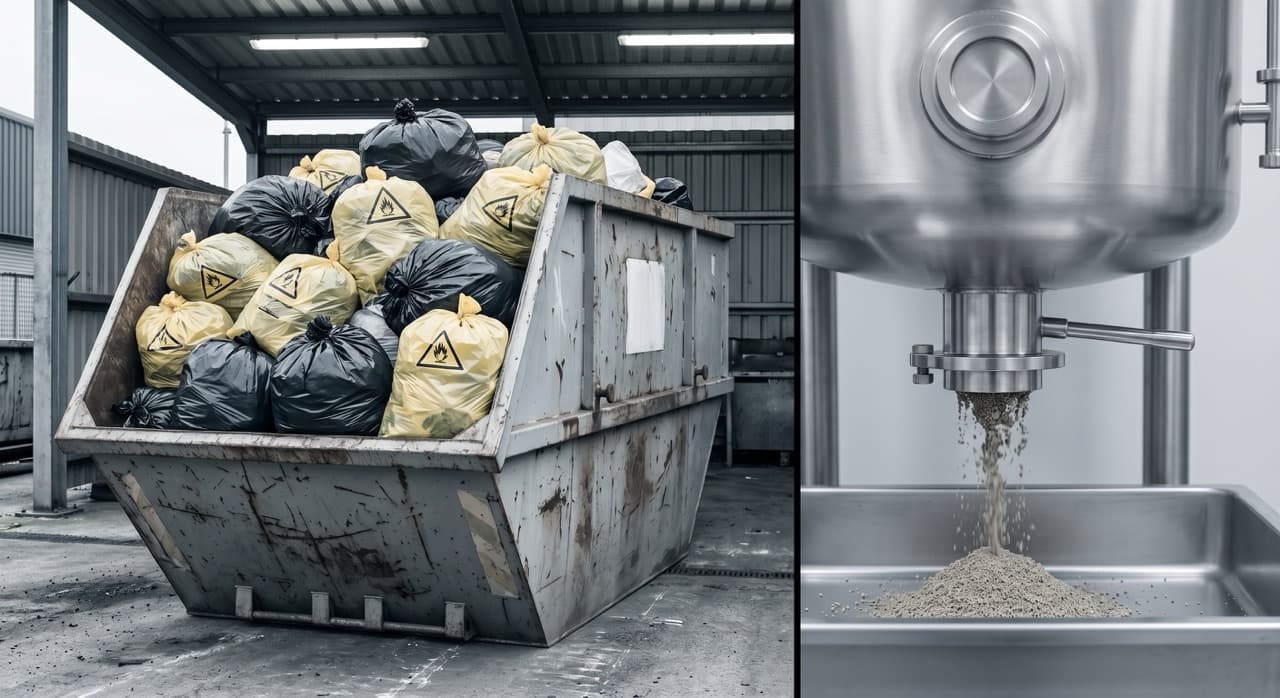
Stream-level classification at source is the correct approach — before routing decisions are made, not after a waste transfer note is signed. The decisive variable is POPs presence: any stream containing PCBs, dioxins, or furans above 0.005% must go to an EA-registered specialist, with no exceptions. Organic streams without POPs — rendering residue, food manufacturing sludge, agricultural biosolids — should not be incinerated. Most facilities are routing SWH-compatible streams to incineration simply because classification has not been done at source.
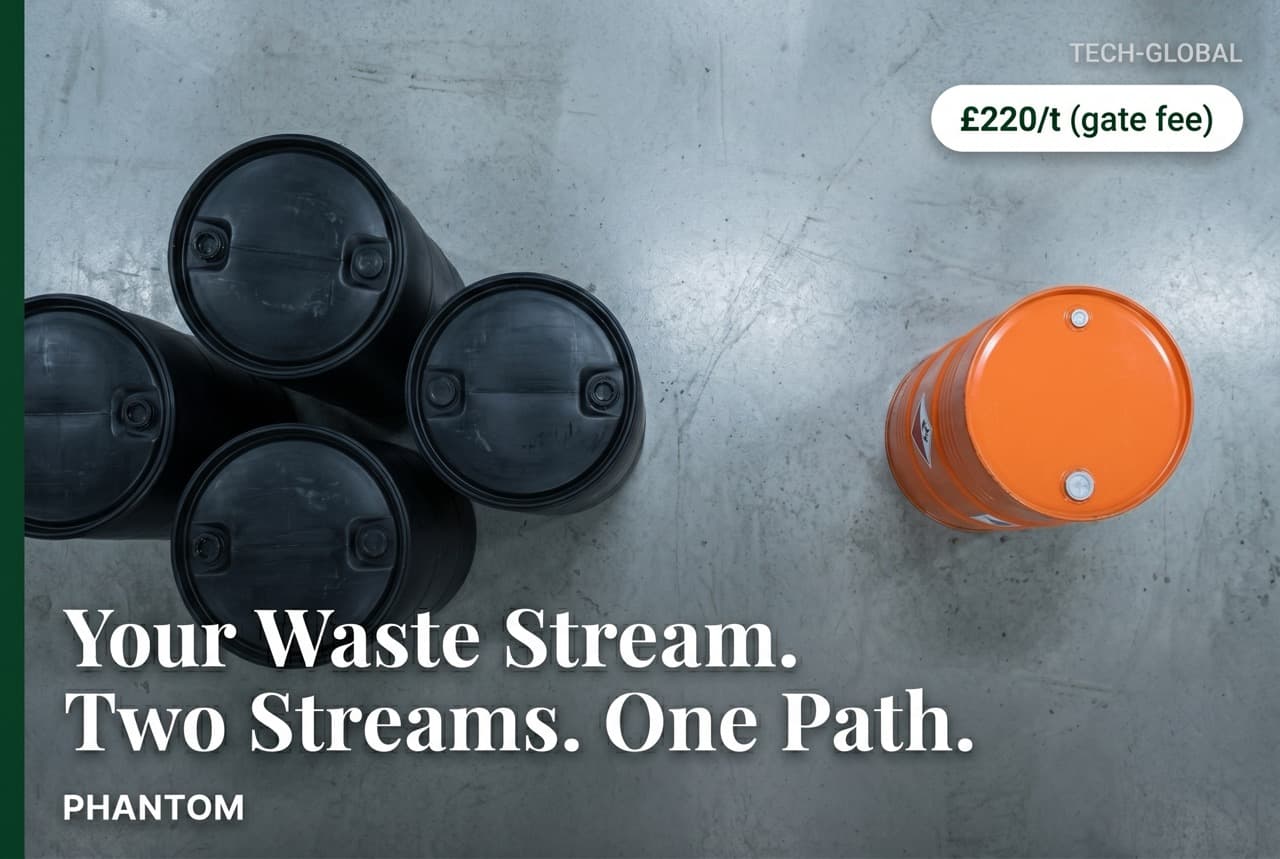
Stream-level classification at source is the correct approach — identifying each waste type before routing decisions are made. The most common and costly error is sending all hazardous waste to incineration because classification has not been done, or because PCB contamination in one stream has caused the entire mixed output to be treated as specialist waste.
The classification decision tree:
- Stream contains PCBs, dioxins, furans, or other POPs above 0.005%? → EA-registered specialist disposal is mandatory — no other route is legal
- Stream contains radioactive material? → Nuclear Decommissioning Authority pathway
- Dominant composition is organic (protein, fat, cellulose, mixed biomass)? → On-site SWH is the appropriate route
- Stream is inorganic — heavy metal concentrate, aqueous acid, or alkali? → Specialist treatment or neutralisation; SWH is not the right tool
- Plastic content co-mingled with organic waste? → SWH can handle mixed streams; see the industrial plastics compatibility guide for co-treatment parameters
This applies when your facility generates multiple hazardous waste types and currently uses a single-contractor, single-route disposal model. It does NOT apply to single-stream facilities already operating a clearly segregated waste management system.
Micro-example: A manufacturing site generating transformer maintenance waste (containing legacy PCBs) alongside regular process organic sludge has two entirely distinct streams. One requires an EA specialist contractor. The other can be treated on-site using a PHANTOM unit. Treating both as incineration waste adds unnecessary cost and unnecessary carbon liability.
The Real Reason Industrial Facilities Overpay for Hazardous Waste Disposal
You now understand the compatibility boundary: PCBs and POPs require specialist disposal; organic industrial waste does not. Here is why most facilities still overpay.
The systemic root cause is undifferentiated waste routing. When a facility labels all its hazardous output as "hazardous," it hands the classification decision to a contractor whose commercial interest is to route everything to the highest-margin treatment stream. The correct classification decision sits inside the facility's own operations team — and it requires stream-level analysis, not just a waste transfer note signed at the gate.
The evidence is in the numbers. Organic industrial streams that are perfectly compatible with on-site subcritical water hydrolysis are routinely incinerated at £120 to £220 per tonne because no one has drawn the stream-level boundary. With the UK ETS adding ~£48 per tonne from 2028, that boundary becomes a financial imperative, not just a compliance nicety.
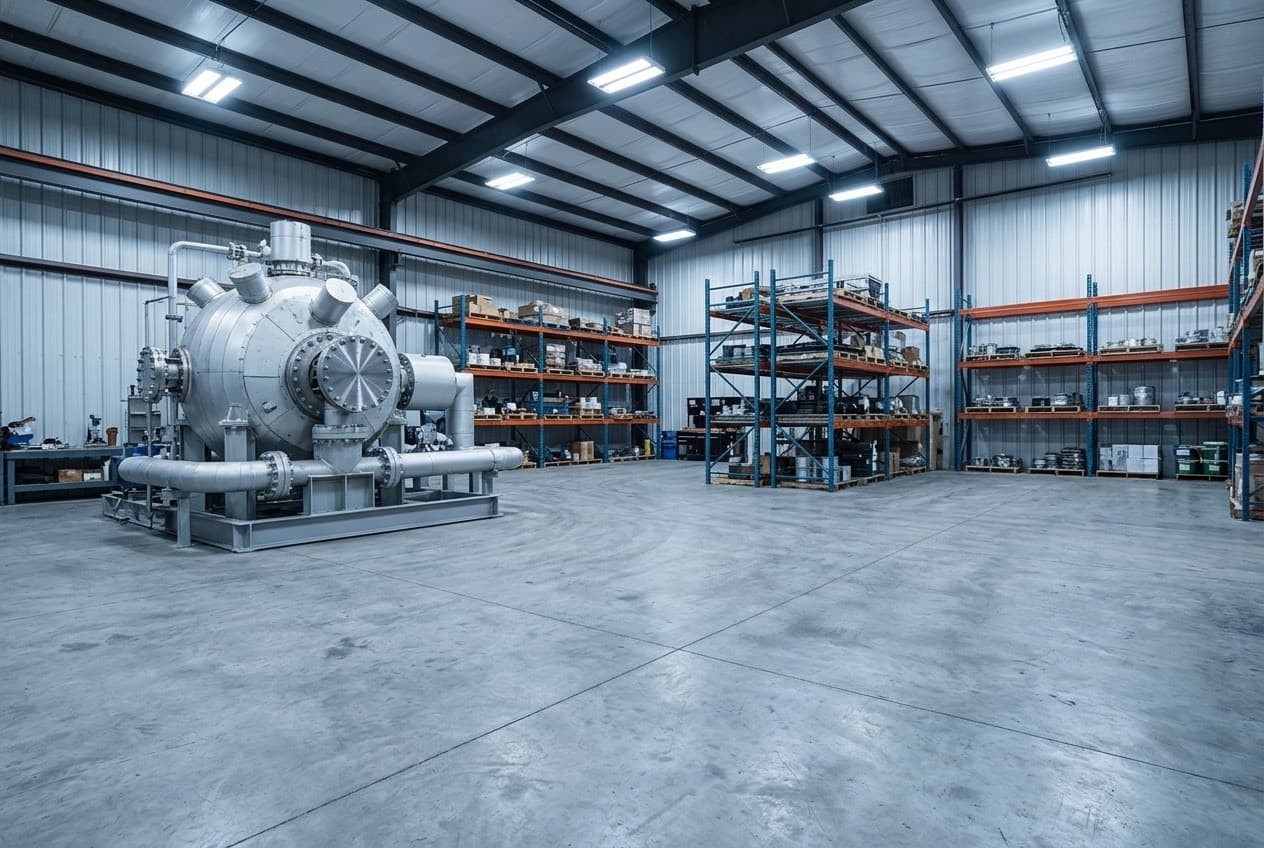
The PHANTOM organic waste treatment machine is designed precisely for the compatible organic stream that most industrial facilities are currently over-treating. A free feasibility assessment at phantomecotech.com/contact will identify, within 48 hours, which of your current waste streams qualify — and what the 5-year cost comparison looks like against your existing disposal contracts.
Hazardous Waste SWH Compatibility Reference
| Waste Stream | Dominant Composition | SWH Compatible? | Correct Route |
|---|---|---|---|
| Rendering / slaughterhouse residue | Protein, fat | ✅ Yes | On-site PHANTOM |
| Food manufacturing slurry / DAF sludge | Mixed organic | ✅ Yes | On-site PHANTOM |
| Agricultural biosolid waste | Cellulose / biomass | ✅ Yes | On-site PHANTOM |
| Contaminated cooking oil / fat-trap | Lipid | ✅ Yes | On-site PHANTOM |
| Industrial proteinaceous sludge | Protein / organic | ✅ Yes | On-site PHANTOM |
| PCB-contaminated transformer oil | Chlorinated organic (POP) | ❌ No | EA-registered contractor |
| PCB capacitor / switchgear waste | Persistent organic pollutant | ❌ No | EA-registered contractor |
| Mixed organic + hard plastic | Organic + polymer | ⚠️ Review | Feasibility assessment |
| Inorganic heavy-metal sludge | Inorganic | ❌ No | Specialist treatment |
Not sure which of your streams qualify? Our team maps your waste streams against compatibility criteria in a free 48-hour feasibility assessment — with a 5-year cost comparison against your current disposal contracts.
Frequently Asked Questions
Standard subcritical water hydrolysis at 250°C and 20–27 bar does not destroy PCBs to the standard required by UK POPs regulations, and poses a significant risk of generating dioxins and furans (polychlorinated dibenzofurans — PCDFs) as by-products. PCB destruction requires temperatures above ~350°C with oxidant addition and specialist emission controls. This is why PCBs require specialised high-temperature incineration or chemical dechlorination — not standard SWH. PCBs must be disposed of by an EA-registered contractor.
Subcritical water hydrolysis is compatible with organic-dominant industrial waste streams: rendering and slaughterhouse residues, food manufacturing slurry, agricultural biosolids, contaminated cooking oils, and proteinaceous industrial sludge. It is not compatible with PCBs, dioxins, or other persistent organic pollutants (POPs).
The UK PCB disposal deadline was 31 December 2025 for equipment containing more than 0.005% PCBs in volumes greater than 50ml. The Environmental Protection (Disposal of PCBs) Amendment Regulations 2024 (SI 2024/354), in force from April 2024, updated enforcement obligations. Operators must register with the Environment Agency and use an EA-authorised disposal contractor.
Hazardous industrial waste incineration currently costs £65–£220 per tonne exclusive of transport, depending on waste classification and contractor rates. UK landfill costs £130.75/tonne from April 2026. UK ETS expansion to waste incineration from 2028 is projected to add approximately £48/tonne. PCB specialist disposal is typically £150–£400/tonne. For SWH-compatible organic streams, on-site PHANTOM treatment falls well below £30/tonne in captive operating cost.
Stream-level classification at source — before routing decisions — is the correct approach. The decisive variable is POPs presence: any stream containing PCBs, dioxins, or furans above 0.005% must go to an EA-registered specialist. Organic streams without POPs — rendering residue, food manufacturing sludge, agricultural biosolids — are SWH-compatible and should not be incinerated. The single biggest cost driver is undifferentiated routing where all hazardous waste is treated as specialist waste.
Key Sources & Citations: UK POPs Regulation (retained EU law) · Environmental Protection (Disposal of Polychlorinated Biphenyls and other Dangerous Substances) (England and Wales) Amendment Regulations 2024 (SI 2024/354) · Environment Agency PCB Registration Guidance · HMRC Landfill Tax Rates April 2026 · UK Emissions Trading Scheme expansion to waste incineration consultation 2024 · Research: subcritical water hydrolysis of PCB-contaminated soil (Hawthorne et al., Environmental Science & Technology) · Research: SWH protein hydrolysate yields (Bhaskar et al., Bioresource Technology) · DEFRA 2023/24 Greenhouse Gas Conversion Factors
Disclaimer: The information in this article is for general informational purposes only and does not constitute legal, regulatory, financial, or procurement advice. Regulatory figures, fee rates, and compliance thresholds are based on publicly available GOV.UK and Environment Agency guidance at the time of publication and are subject to change. PCB disposal regulations carry significant enforcement risk — always verify current obligations with the Environment Agency, your legal advisers, and EA-registered waste management professionals before making operational decisions.