Article Series
Which Cellulosic Waste Streams Convert to a Bioethanol Feedstock via Subcritical Water Saccharification — and Which Do Not?
Clean cellulosic residues — untreated timber, bark, bamboo, straw, and bagasse — qualify to become a fermentable, glucose-rich hydrolysate through subcritical water saccharification, while treated, painted, or plastic-contaminated streams do not. Getting this boundary right starts with the chemistry itself, which is why subcritical water hydrolysis is the correct lens for every feedstock decision below. This article draws its process data from a Kumamoto University cellulose trial and two third-party bioethanol demonstrations. It tells you exactly which residues route to a bioethanol feedstock — and which route only to solid fuel.
Which cellulosic waste streams qualify as a bioethanol feedstock via subcritical water saccharification?
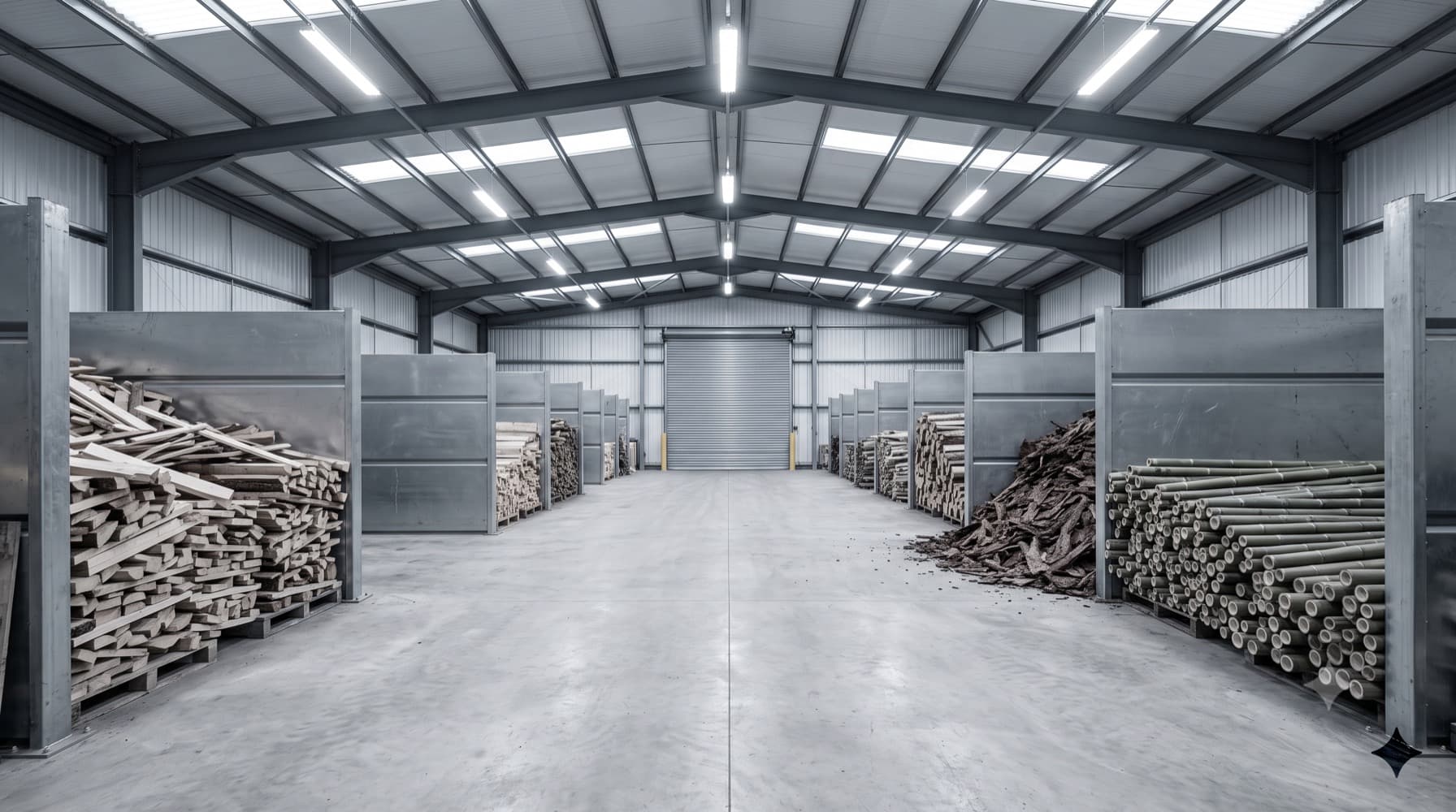
Clean, uncontaminated cellulosic biomass qualifies; anything carrying coatings, preservatives, or non-cellulosic material does not. Subcritical water saccharification breaks the cellulose polymer into glucose, and glucose is what a downstream fermenter needs. The dividing line is contamination, not plant species.
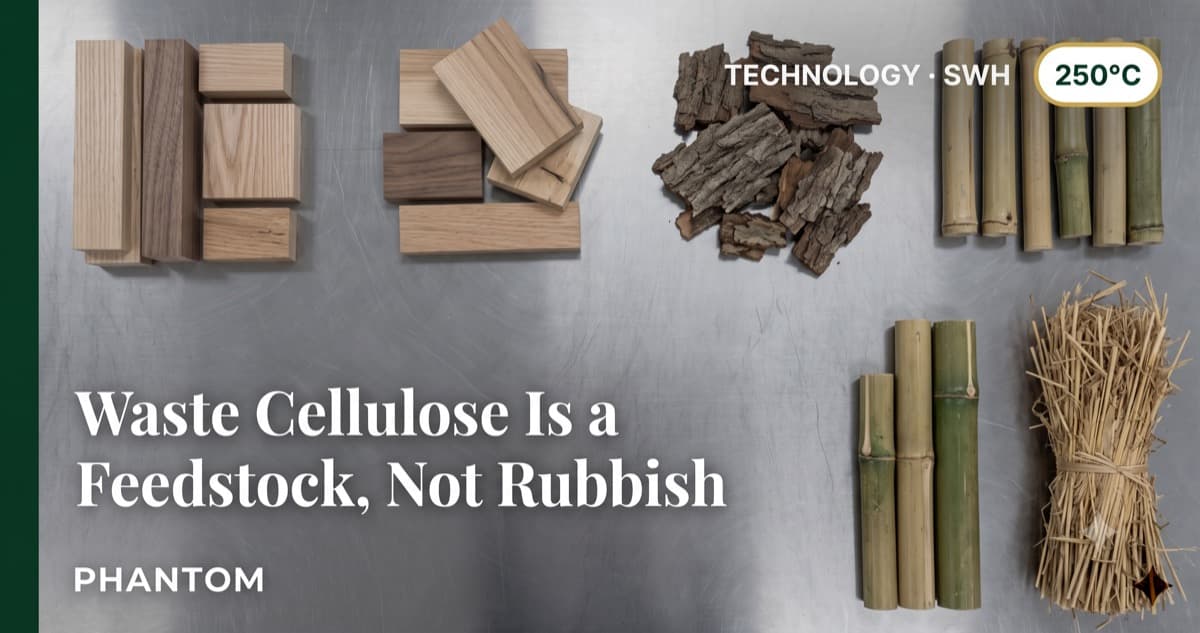
Streams that qualify:
- Untreated timber offcuts — suitable, clean cellulose and hemicellulose.
- Bark — expected to behave like cellulose, based on the Kumamoto trial.
- Bamboo — expected to behave like cellulose, based on the Kumamoto trial.
- Rice straw — evidenced as a bioethanol feedstock in a third-party demonstration (Kawasaki, 2015).
- Sugarcane bagasse — evidenced as a bioethanol feedstock in a third-party demonstration (Nippon Steel Engineering, 2020).
This applies when the residue is clean cellulosic biomass with no coatings or synthetic content — it does NOT apply if the stream carries paint, preservative, adhesive, or plastic contamination. Only "untreated timber," "rice straw," and "sugarcane bagasse" are backed by direct trial or third-party demonstration; bark and bamboo are labelled expected, because the source states similar results can be anticipated, not that they were proven.
Micro-example: A joinery workshop collecting one clean stream of untreated softwood offcuts holds a qualifying feedstock; the same workshop's painted skirting-board offcuts do not qualify and must be kept separate.
Cellulosic Feedstock Qualification Table
Which clean cellulosic residues convert to a fermentable, glucose-rich hydrolysate — and which route to solid fuel only.
Qualifies — glucose pathway evidenced or expected
| Feedstock | SWH saccharification suitability | Bioethanol pathway status |
|---|---|---|
| Untreated timber | Suitable | Fermentable hydrolysate — clean cellulose |
| Bark | Expected | Anticipated per Kumamoto cellulose trial — pending confirmation |
| Bamboo | Expected | Anticipated per Kumamoto cellulose trial — pending confirmation |
| Rice straw | Evidenced | Third-party bioethanol demonstration (Kawasaki, 2015) |
| Sugarcane bagasse | Evidenced | Third-party bioethanol demonstration (Nippon Steel Engineering, 2020) |
Does not qualify for bioethanol — solid fuel only
| Feedstock | SWH saccharification suitability | Bioethanol pathway status |
|---|---|---|
| Painted / treated timber | Not for bioethanol | Solid fuel only — coatings/preservatives disqualify |
| Mixed plastics | Not for bioethanol | Solid fuel only — not cellulose, does not saccharify |
| Any coated / preserved / contaminated stream | Not for bioethanol | Solid fuel only — non-cellulosic contamination |
PHANTOM performs the saccharification stage, converting clean cellulosic biomass into a glucose-rich hydrolysate. Fermentation and distillation to bioethanol are separate downstream steps not performed by the PHANTOM system. Bark and bamboo results are anticipated based on cellulose trial data, pending feedstock-specific confirmation.
Request a free feedstock feasibility assessmentHow does subcritical water turn cellulose into a fermentable glucose-rich hydrolysate?
Subcritical water — liquid water held above 100°C under pressure — dissociates into H⁺ and OH⁻ ions and acts like a chemical blade, cutting the long cellulose chains into glucose. In the Kumamoto University cellulose trial, carboxymethyl cellulose sodium (CMC-Na) treated at 224°C and 25.4 atm for 20 minutes produced a treated liquid in which glucose was confirmed by liquid chromatography against a glucose standard.
The mechanism in four steps:
- Water is driven into a subcritical state by heat and pressure inside the sealed vessel.
- In that state, water dissociates into reactive H⁺ and OH⁻ ions.
- Those ions attack and cleave the glycosidic bonds holding the cellulose chain together.
- The chain breaks down into low-molecular sugars, producing a glucose-rich hydrolysate.
This applies when the input is genuine cellulose or hemicellulose — it does NOT apply if the input is lignin-dominated or synthetic, because those fractions do not saccharify into fermentable sugar. Note the source stated the glucose identification cautiously: the chromatogram elution time was slightly shifted and glucose isomers may be present, so this is glucose confirmed against a standard, not a quantified, purified concentration.
Micro-example: In my experience running the CMC-Na trial behind the Kumamoto data, the tell was the chromatogram — I charged cellulose into the vessel at 224°C and 25.4 atm, and the treated liquid returned a glucose peak against the standard, with the isomer shift exactly where the report flags it. The chemistry did the saccharification; the machine never touched fermentation.
Why do treated timber, painted wood, and mixed plastics NOT qualify for the bioethanol pathway?
Treated timber, painted wood, and mixed plastics are excluded from the bioethanol pathway and route to solid fuel only. Bioethanol needs a clean glucose stream; coatings, preservatives, and synthetic polymers contaminate the hydrolysate or don't saccharify at all, so the sugar route closes and the fuel route opens.
What forces the exclusion:
- Paint and surface coatings introduce non-cellulosic material that fouls a fermentable sugar stream.
- Preservatives (and any biocide) are designed to resist biological breakdown — the opposite of what a fermenter needs.
- Mixed plastics are not cellulose and do not saccharify into glucose.
- Any adhesive, laminate, or coating contamination disqualifies an otherwise-cellulosic batch.
This applies when the stream carries coatings, preservatives, or non-cellulosic contamination — it does NOT apply to a genuinely clean, untreated cellulosic batch, which stays on the bioethanol-feedstock track. Stating this exclusion plainly is a credibility asset: matching feedstock to output is the discipline that keeps the glucose route honest.
Micro-example: A pallet-recycling line running heat-treated but unpainted pallets can keep a clean cellulosic fraction; the moment painted or plastic-banded pallets enter the same bay, that batch drops to solid-fuel output.
What happens to the streams that don't qualify?
Streams that fail the bioethanol test still have a route: they become solid fuel rather than a fermentable feedstock. Treated timber, painted wood, and mixed plastics are reduced and converted to a fuel output instead of a sugar output — the value is thermal, not fermentable.
- Painted or treated timber → solid fuel only.
- Mixed plastics → solid fuel only.
- Any coated, preserved, or contaminated stream → solid fuel only.
This applies when contamination rules out fermentation — it does NOT apply to clean cellulosic residue, which stays on the glucose pathway. For the full picture on the non-cellulosic route, see how subcritical water hydrolysis processes non-cellulosic and treated waste streams, which covers the plastics and solid-fuel pathway in detail. Each feedstock is matched to one of the four PHANTOM output routes — solid fuel, compost, liquid fertilizer, or bioethanol feedstock.
Micro-example: A demolition contractor's mixed load of painted joists and plastic trim yields no bioethanol feedstock — it processes to a solid fuel output, and is kept out of the clean cellulosic bay entirely.
Does the PHANTOM system produce bioethanol, or only the feedstock for it?
The PHANTOM system performs the saccharification stage only — it produces a glucose-rich, fermentable hydrolysate, not bioethanol. Fermentation and distillation are separate downstream steps the machine does not perform. This is the honest boundary, and it is the whole point of the article.
Where PHANTOM starts and stops:
- It collapses crush/wash, pretreatment, and saccharification into one subcritical water treatment step.
- It outputs a fermentable, glucose-rich hydrolysate from clean cellulosic biomass.
- It does NOT ferment that hydrolysate into alcohol.
- It does NOT distil alcohol into finished bioethanol.
This applies when the goal is producing a fermentable feedstock on-site — it does NOT apply if you expect finished ethanol out of the vessel, because that requires downstream fermentation and distillation. The two cited bioethanol results — Kawasaki's 2015 rice straw work and Nippon Steel Engineering's 2020 bagasse work — are third-party demonstrations of the downstream pathway, not outputs of the PHANTOM machine, and no litres-per-tonne ethanol yield is attributed to PHANTOM here.
Micro-example: Feed clean rice straw and you get a glucose-rich hydrolysate at the outlet; converting that hydrolysate to ethanol still needs a separate fermenter and still, which sit outside the PHANTOM unit.
Why does clean cellulosic residue get landfilled instead of fermented?
Clean cellulosic residue is usually landfilled, burned, or chipped because conventional cellulosic-ethanol production is expensive before fermentation even begins. The pre-fermentation sequence — crushing and washing, chemical or steam pretreatment, then enzymatic saccharification — is three separate stages, and enzyme cost alone is a major share of cellulosic-ethanol production cost. That multi-stage cost is why cellulosic biomass has historically been treated as low-value waste.
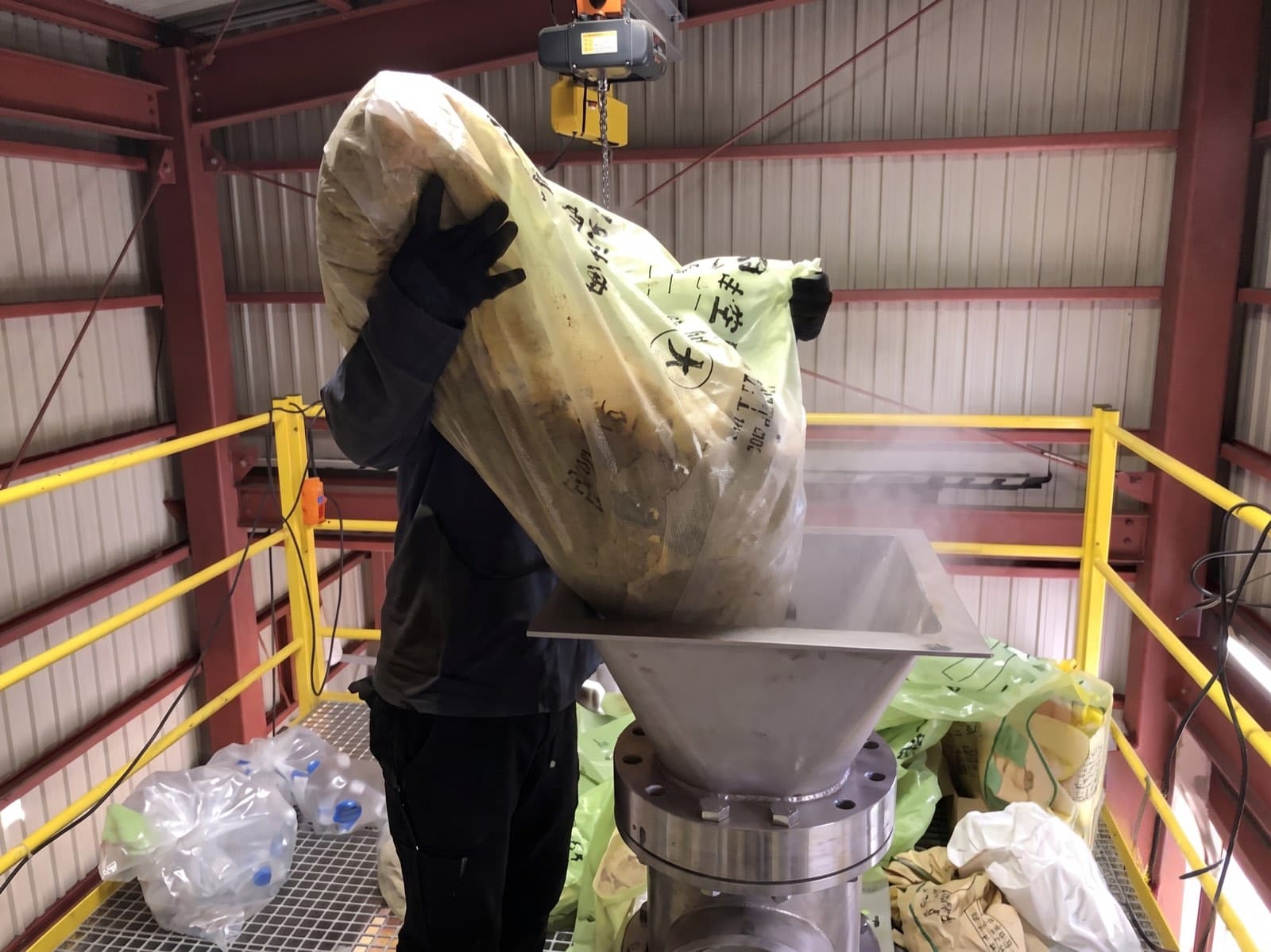
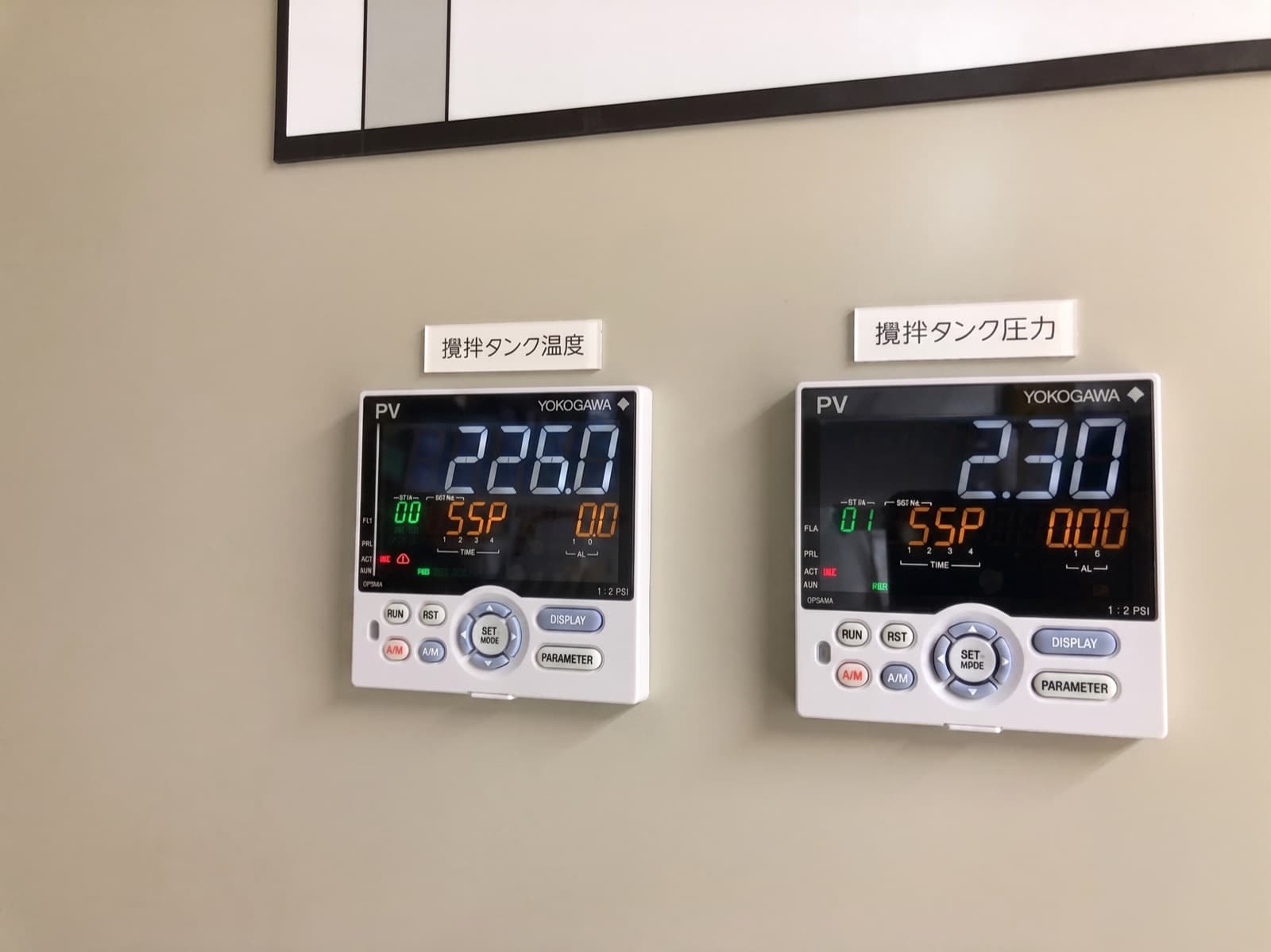
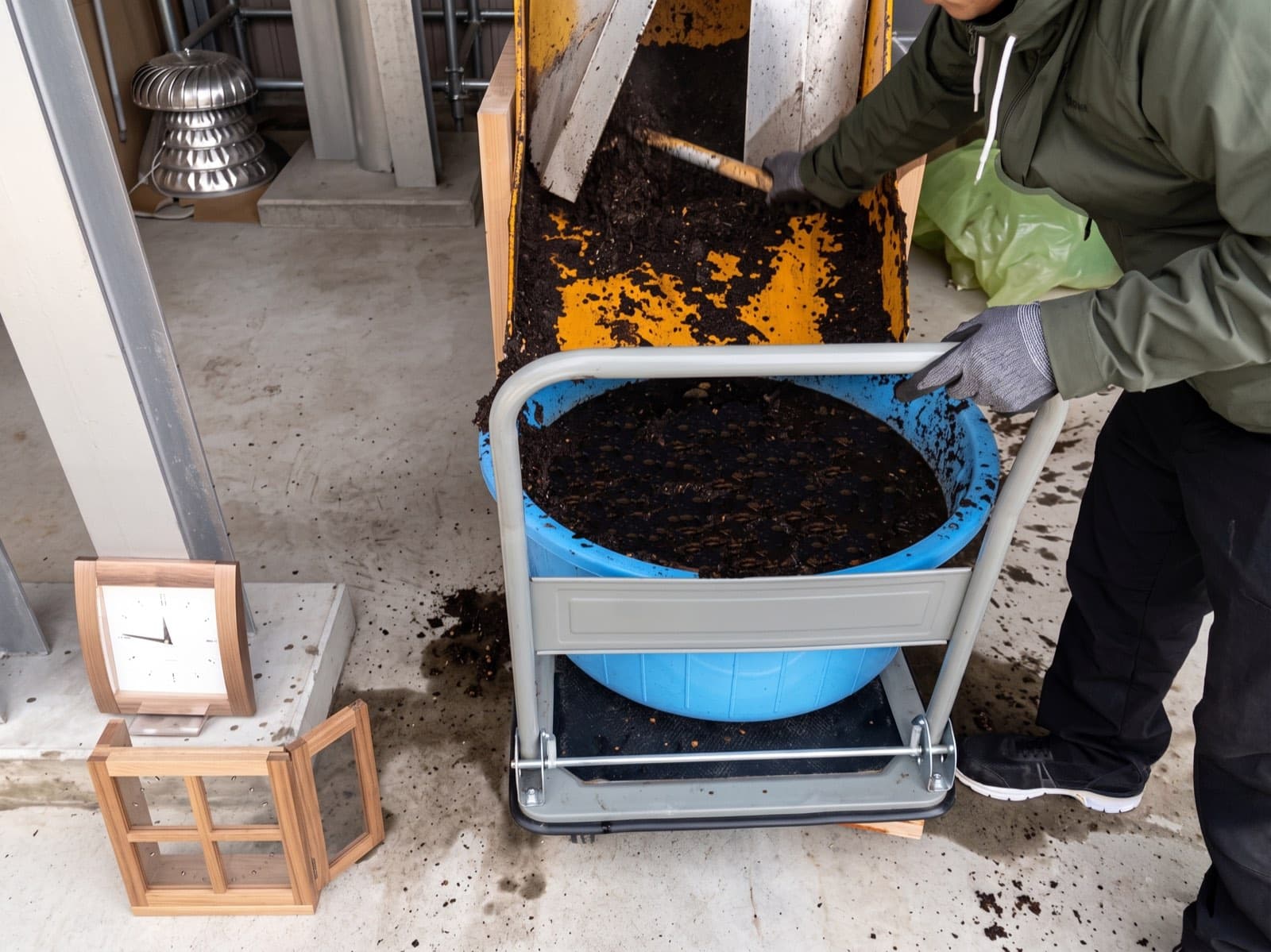
Pro-Tip: The real barrier isn't the biomass — it's the three stages in front of it
You've now spotted the real problem. If you run clean cellulosic residue — untreated timber, bark, bamboo, straw, or bagasse — you've seen that the biomass itself was never the obstacle. The obstacle is everything that has to happen before a fermenter can touch it.
Here's why it keeps recurring. Conventional cellulosic-ethanol requires three separate, costly pre-fermentation stages — crush and wash, pretreat, then enzymatically saccharify — and enzyme cost alone is a major share of total production cost. That stacked cost, not the availability of biomass, is the systemic root cause that keeps cellulosic residue parked in landfill and skips, treated as waste rather than feedstock. Better logistics or a cheaper chipper treat the symptom; they never remove the three-stage barrier itself.
That's the barrier the PHANTOM subcritical water hydrolysis machine is built to remove — by collapsing crush/wash, pretreatment, and saccharification into a single subcritical water treatment step, it turns clean cellulosic residue directly into a fermentable, glucose-rich hydrolysate. That brings the pre-fermentation cost of cellulosic feedstock closer to conventional sugar or corn feedstock, and turns a landfilled residue into a fermentable feedstock. Fermentation and distillation to finished bioethanol remain separate downstream steps — but the expensive saccharification barrier is gone.
To confirm whether your specific residue qualifies as a clean cellulosic feedstock, our team runs free feasibility assessments — request a quote and we'll review your stream against the qualification table above.
Frequently Asked Questions
No. PHANTOM performs the saccharification stage only, producing a fermentable, glucose-rich hydrolysate from clean cellulosic biomass. Fermentation and distillation to finished bioethanol are separate downstream steps the machine does not perform, and no litres-per-tonne ethanol yield is attributed to PHANTOM.
Untreated timber is suitable; bark and bamboo are expected based on the Kumamoto University cellulose trial, pending feedstock-specific confirmation; and rice straw and sugarcane bagasse are evidenced in third-party bioethanol demonstrations (Kawasaki, 2015; Nippon Steel Engineering, 2020). The dividing line is contamination, not plant species.
Paint, preservatives, and adhesives introduce non-cellulosic material that fouls the fermentable sugar stream or resists biological breakdown, and mixed plastics are not cellulose and do not saccharify into glucose. These streams route to solid fuel only, not to the bioethanol pathway.
In the Kumamoto University trial, carboxymethyl cellulose sodium (CMC-Na) was treated at 224°C and 25.4 atm for 20 minutes. Glucose was confirmed by liquid chromatography against a glucose standard, with a noted elution-time shift and possible isomers — a confirmation against a standard, not a quantified purity or concentration.
They still have a route: they are reduced and converted to a solid fuel output rather than a fermentable feedstock. The recovered value is thermal, not fermentable — treated timber, painted wood, and mixed plastics all follow this solid-fuel path.
Key Sources & Citations: Kumamoto University subcritical water cellulose (CMC-Na) trial — 224°C, 25.4 atm, 20 min, glucose confirmed by liquid chromatography against a standard · Kawasaki rice straw bioethanol demonstration (2015) · Nippon Steel Engineering sugarcane bagasse bioethanol demonstration (2020) · JEP Corporation PHANTOM 3M³ process documentation.
Disclaimer: The information in this article is for general informational and educational purposes only and does not constitute engineering, procurement, or commercial advice. Process figures are drawn from a named cellulose trial and third-party demonstrations at the time of publication; feedstock behaviour varies with source, contamination, and operating conditions. Bark and bamboo results are anticipated from cellulose trial data and require feedstock-specific confirmation. PHANTOM produces a fermentable hydrolysate, not finished bioethanol. Always confirm suitability for your specific waste stream with a qualified assessment before making operational or investment decisions.