PHANTOM · Global Markets · India
PHANTOM in India: On-Site Waste Treatment Under SWM Rules 2026
India's Solid Waste Management Rules 2026 reshape how large generators handle waste — toward on-site processing, recovered-fuel uptake, and restricted landfilling. Here is how a non-combustion, on-site treatment such as subcritical water hydrolysis fits that landscape.
India's Solid Waste Management (SWM) Rules 2026, effective 1 April 2026, push large waste generators toward on-site wet-waste processing, restrict landfilling, and mandate industrial uptake of refuse-derived fuel — creating a regulatory environment suited to on-site, non-combustion treatment such as subcritical water hydrolysis.
What the SWM Rules 2026 introduce
- Mandatory four-stream segregation of waste at source
- Bulk Waste Generators (100 kg/day or more) must process wet waste on-site “as far as possible” or obtain an EBWGR certificate
- RDF substitution by cement and waste-to-energy plants rising from 5% to 15% over six years
- Landfills restricted to non-recyclable, non-energy-recoverable, inert material, with higher fees for unsegregated waste
Applies to: Indian bulk waste generators — government bodies, PSUs, institutions, commercial establishments, large residential complexes — plus healthcare facilities managing biomedical waste and industrial operators generating organic or mixed waste.
Example: a large institutional generator producing wet organic waste on-site can treat it at the point of generation into a sterile reusable output, rather than transporting unsegregated waste to a landfill now subject to higher fees under the 2026 rules.
Section 1
India's Waste Challenge in Numbers
Municipal solid waste generated
Annual MSW total
Share treated
Biomedical waste generated
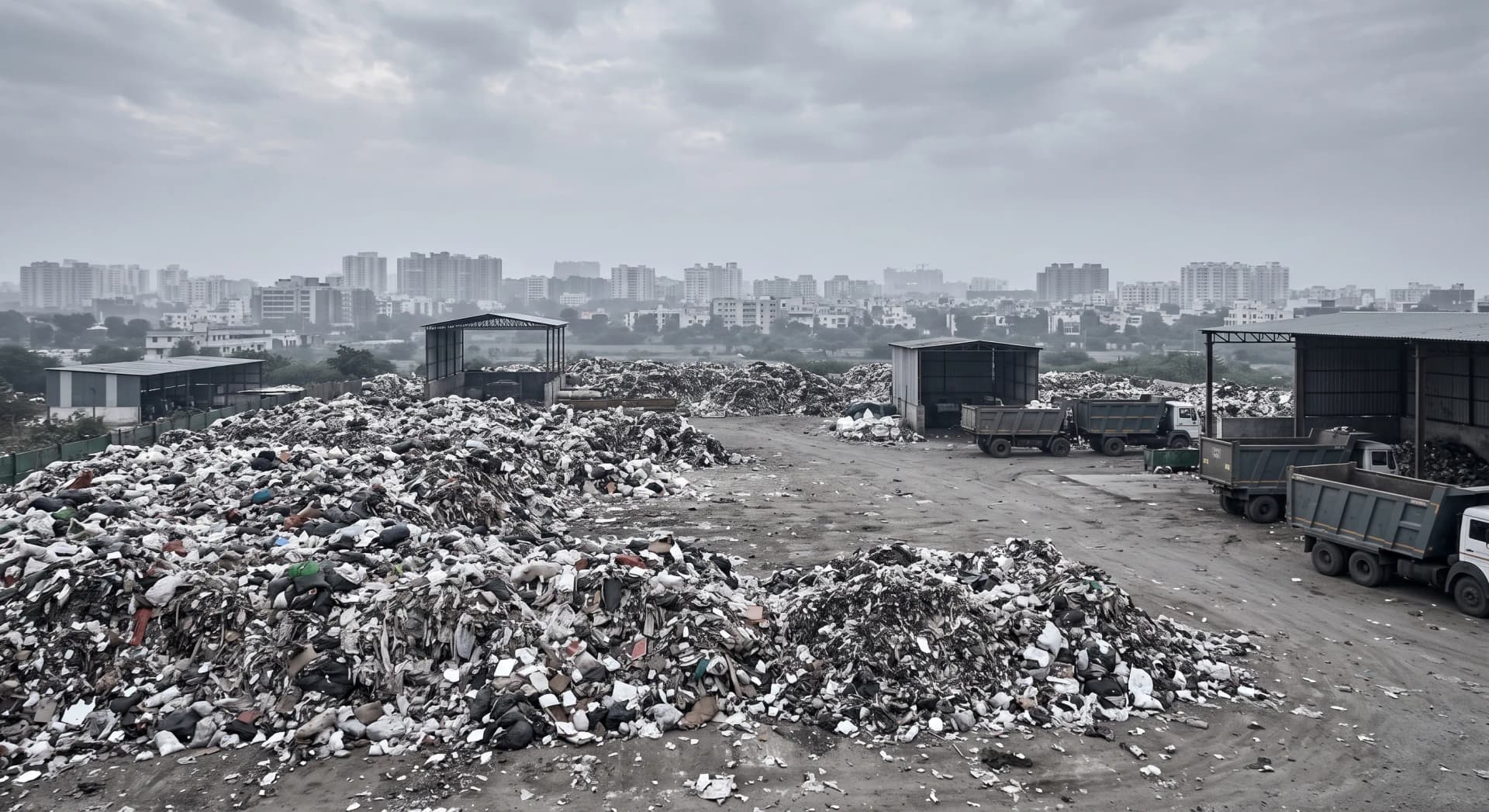
India generates approximately 170,000 tonnes of municipal solid waste per day — nearly 62 million tonnes annually — according to Central Pollution Control Board (CPCB) data for FY 2021-22. Of this, roughly 54% is treated and around 24% is sent to landfill, with over 30,000 tonnes per day going unprocessed (Mordor Intelligence analysis of CPCB data). One widely cited projection estimates urban India's MSW could rise from 62 million tonnes in 2015 to as high as 165 million tonnes by 2030.
Section 2
SWM Rules 2026: What Changed
The Union Ministry of Environment, Forest and Climate Change (MoEFCC) notified the Solid Waste Management Rules, 2026 on 28 January 2026, superseding the 2016 rules and coming into full effect on 1 April 2026 (Press Information Bureau, Government of India). The rules integrate Circular Economy and Extended Producer Responsibility principles, and introduce environmental compensation on a 'Polluter Pays' basis for non-compliance.
Wet waste
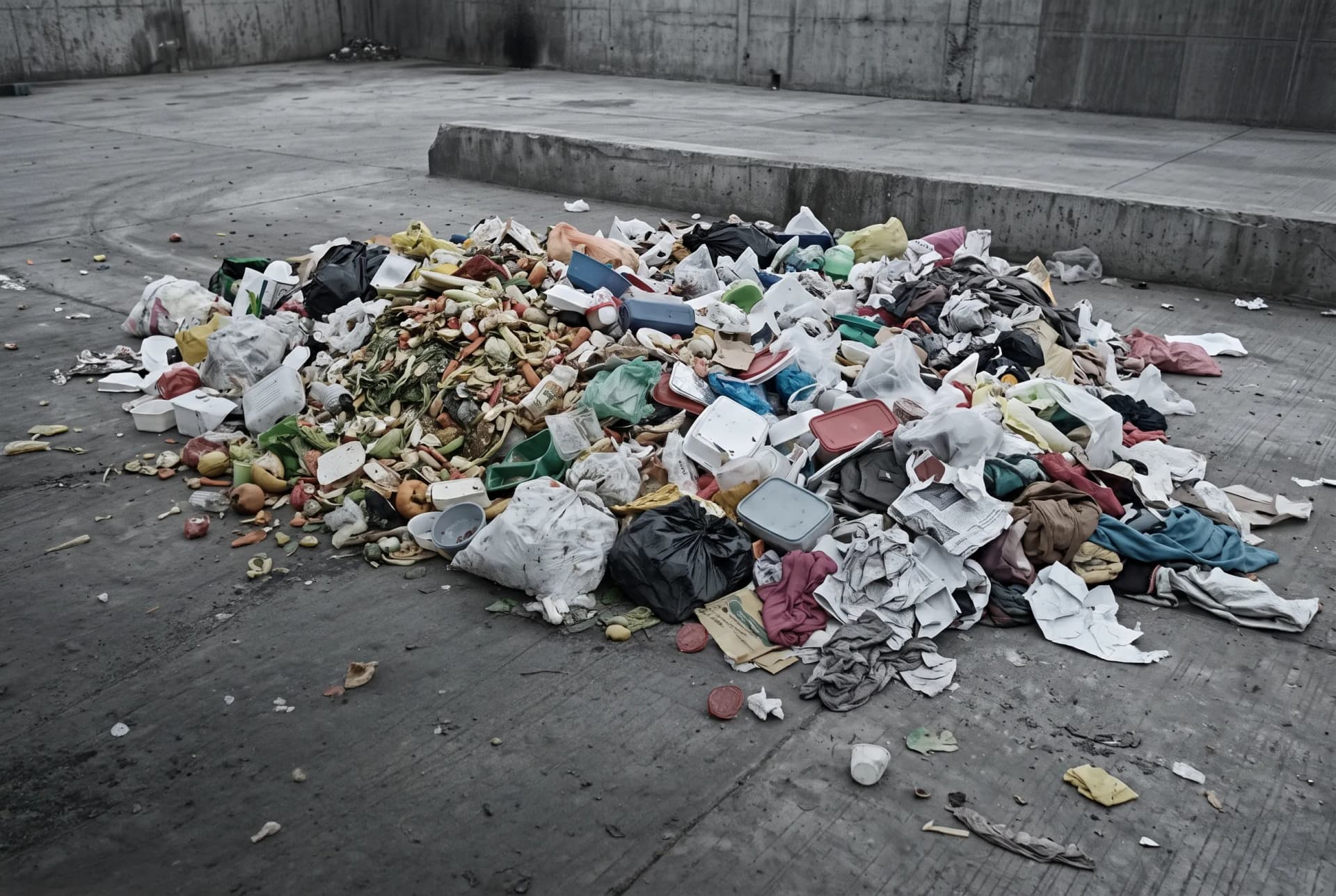
Kitchen waste, food scraps
To be composted or processed via bio-methanation.
Dry waste
Plastic, paper, metal, glass, wood, rubber
Sent to Material Recovery Facilities for sorting and recycling.
Sanitary waste
Diapers, sanitary items
Securely wrapped and stored separately.
Special care waste
Paint cans, bulbs, thermometers, medicines
Collected by authorised agencies.
Four-stream segregation framework per Press Information Bureau / SWM Rules 2026.
The On-Site Processing Mandate (EBWGR)
Bulk Waste Generators are defined as entities with a floor area of 20,000 m² or more, water consumption of 40,000 litres/day or more, OR solid waste generation of 100 kg/day or more. Under the new Extended Bulk Waste Generator Responsibility (EBWGR), these generators must process wet waste on-site 'as far as possible,' or obtain an EBWGR certificate where on-site processing is not feasible. Bulk generators account for nearly 30% of total solid waste generation (Press Information Bureau, Government of India).
On-site subcritical water hydrolysis is one category of non-combustion treatment that processes wet organic waste at the point of generation — the operational model the EBWGR provisions encourage. The category-level economics and capacity tiers are set out in the PHANTOM waste treatment machine guide.
RDF Substitution: A New Demand Signal
The SWM Rules 2026 define Refuse-Derived Fuel (RDF) and mandate that industrial units — including cement plants and waste-to-energy plants currently using solid fuel — replace it with RDF, with the substitution rate rising from 5% to 15% over six years (Press Information Bureau, Government of India).
PHANTOM produces a solid recovered fuel output from suitable feedstocks, creating alignment with this mandated industrial demand. Whether a given output meets India's RDF specification depends on feedstock and local standards.
Biomedical Waste: The Non-Incineration Opportunity
India generates approximately 484 tonnes per day of biomedical waste from around 168,869 healthcare facilities, of which roughly 447 tonnes/day is treated (Government of India / MoEFCC data). Treatment is governed by the Bio-Medical Waste Management Rules, 2016 (as amended), with 234 Common Bio-Medical Waste Treatment Facilities (CBWTFs) operational as of 2023. The CPCB's updated CBWTF Guidelines, issued 12 April 2025, place particular emphasis on continuous monitoring of incineration emissions, including dioxins and furans.
Subcritical water hydrolysis is a non-combustion treatment that operates without the dioxin/furan formation pathway associated with incineration — explored in our guide to non-incineration treatment of infectious medical waste.
India's Waste Management Market
Independent research firms size India's waste management market differently by scope and methodology. The figures below are presented as a range rather than a single number.
| Source | 2025 Value | Projection | CAGR |
|---|---|---|---|
| Mordor Intelligence | USD 7.85bn | USD 10.37bn (2030) | 5.72% |
| IMARC Group | USD 13.0bn | USD 21.9bn (2034) | 6.00% |
| Markntel Advisors | USD 13.56bn | USD 18.95bn (2032) | 4.83% |
Estimates vary by scope and methodology; all figures are third-party projections cited for market context only.
How PHANTOM Applies in India
The SWM Rules 2026 point in one direction: treating waste at the point of generation rather than hauling it to landfill. On-site subcritical water hydrolysis maps onto several of the rules' provisions at a category level — it processes wet organic waste on-site (the model the EBWGR provisions encourage), yields a solid recovered fuel output from suitable feedstocks (aligned with the mandated RDF demand signal), and treats organic and mixed waste without combustion (relevant where the CBWTF guidelines emphasise incineration-emission monitoring). It sits naturally within the circular-economy and Polluter-Pays framing the rules adopt. For the broader technology context, see our guide to zero-emission industrial waste treatment and the PHANTOM waste treatment machine guide.
PHANTOM operates manufacturer-direct in India as the direct commercial representative of JEP Corporation, Japan — the engineers who build the system. Indian operators deal directly with the source, not a reseller: the same JEP-engineered specification and technical support, without commission-stacking intermediaries between the operator and the manufacturer.
FAQ
Frequently Asked Questions
The Solid Waste Management Rules, 2026 were notified on 28 January 2026 and come into full effect on 1 April 2026, superseding the 2016 rules (Press Information Bureau, Government of India).
A Bulk Waste Generator is an entity with a floor area of 20,000 m² or more, water consumption of 40,000 litres/day or more, OR solid waste generation of 100 kg/day or more (Press Information Bureau, Government of India).
Extended Bulk Waste Generator Responsibility (EBWGR) requires bulk generators to process wet waste on-site 'as far as possible,' or to obtain an EBWGR certificate where on-site processing is not feasible — an accountability mechanism for on-site wet-waste processing.
Refuse-Derived Fuel (RDF) is a solid fuel recovered from waste. The SWM Rules 2026 mandate that industrial units — including cement and waste-to-energy plants using solid fuel — substitute RDF at a rate rising from 5% to 15% over six years (Press Information Bureau, Government of India), creating a new industrial demand signal.
India generates approximately 484 tonnes per day of biomedical waste from around 168,869 healthcare facilities, of which roughly 447 tonnes/day is treated (Government of India / MoEFCC data).
Operating in India?
We'll map your waste streams, the SWM Rules 2026 provisions that apply to your site, and the right PHANTOM configuration.
Sources
- Press Information Bureau, Government of India — "New Solid Waste Management Rules Notified" (28 January 2026)
- Central Pollution Control Board (CPCB) — Municipal Waste Management data, FY 2021-22
- CPCB — Guidelines for Common Bio-Medical Waste Treatment and Disposal Facilities (12 April 2025)
- Government of India / MoEFCC — biomedical waste generation data
- Mordor Intelligence; IMARC Group; Markntel Advisors — India waste management market estimates (third-party projections)
Disclaimer: The figures on this page are compiled from public and third-party sources for informational purposes only and do not constitute legal, regulatory, or procurement advice. Market-size figures are third-party estimates that vary by scope and methodology. Regulatory provisions are subject to change and to official interpretation; independent due diligence is advised before making operational or procurement decisions.