
PHANTOM — Organic Waste Treatment Machine
Creating the Future from Waste
PHANTOM is an industrial organic waste treatment system that uses subcritical water hydrolysis — water heated to 150–374°C under pressure — to convert organic waste into sterile compost, liquid fertiliser, and solid fuel. Each 30-minute cycle processes up to 3 tonnes with zero dioxins, zero harmful gas emissions, and a >99.9% pathogen kill rate. Trusted by hospitals, livestock farms, food processors, and manufacturers across Asia, the Middle East, and Europe.
The Problem
Organic Waste Is a Growing Crisis — and Incineration Is Not the Answer
UK disposal now costs £205–285/t to landfill and £130–617/t to incinerate — and every mainstream route is getting more expensive, more regulated, or both.
Rising Disposal Costs
- Landfill tax hit £126.15/t in 2025 — rising every year
- Incineration gate fees: £130–617/t depending on waste type
- EPR fees & carbon pricing adding a second and third cost layer
- Municipal landfills across UK, EU, and US approaching capacity
Incineration Creates New Problems
- Emits dioxins, furans, and hazardous fly ash requiring specialist disposal
- 5–10 years of planning opposition before a tonne is processed
- 0.94 kg CO₂e per kg burned — EU ETS carbon costs from 2028
- Consumes waste instead of recovering value from it
Alternatives Fall Short
- Composting: 3–6 months, limited to clean source-separated organics
- Anaerobic digestion: 20–40 days, can't handle pathogenic or mixed waste
- AD gate fees now £25–55/t — the cost advantage has gone
- Neither route handles plastics, PPE, or mixed industrial streams
The PHANTOM Answer
30 minutes. Zero dioxins. Three sellable outputs.
Subcritical water hydrolysis converts any organic waste stream — including clinical, agricultural, and plastic waste — into sterile compost, liquid fertiliser, and solid fuel at ~£33 per cycle. No combustion, no planning opposition, no carbon liability.
The Machine — PHANTOM
Easy Installation & Operation
PHANTOM systems are designed to be modular and “plug-and-operate,” dramatically reducing installation time, cost, and complexity.
- Modular Design
- Plug-and-Operate
- Installation Support Included
- Full Training Provided
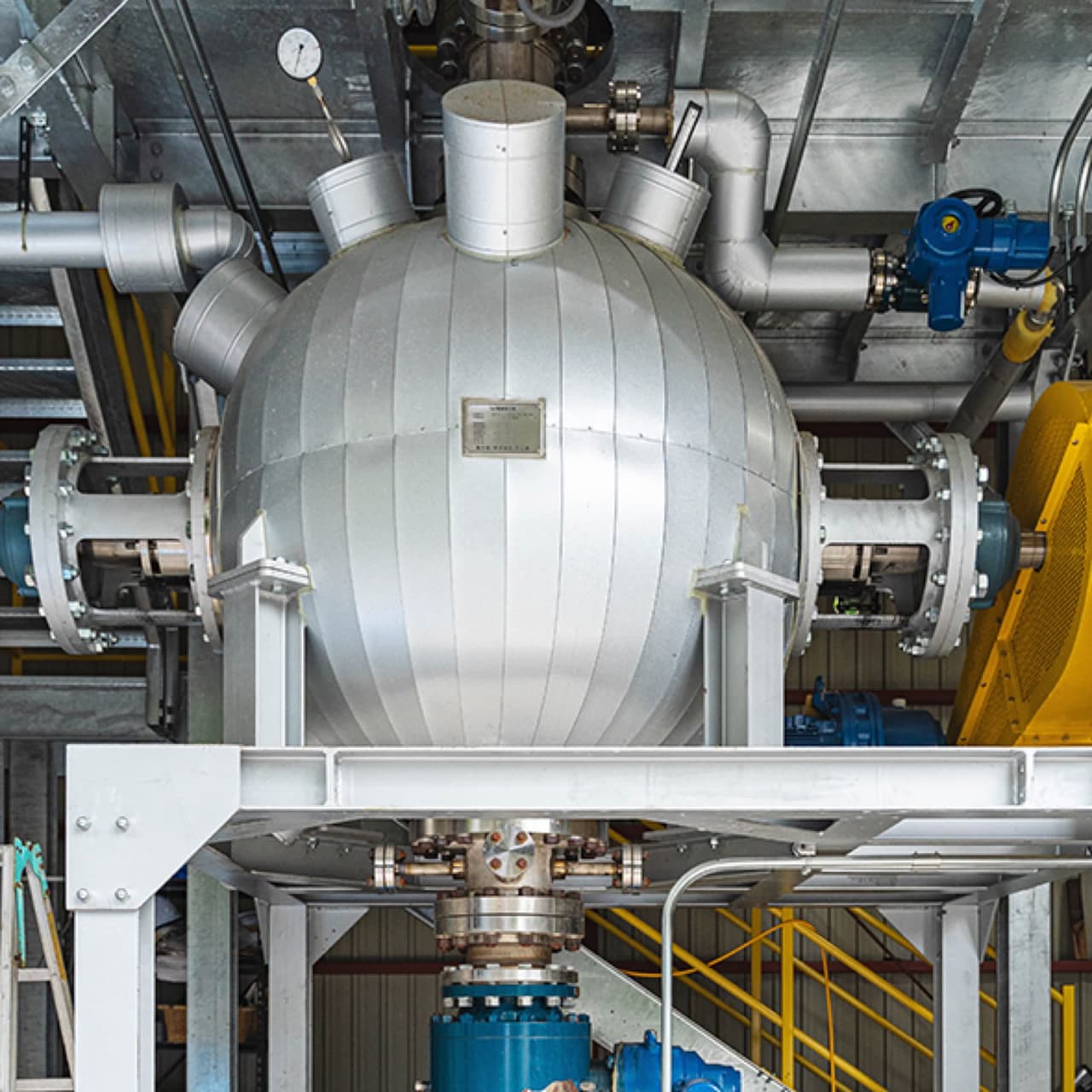
Round-Type Processing Furnace
Modular containerised installation
Why PHANTOM
A New Era in Waste Treatment
From marine pollution to medical waste, modern society faces escalating disposal challenges. PHANTOM answers them with subcritical water technology — rapid, clean, and circular.
Subcritical Water Technology
Sterilize · Neutralize · Reduce
High-temperature pressurised water breaks organic waste into smaller molecules — sterilizing, deodorizing, and reducing volume by up to 60%.
Tackling Modern Waste
Marine · Plastic · Medical · Livestock
PHANTOM processes the waste streams that conventional methods struggle with — from ocean plastics and livestock excreta to hospital and food waste.
Circular Economy
Compost · Feed · Fuel
Processed output becomes compost, animal feed, or solid fuel. The global compost market exceeds $33M USD annually — turning waste into a genuine revenue stream.
Zero Harmful Emissions
No Dioxins · No Toxic Gases
Unlike incineration, PHANTOM produces no dioxins, furans, or harmful gases. A sealed system that eliminates odors completely.
Sea Water Fertilizer
Near-Zero Production Cost
Our innovative liquid fertilizer uses 80–85% sea water, diluted 500–800× for application. Accelerates crop growth at a fraction of conventional fertilizer cost.
Rapid Processing
30 Minutes per Cycle
Process up to 3 tonnes of organic waste in just 30 minutes — dramatically outperforming landfill, composting, and incineration timelines.
Performance
Numbers That Matter
Units Deployed
Poultry, industrial & agriculture
Input → 1.8t Output
Per 30-minute cycle
Per Cycle Cost
Fuel & utilities combined
Harmful Emissions
No dioxins or harmful gases
Recycling Outputs
What Goes In, What Comes Out
PHANTOM converts organic waste into three valuable output categories — compost & feed, solid fuel, and liquid fertilizer.
Compost & Animal Feed
Sterile, nutrient-rich output
Solid Fuel
High-calorie bio-coal (~5,000 kcal/kg)
Sea Water Liquid Fertilizer
Innovative near-zero-cost production
PHANTOM's liquid output can be combined with sea water (80–85% composition) to create a powerful organic fertilizer. Diluted 500–800× for field application, it accelerates crop growth at a fraction of conventional fertilizer costs — with nearly free raw material.
Not suitable for:
Glass, metal, and stone cannot be processed by the PHANTOM system. Pre-sorting is required to remove these materials before treatment.
Return on Investment
Stop Paying for Hauling. Turn Waste into an Asset.
PHANTOM isn't just waste equipment — it's a strategic financial asset that reduces ongoing costs and transforms waste into a potential revenue source.
Cuts Disposal Costs
Eliminate expensive outsourcing fees by processing waste internally. No more hauling contracts, no more rising disposal charges — immediately improving profitability.
Very Low Operating Costs
- Minimal fuel use — wet waste requires no extra fuel
- Fixed utility cost of ~$33 USD per cycle (fuel & utilities), regardless of machine size
- Simple touch-button operation reduces labour costs — no specialised technicians needed
Low Maintenance & Capital Costs
- Non-incineration design keeps the structure simple and maintenance inexpensive
- Only routine boiler inspections and gasket replacements (~once every 10 years)
- Construction and upkeep cost a fraction of traditional incinerators
Generates Revenue from Waste
- Converts waste into sterile, reusable residue — compost, feed, or fuel
- Global compost import market exceeds $33M USD annually — significant resale potential
- Sea water fertilizer innovation — near-zero production cost, accelerates crop growth
Industries Served
Who Uses PHANTOM?
With 7 units deployed across poultry farms, industrial waste disposal, and agricultural operations — PHANTOM is proven in real-world conditions.
Food & Hospitality
Restaurants, hotels, food processing plants
Agriculture
Livestock farms, crop waste processing
Healthcare
Hospitals, medical waste management
Manufacturing
Factory waste, industrial organics
Ready to Transform Your Waste Management?
Contact us today for a consultation and quotation tailored to your waste management needs.
Frequently Asked Questions
PHANTOM is designed for simple, touch-button operation. It does not require a full-time dedicated operator or specialised technicians. A single trained staff member can start a cycle and attend to other duties while the system runs. Full operator training is included with every installation.
Each treatment cycle has a fixed utility cost of approximately $33 USD (fuel and utilities combined), regardless of machine size (0.5–3 tons). When compared to ongoing hauling contracts, landfill tipping fees, and outsourced disposal charges, PHANTOM typically delivers significant net savings from the very first year of operation.
PHANTOM uses only water and heat — no proprietary chemicals, enzymes, or consumables are required. The non-incineration design keeps the structure simple. Routine maintenance involves standard boiler inspections and gasket replacements approximately once every 10 years. Ongoing upkeep costs are a small fraction of traditional incinerators.
PHANTOM produces zero dioxins, furans, or harmful gases because it uses subcritical water hydrolysis — not combustion. The sealed system operates well within EPA and EU industrial emission standards. Permitting requirements vary by jurisdiction, but because there is no incineration involved, PHANTOM typically falls outside the stricter emissions permitting required for incinerators. We assist customers with local compliance documentation.
No. The entire process takes place inside a sealed, pressurised vessel. There is no open-air handling of waste during treatment. The subcritical water process eliminates odors as part of the hydrolysis cycle, making PHANTOM suitable for indoor installation within factories, hospitals, and food processing facilities.
The output is a sterile, pathogen-free residue that can be repurposed as compost, liquid fertiliser, livestock feed supplement, or solid fuel. Certification and land-application regulations vary by country and region. In many jurisdictions, because the output is fully sterilised and free of harmful contaminants, it qualifies for agricultural use rather than being classified as industrial sludge. We work with customers to navigate local certification requirements.
PHANTOM heats water to 100–374°C inside a sealed, pressurised vessel. At these conditions, water's chemistry changes — it becomes a powerful natural solvent that rapidly breaks organic molecules into amino acids, sugars, and fatty acids. The entire process takes 30 minutes, produces no combustion, and generates no dioxins or harmful gases. The result is sterile, reusable outputs: compost, liquid fertiliser, solid fuel, and clean effluent.
PHANTOM processes a wide range of organic waste streams: food waste from restaurants, hotels, and food manufacturing; livestock and poultry manure; agricultural by-products; medical and clinical organic waste; fishery and slaughterhouse by-products; hospital single-use plastics and PPE; and mixed industrial organic waste. Glass, large metal pieces, and stone must be removed during pre-sorting and cannot be processed.
Incineration generates dioxins, furans, and hazardous fly ash — a regulated special waste requiring specialist disposal. It emits CO₂ and is entering EU Emissions Trading Scheme carbon pricing from 2028. PHANTOM produces zero dioxins, zero fly ash, and near-zero CO₂. Its outputs — compost, fuel, and fertiliser — have resale value. Capital costs are significantly lower, and it requires no flue-gas scrubbing or pollution control infrastructure.
Traditional composting takes 3–6 months and is limited to source-separated organics. Anaerobic digestion requires 20–40 days and cannot handle pathogenic or mixed waste streams. PHANTOM completes a full treatment cycle in 30 minutes, handles mixed and pathogenic waste, and produces sterilised outputs. It is weather-independent and suitable for indoor installation — a significant operational advantage over open-air composting.
ROI depends on current disposal costs, output sale prices, and daily throughput. At UK landfill tax rates of £126/tonne plus gate fees, and US tipping fees of $62–90/ton, the avoided disposal cost alone is substantial. Most operators with consistent daily throughput reach payback within a few years. Each output stream — compost, fuel, and fertiliser — adds incremental revenue. We provide a site-specific ROI calculation with every free proposal.
From contract signing, manufacturing takes approximately 6 months. On-site installation and commissioning typically takes 1–2 weeks. Site requirements are modest: reinforced concrete flooring (load ratings vary by model), three-phase electrical supply, water connection, and compressed air. The unit can be installed inside an existing factory, warehouse, or purpose-built enclosure — no dedicated building is required for smaller models.
Yes. PHANTOM's subcritical water process achieves 99.99%+ pathogen sterilisation, making it suitable for infectious clinical waste, single-use medical plastics and PPE, laboratory biological waste, and food waste from clinical settings. The sealed, pressurised system eliminates biohazard exposure risk during treatment. Regulatory classification for medical waste varies by jurisdiction — we assist customers with compliance documentation.
PHANTOM is available globally and meets international industrial emission standards. The system has been deployed across Asia, the Middle East, and Europe. Our engineering team supports customers with local regulatory compliance, installation logistics, and operator training regardless of location. Contact us for a country-specific feasibility assessment.
PHANTOM is engineered for a 10-year major maintenance interval — far exceeding the service requirements of incinerators. Full operator training is included with every installation. After-sales support includes remote monitoring via the integrated PLC control system, ongoing technical guidance, and maintenance scheduling. Contact us for current warranty terms specific to your region and system model.